
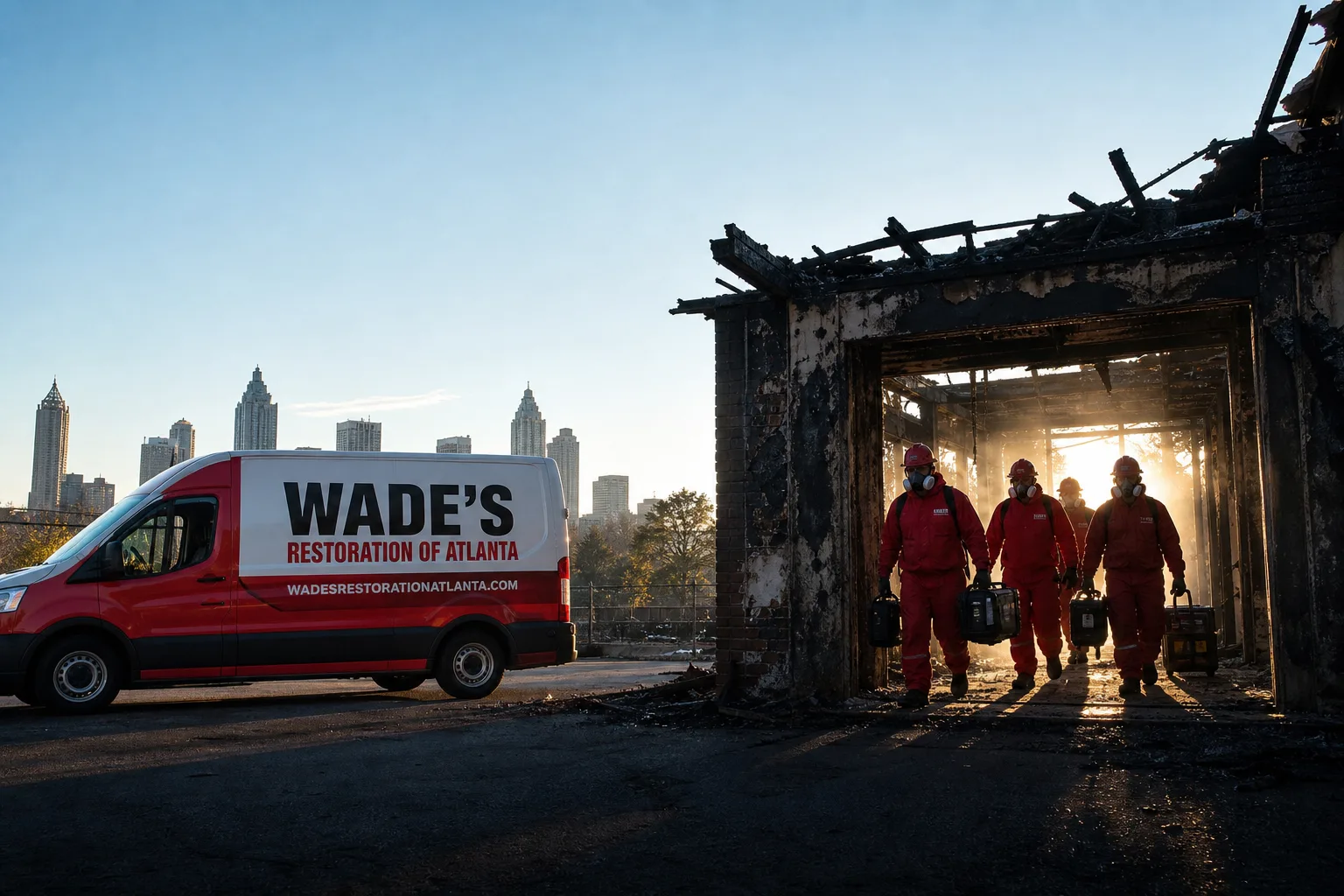
Fast, Reliable Storm & Disaster Restoration Across Austell
Storm damage in Austell hits different than it does in Powder Springs or Mableton. The red clay under most 30106 and 30168 homes holds water against slab edges for weeks after a storm passes, and the 1970s-1990s construction era means polybutylene supply lines are hiding in walls waiting to fail mid-cleanup. If you need Storm & Disaster Restoration in Austell right now, call (888) 690-3757. Wade Ferris answers his own phone, and he can have a crew with extraction equipment heading your way inside the hour.
We know the neighborhoods off Austell-Powder Springs Road, the subdivisions along Maxham, and the older brick ranches near Sweetwater Creek. Austell is home to people who expect a straight answer and work done right the first trip out. That’s what we do.
Why Wade’s Restoration of Atlanta Is Austell’s Preferred Storm & Disaster Restoration Company
Wade Ferris founded this company in 2007 and still answers his own phone. Not a call center, not a voicemail queue. When a storm drops a tree limb through your garage roof off Anderson Mill Road, you talk to the man whose name is on the truck. He’ll tell you what he can do, when he’ll be there, and what it’ll cost before any work starts.
Austell homeowners have been burned by national outfits that quote one number on the phone and another at the door. Wade runs the opposite way. Every water, fire, and mold restoration job comes with the 90-Day Done Right Promise in writing. If it’s not done right, he comes back and makes it right. No fine print, no arguing.
Calls are answered by a live person 24/7. Wade heads out personally on storm calls across Austell, and his background-checked crew follows with Dri-Eaz, Phoenix, and XPOWER equipment that actually moves air and pulls moisture. Not rental-store blowers. Professional grade.
Our Storm & Disaster Restoration Services in Austell
Our Storm & Disaster Restoration team handles the full scope of what Austell storms and Sweetwater Creek flooding throw at a house. Here are the four services Austell homeowners call us for most.
Flood Damage Restoration
Austell’s slab-on-grade brick ranches and split-levels are uniquely vulnerable to lateral water migration. Water doesn’t drain down through a crawlspace; it wicks along the concrete slab, up into wall cavities, and behind baseboards where you can’t see it. Georgia red clay holds moisture against slab edges for weeks, which means structural drying here runs 30-50% longer than in neighboring Mableton or Powder Springs with better-draining soils. That’s why we take daily moisture readings and hand you the full log at the end of the job. Almost nobody in this trade does that. In Austell, it’s not optional.
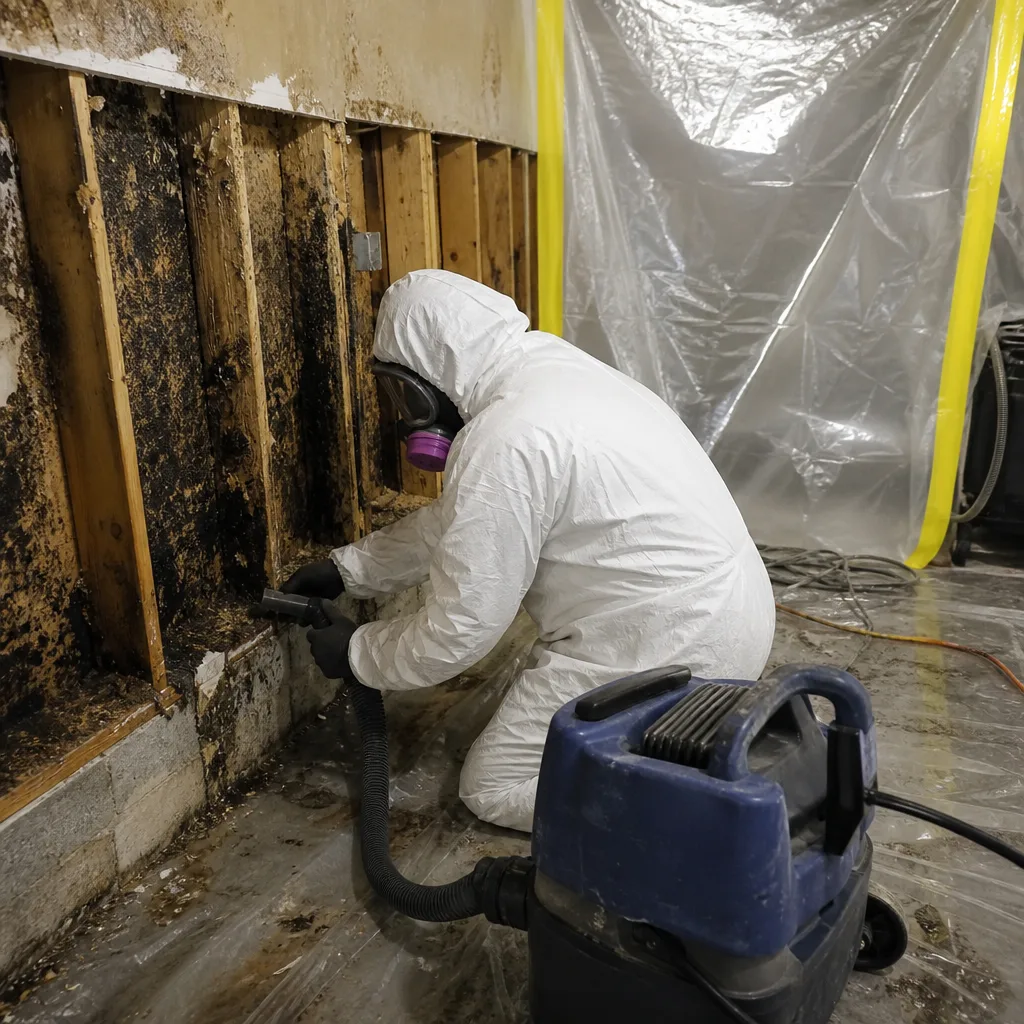
Emergency Board-Up
When wind tears off a section of your roof or a tree comes through a window off Veterans Memorial Highway, the clock starts immediately. Austell’s humid subtropical summers mean secondary mold colonization can begin within 24-48 hours of water intrusion. We board up openings with plywood and fasteners rated for high wind, and we do it before the next band of storms rolls through. One trip, done right.
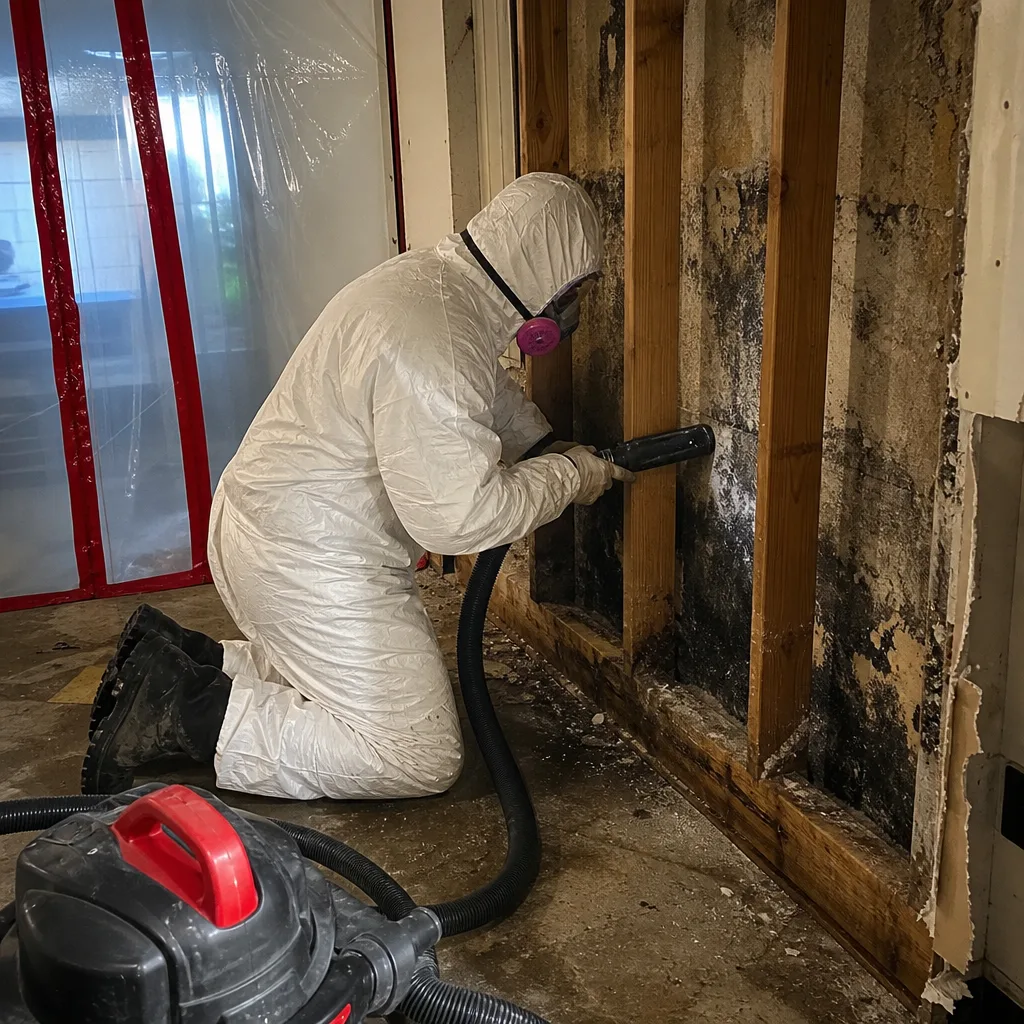
Roof Tarping
Roof tarping after an Austell windstorm matters even when the roof looks intact from the ground. Lifted shingles, cracked flashing, and nail pops don’t show up from street level. But a stalled summer front can push rain through those small breaches for hours. We inspect, tarp, and secure the roof so the interior drying can start. Waiting until the debris removal is scheduled is how a $400 tarp job becomes a $14,000 interior rebuild.
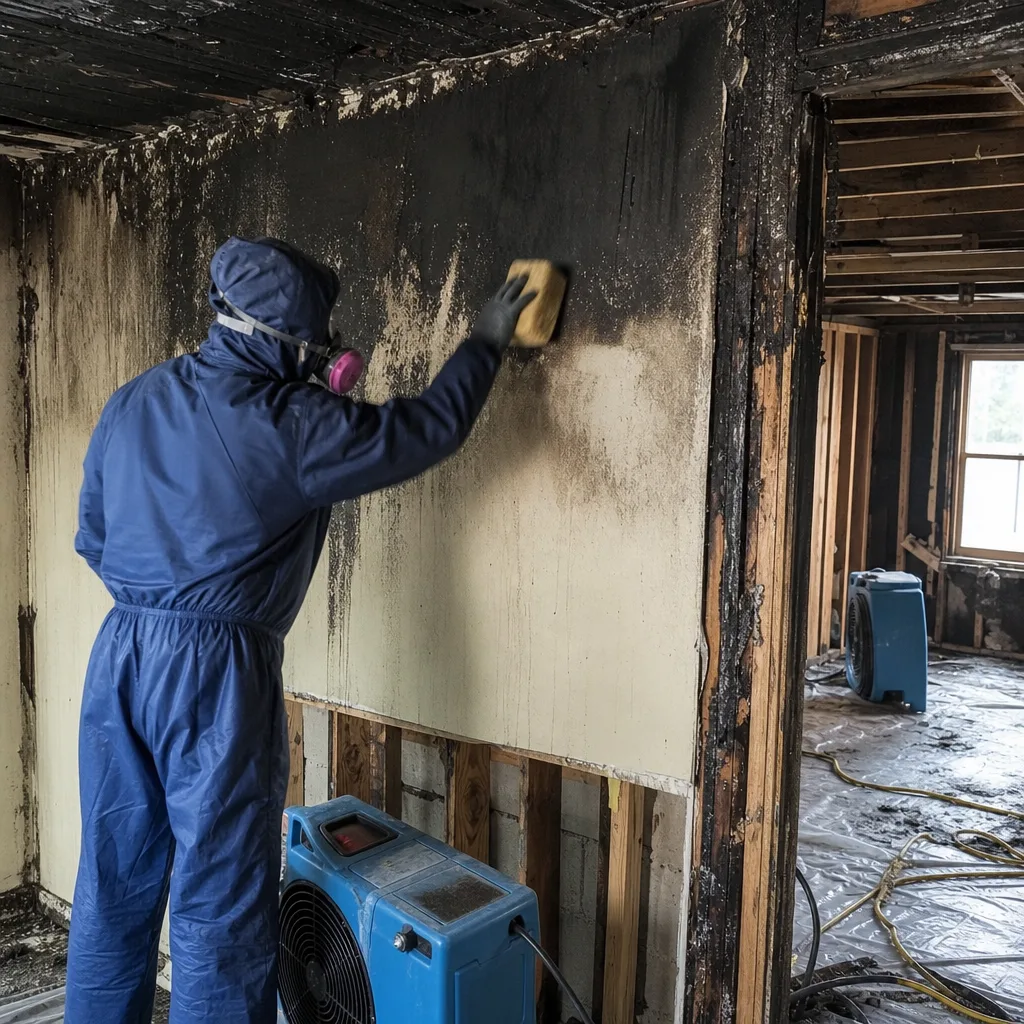
Storm Damage Cleanup
Fallen trees, downed fences, soaked carpet, saturated drywall. We remove debris, catalog it for your insurance adjuster with photos, and start the structural drying that Austell’s soil conditions make unusually time-sensitive. Wade deals with the adjuster directly, so you’re never the one relaying information between two sides. That alone saves Austell homeowners weeks of back-and-forth.
What happens when you call
- 1
A real person answersNo phone trees - you reach a local pro.
- 2
You get an upfront price rangeHonest numbers before anyone is dispatched.
- 3
A background-checked tech heads outLicensed & insured, dispatched right away.
- 4
You approve before work beginsNothing starts until you say go.
Trusted Brands We Service in Austell
The equipment and products we use on Austell homes aren’t what you’ll find at a big-box rental counter. We run Dri-Eaz LGR 7000 dehumidifiers, Phoenix axial air movers, and XPOWER extraction systems because they’re built for the kind of deep structural drying Austell’s slab-on-grade construction demands. For emergency board-up and roof tarping, we stock fasteners, moisture barriers, and tarp systems sized for the roof pitches common in 30106 and 30168. When your adjuster asks what equipment was used, the brand names on the log mean something.
Common Storm & Disaster Restoration Problems We See in Austell Homes
- Slab-on-grade wicking that gets misdiagnosed. A contractor who treats your Austell ranch like a crawlspace house will set air movers and call it done. But water migrates laterally along the concrete, and six weeks later the baseboards swell and mold blooms behind the drywall. We’ve pulled 184 linear feet of saturated baseboard from a split-level off Maxham Road in 30168 after Sweetwater Creek overtopped its banks. The slab had wicked moisture 22 inches up the wall cavities.
- Polybutylene supply lines failing during or right after storm restoration. This is the Austell-specific problem newer suburbs to the north rarely see. Homes built between 1978 and 1995 out here carry original polybutylene plumbing that degrades silently. Contractors who fix the flood damage but leave the poly pipe in the wall are setting you up for a second water loss weeks later. We check for it on every storm job in Austell.
- Roof damage hidden by intact shingles. After a windstorm, the roof can look fine from the driveway. But lifted shingles and cracked flashing leak slowly through every subsequent rain. In Austell’s humid air, that slow leak turns into mold inside 48 hours. A proper tarp inspection is cheap insurance.
- Slow structural drying from red clay soil. Georgia red clay drains poorly. It holds moisture against slab edges and foundation walls long after the storm passes. Drying times extend 30-50% longer than in nearby cities with better-draining soils, which means equipment has to run longer, moisture readings need to be taken daily, and hidden mold behind baseboards becomes a real risk. A one-size-fits-all drying plan from a national chain won’t account for that.
Pricing for Storm & Disaster Restoration in Austell, GA
Here’s what Austell homeowners can expect to pay, straight up. Emergency board-up after a wind or impact event runs $450-$900 depending on the number of openings and the plywood grade required. Roof tarping typically lands between $600 and $1,400 for a standard split-level or ranch roof, more for steep pitches or multiple ridges. Flood damage restoration with full structural drying runs $3,200-$8,500 for a typical slab-on-grade Austell home where water has migrated into wall cavities. Storm damage cleanup, including debris removal and carpet extraction, adds $1,200-$3,800 depending on square footage.
What changes the number is the polybutylene question. If we find poly pipe weeping behind wet drywall, the restoration scope grows because a re-pipe conversation has to happen before the drywall goes back up. Free estimates, no trip charge inside the county, and a free second opinion on any written estimate you already have. Call (888) 690-3757.
We Also Serve Cities Near Austell
Our storm and disaster restoration coverage extends beyond Austell into Mableton, Lithia Springs, Smyrna, and Fair Oaks. If your neighborhood sits in one of those communities, we respond with the same urgency and the same 90-Day Done Right Promise. One call handles the whole area.
Serving Austell, GA - Our Local Coverage Area
We’re based in the Austell area and know this community well. Use the map below to see our service coverage - if you’re nearby, we can almost certainly help.
FAQs - Storm & Disaster Restoration in Austell
Structural drying in Austell routinely runs 30-50% longer than in Kennesaw or Acworth because of the soil under your house. Austell’s homes sit on Georgia red clay that drains poorly and holds moisture against slab edges and foundation walls for weeks after a storm. Slab-on-grade construction compounds the problem: water migrates laterally along the concrete into wall cavities instead of draining downward into a crawlspace. That hidden wicking means more drying time, more equipment runtime, and more moisture readings. Call (888) 690-3757 and we’ll explain what that means for your specific house.
You won’t know until a wall is opened, which is why we open the wall on every Austell storm job where water has wicked into the cavities. Homes built between 1978 and 1995 in Austell almost certainly have original polybutylene supply lines unless a previous owner already replaced them. The pipe degrades from the inside out, with no visible warning before it ruptures. When we pull back wet drywall and find poly stub-outs, we show you exactly what we’re seeing and walk through the re-pipe conversation before any reconstruction starts. It’s the only honest way to handle it.
Get extraction running and drywall pulled back within 24 hours, because Austell’s humid summer air kicks off mold colonization in that window. Don’t wait on your adjuster to call back. Wade will talk to the adjuster directly, but the mitigation has to start now. Call (888) 690-3757 and we’ll get an extraction crew moving while you’re still on the phone.
Austell windstorms lift shingles, crack flashing, and pop nails, and none of that shows from street level. The roof looks fine, but a stalled summer front pushes rain through those small breaches for hours. In Austell’s humidity, that moisture starts mold colonization inside wall cavities within 24-48 hours. Tarping costs a few hundred dollars. The interior rebuild it prevents runs into five figures. We tarp before the debris removal is even scheduled.
In Austell, a company that finds polybutylene during storm restoration should at minimum walk you through what re-piping involves and help coordinate the work. We don’t hide behind a wall repair and leave the plumbing problem for someone else to catch weeks later. Wade will show you what we found, explain the re-pipe scope, and bring in a licensed plumber who works with our restoration timeline so the drywall doesn’t go back up over failing pipe. One phone call to (888) 690-3757 starts the whole conversation.
Written by Wade Ferris, Owner at Wade’s Restoration of Atlanta, serving Austell since 2007.