
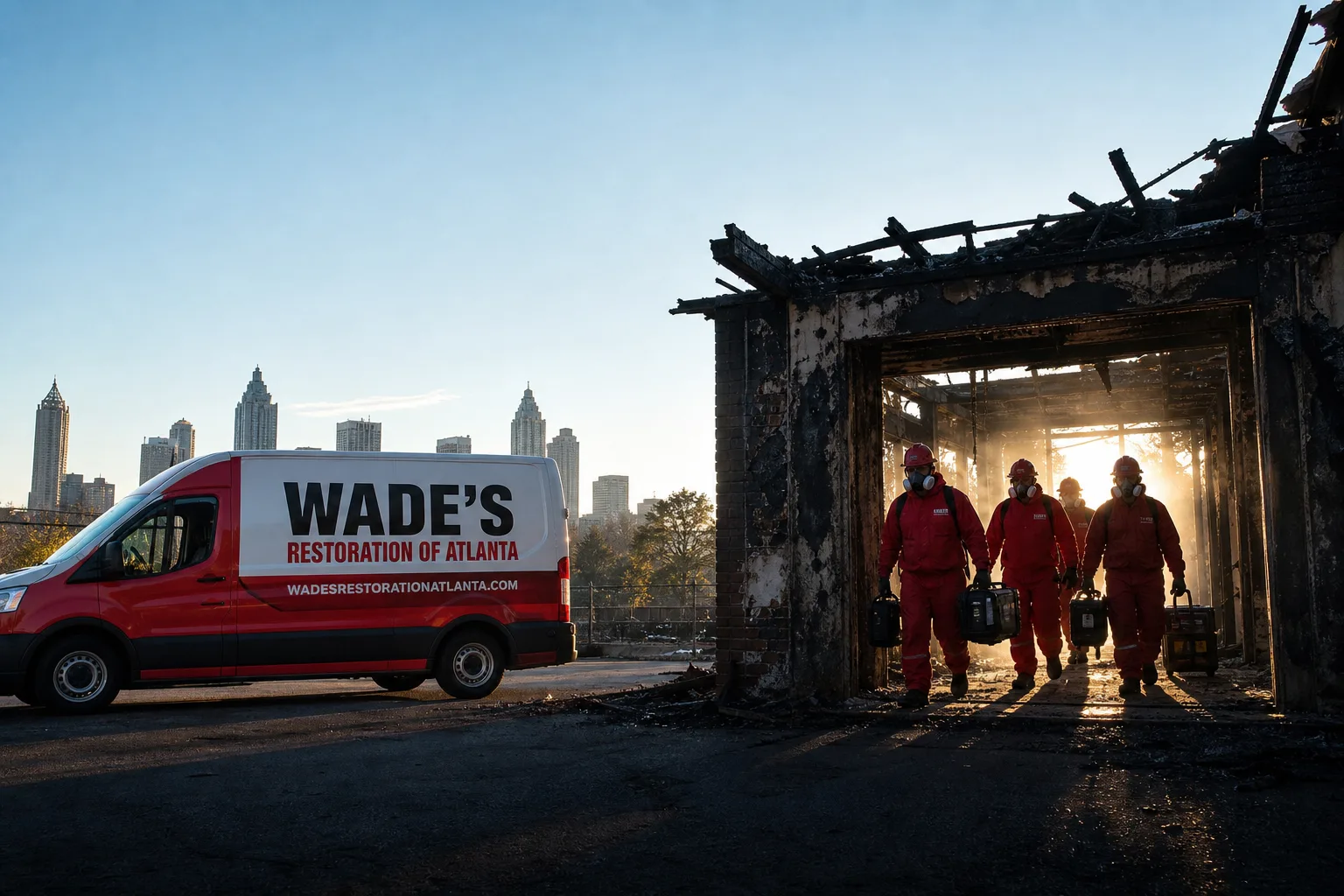
Fast, Reliable Storm & Disaster Restoration Across Duluth
Storm damage in Duluth moves fast, and so do we. When a hailstorm punches through a roof off Peachtree Industrial Boulevard or straight-line winds tear siding from a 1990s subdivision home near GA-120, the clock starts on water intrusion before the rain even stops. Wade’s Restoration of Atlanta has crews stationed to reach Duluth neighborhoods including 30096 and 30097 quickly, typically within an hour of your call. Call (888) 690-3757 and Wade Ferris himself will answer. He’s been doing this since 2007, and he knows exactly what Duluth’s older wood-frame houses do when water gets inside them.
Why Wade’s Restoration of Atlanta Is Duluth’s Preferred Storm & Disaster Restoration Company
Ask anyone on your street. Wade’s name gets passed around Duluth subdivisions the way it did twenty years ago, neighbor to neighbor at the mailbox or in the pickup line at Duluth High School. Homeowners here have dealt with enough national outfits that quote one number on the phone and a different one at the front door. Wade doesn’t work that way. He publishes his name, his address, and his license number. You’ll see him at the hardware store on Saturday. That’s the accountability mechanism that actually works.
Our crews have pulled water out of slab-on-grade ranches in Berkeley Hills, opened walls in Sugarloaf Country Club homes after roof breaches, and board-up windows on Buford Highway storefronts after tornado warnings. We know which Duluth homes hide moisture under engineered wood subfloors. We know the EIFS-clad houses that look fine from the street but have been rotting behind the stucco for a decade. That’s not knowledge you get from a training manual. It comes from years of working this exact housing stock.
Wade’s team is IICRC-certified and RIA-affiliated, with background-checked, uniformed technicians. Every storm job is covered by the 90-Day Done Right Promise, in writing. If it’s not done right, Wade makes it right. No fine print, no runaround.
Our Storm & Disaster Restoration Services in Duluth
Here’s what we actually do after a Duluth storm. This is the work itself, not a list of vague promises. Our Storm & Disaster Restoration team handles every part of getting your home dry, secure, and back to normal.
Storm Damage Cleanup
Downed limbs, shredded shingles, siding torn loose, fence sections in the neighbor’s yard. Gwinnett County’s spring and summer thunderstorm corridor produces repeated hail and straight-line wind events that leave Duluth homes looking like they’ve been through a fight. We clear the debris, document everything with photos for your adjuster, and get the damage assessed the same day. The goal is stopping secondary damage before it starts.
Flood Damage Restoration
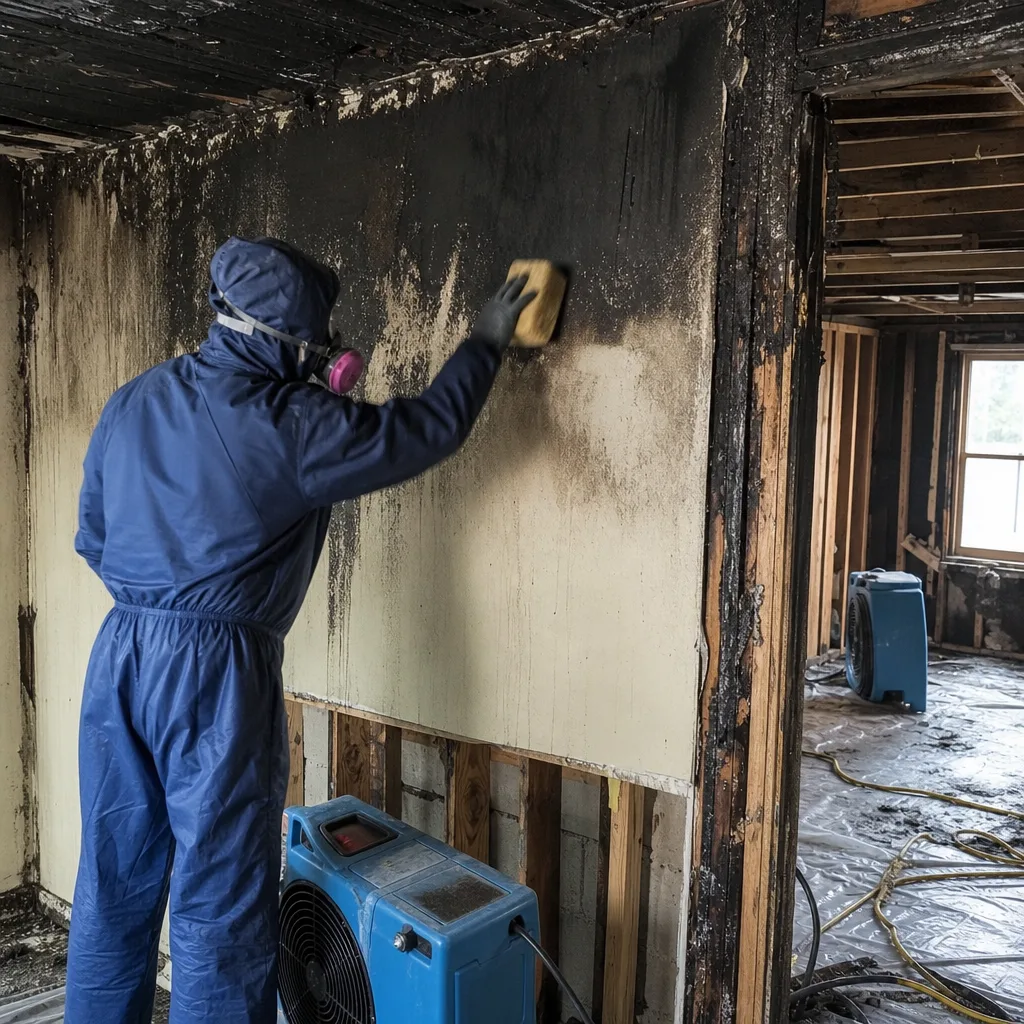
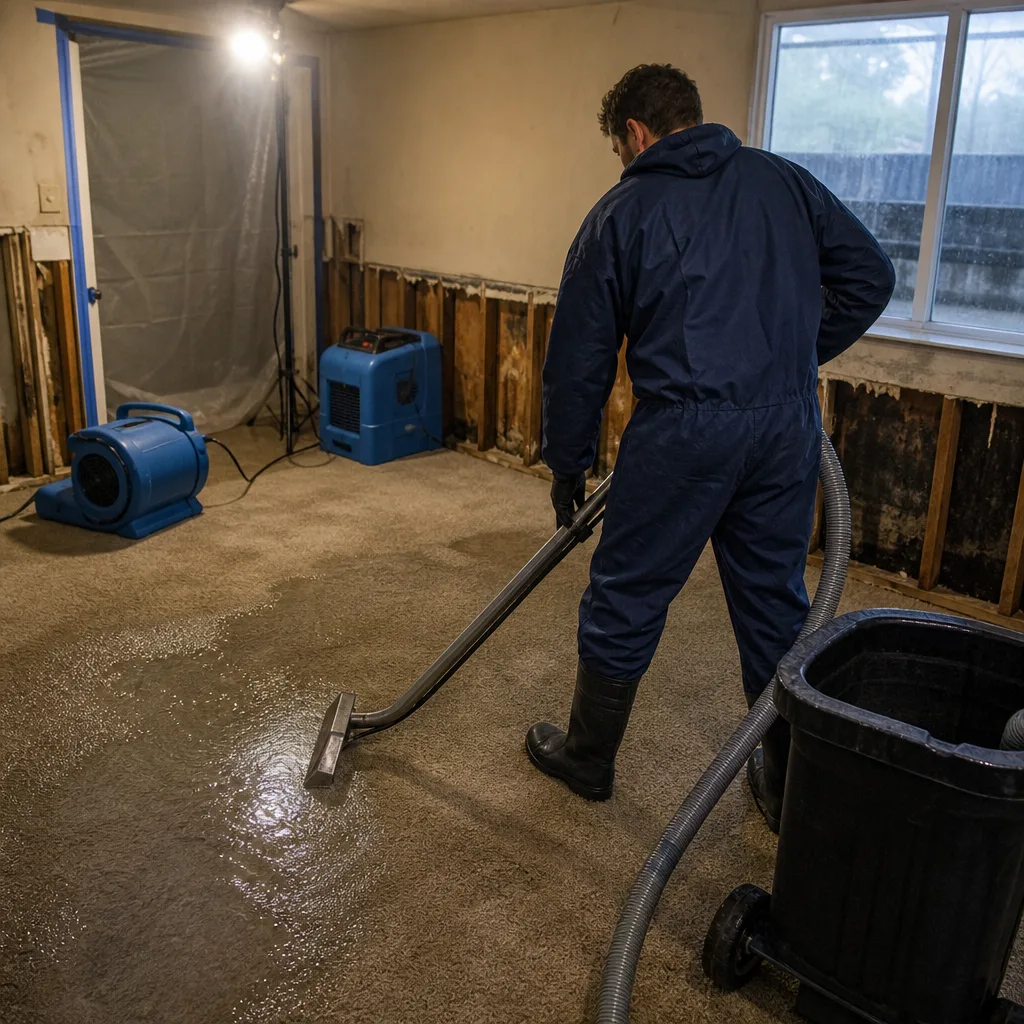
Flood water in Duluth is a different animal than a clean water pipe break. It carries whatever it crossed, and in 80% summer humidity, mold colonies can establish within 48 hours. We extract standing water with truck-mounted equipment, pull baseboards to check for wicking, and run Dri-Eaz dehumidifiers and XPOWER air movers until moisture readings tell us the structure is actually dry. Wade takes moisture readings every single day and hands you the full log at the end. Almost nobody in this trade does that.
Emergency Board-Up
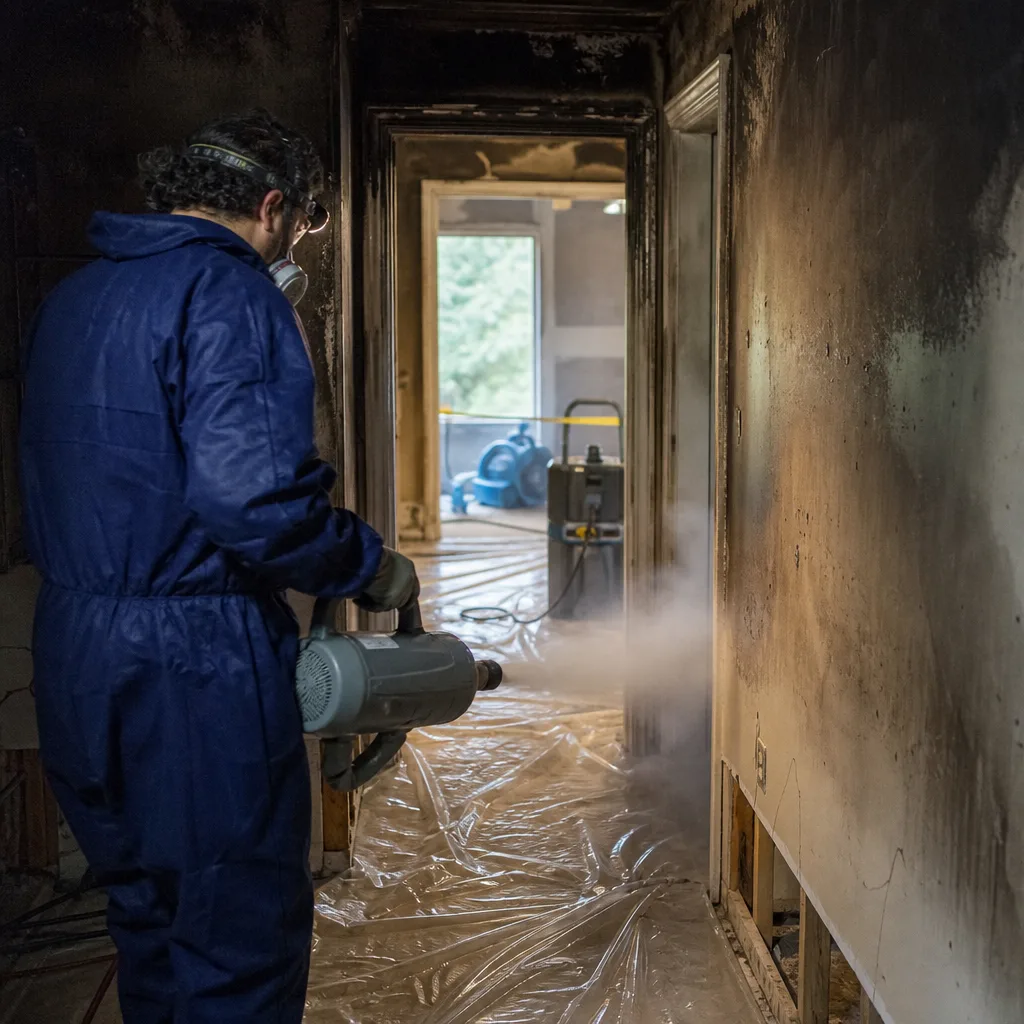
After a tree limb goes through a Duluth dining room window or wind rips a patio door out of its frame, your house is open to weather, animals, and anyone walking by. We board up the opening with plywood and proper fasteners, tarp the roof breach, and secure every point of entry. This isn’t a temporary patch job. It’s a real barrier that keeps further damage from accumulating while your insurance claim moves forward.
Roof Tarping
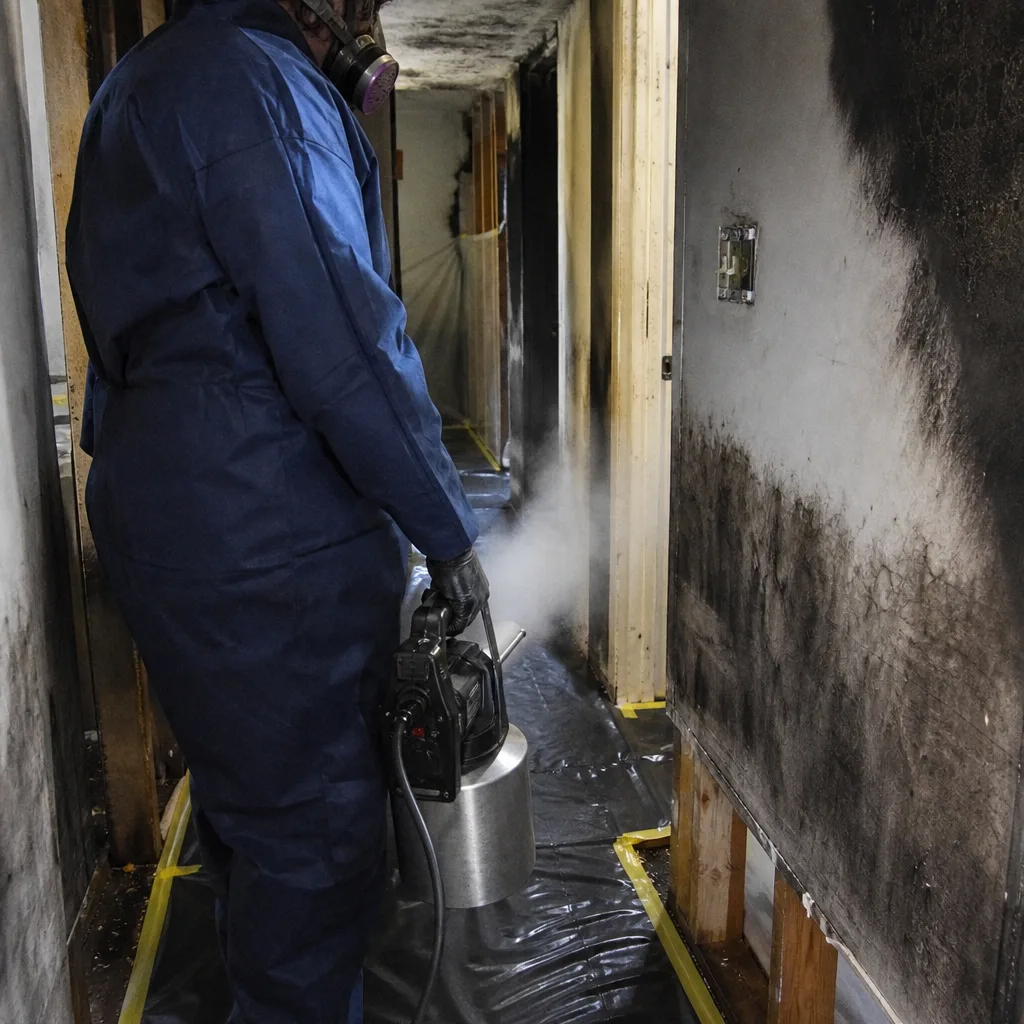
Hailstorms in Duluth routinely compromise shingles and decking. A tarp installed within hours prevents rain from turning a roof repair into a ceiling replacement and a mold remediation project. We use heavy-duty tarps and nail-and-batten installation that holds through Georgia wind, not the flimsy plastic sheeting some outfits throw on and call it done. Your adjuster will get clear photos of the damage before and after tarping, because Wade deals with the insurance company directly. You’re never the one stuck relaying information between two sides.
What happens when you call
- 1
A real person answersNo phone trees - you reach a local pro.
- 2
You get an upfront price rangeHonest numbers before anyone is dispatched.
- 3
A background-checked tech heads outLicensed & insured, dispatched right away.
- 4
You approve before work beginsNothing starts until you say go.
Trusted Brands We Service in Duluth
We don’t bring consumer-grade equipment to a Duluth flood. Wade’s crew runs professional-grade gear from Dri-Eaz, Phoenix, and B-Air because the engineered wood subfloors and OSB sheathing in 1990s Duluth construction hold water far longer than solid lumber from older eras. Cheap dehumidifiers leave moisture behind, and moisture left behind in slab-on-grade construction means mold you won’t see until it’s a full remediation project. We also stock the injection drying equipment and moisture meters needed for this specific housing stock, so we’re not waiting on a supplier while your drywall wicks water up from the bottom plate.
Common Storm & Disaster Restoration Problems We See in Duluth Homes
- Polybutylene pipe failures behind slab walls. Duluth’s 1985-2000 Gwinnett County boom left thousands of homes with Quest supply lines now 30-40 years old. When they fail, water saturates the subfloor and wicks into drywall bottom plates for weeks before you notice anything. By then, the remediation scope has tripled.
- Hidden moisture behind 1990s EIFS cladding. That synthetic stucco looks intact after a wind event, but cracked flashing channels water into wall assemblies for years. A “minor” storm repair becomes a full mold remediation the moment we open the wall and see what’s behind it.
- Severe hailstorm roof breaches. Duluth sits in an active severe-thunderstorm corridor. Hail compromises shingles quietly, and the next rain turns a small leak into a ceiling collapse. Delayed extraction in subtropical humidity means Category 3 mold within 48-72 hours.
- Slab-on-grade moisture traps. No crawl space means no way to see what’s happening under the flooring. Water from a storm breach or pipe burst sits trapped beneath engineered wood products, expanding the true damage zone far beyond what the surface shows.
Pricing for Storm & Disaster Restoration in Duluth, GA
You deserve real numbers, not a vague “it depends.” Emergency board-up for a typical Duluth single-family home runs $350-$700 depending on the number of openings. Roof tarping starts around $400-$800 for a standard breach. Storm debris removal and cleanup typically lands between $500-$1,200. Flood water extraction for a single room starts around $1,200-$2,500, while a whole-home event affecting multiple rooms and requiring drying equipment for several days commonly runs $4,000-$12,000 in this market. Mold remediation triggered by delayed storm response adds $2,500-$6,000 depending on containment scope. Every job gets a written scope agreed before work starts, so there’s no number that changes at the door. Call (888) 690-3757 for a free estimate, and ask about the Senior & Veteran 10% discount if it applies.
We Also Serve Cities Near Duluth
Wade’s Restoration of Atlanta serves Storm & Disaster Restoration in Duluth and the surrounding Gwinnett County communities we know as well as our own block. If you’re in Norcross, Lawrenceville, Suwanee, or Peachtree Corners and a storm just rearranged your roofline, the same crew and the same 24/7 phone number apply. No trip charge inside the county. Call (888) 690-3757 and Wade heads out.
Serving Duluth, GA - Our Local Coverage Area
We’re based in the Duluth area and know this community well. Use the map below to see our service coverage - if you’re nearby, we can almost certainly help.
FAQs - Storm & Disaster Restoration in Duluth
Polybutylene supply lines from the 1985-2000 construction era fail catastrophically without warning, often behind slab-on-grade walls where water is completely hidden from view. The pipe bursts under pressure and saturates the subfloor and bottom plates within hours. In Duluth’s 80% summer humidity, you have a 48-72 hour window before mold colonies establish. Older neighborhoods with copper or PEX plumbing don’t face the same volume of hidden, pressurized water loss. That’s why our crews in Duluth treat every poly-pipe storm-related leak as a time-critical extraction, not a routine drying job. If you suspect a supply line has failed after a storm event, call (888) 690-3757 immediately.
The difference is what’s underneath the shingles. Duluth homes built between roughly 1985 and 2005 used OSB sheathing and engineered wood products that absorb water differently than the solid lumber common in pre-1980 Atlanta housing. OSB swells, loses structural integrity faster, and holds moisture longer, which means the drying protocol has to be more aggressive from day one. Older solid-lumber roof decks can often dry with standard equipment; OSB requires injection drying and longer dehumidifier runtimes. Wade’s team adjusts the equipment plan based on your specific roof assembly, not a generic template.
Check for discoloration, softness, or cupping at the edges of flooring near the failure point. With slab-on-grade construction, water from a burst pipe travels laterally under the flooring and wicks up into drywall bottom plates and baseboards. The surface can feel dry while the subfloor and structural framing underneath remain saturated. Don’t trust surface readings alone. Wade takes moisture readings daily and documents every number, so you know exactly what’s drying and what isn’t. If you’ve had a recent pipe burst and the flooring looks fine but you haven’t checked moisture levels underneath, call (888) 690-3757 for an assessment.
Because 1990s-era EIFS, or synthetic stucco, fails from the inside out. Wind-driven rain finds cracks and improperly flashed seams, channels moisture into the wall assembly, and traps it against OSB sheathing. The exterior face shows nothing. By the time stains or crumbling appear, the structural damage and mold growth behind the cladding are years along. After any wind event in Duluth subdivisions with this cladding, we probe and moisture-test the wall assemblies before we declare the home dry. Skipping that step is how a $1,500 storm repair becomes a $15,000 mold remediation six months later.
Mold colonies can establish within 48 hours, and in Duluth’s peak summer conditions with relative humidity above 80%, we’ve seen visible growth start in 72 hours. That’s the window between a water loss and a Category 3 mold remediation project. The faster extraction starts, the smaller the project stays. Wade’s crews run Dri-Eaz and Phoenix equipment at full capacity from the moment they arrive, because in this climate you don’t get a second chance to prevent mold. If your home took on water and it’s been more than a day, call (888) 690-3757 and Wade will tell you straight what you’re facing.
One thing separates Wade’s Restoration from every other company answering storm calls in Duluth: Wade has been going into these specific houses since 2007. He’s opened enough walls in Berkeley Hills and Sugarloaf to know what’s behind them before the first cut. He’s read moisture logs in 30096, 30095, and 30097 homes where other companies said they were dry and they weren’t. He knows which subdivisions have polybutylene, which have EIFS, and which have slab-on-grade floors hiding water for weeks. That’s not marketing. That’s what happens when the owner answers the phone, shows up himself, and lives here too. To wade is what you do through a flooded basement at two in the morning, and it happens to be his name.
If a storm just hit your Duluth home, don’t wait to see what dries on its own. Call (888) 690-3757 now. Wade answers. He’ll tell you what he’s seeing, what it’ll take, and whether you even need us yet. No charge for that. It’s just what a neighbor does.
Written by Wade Ferris, Owner at Wade’s Restoration of Atlanta, serving Duluth and Gwinnett County.