
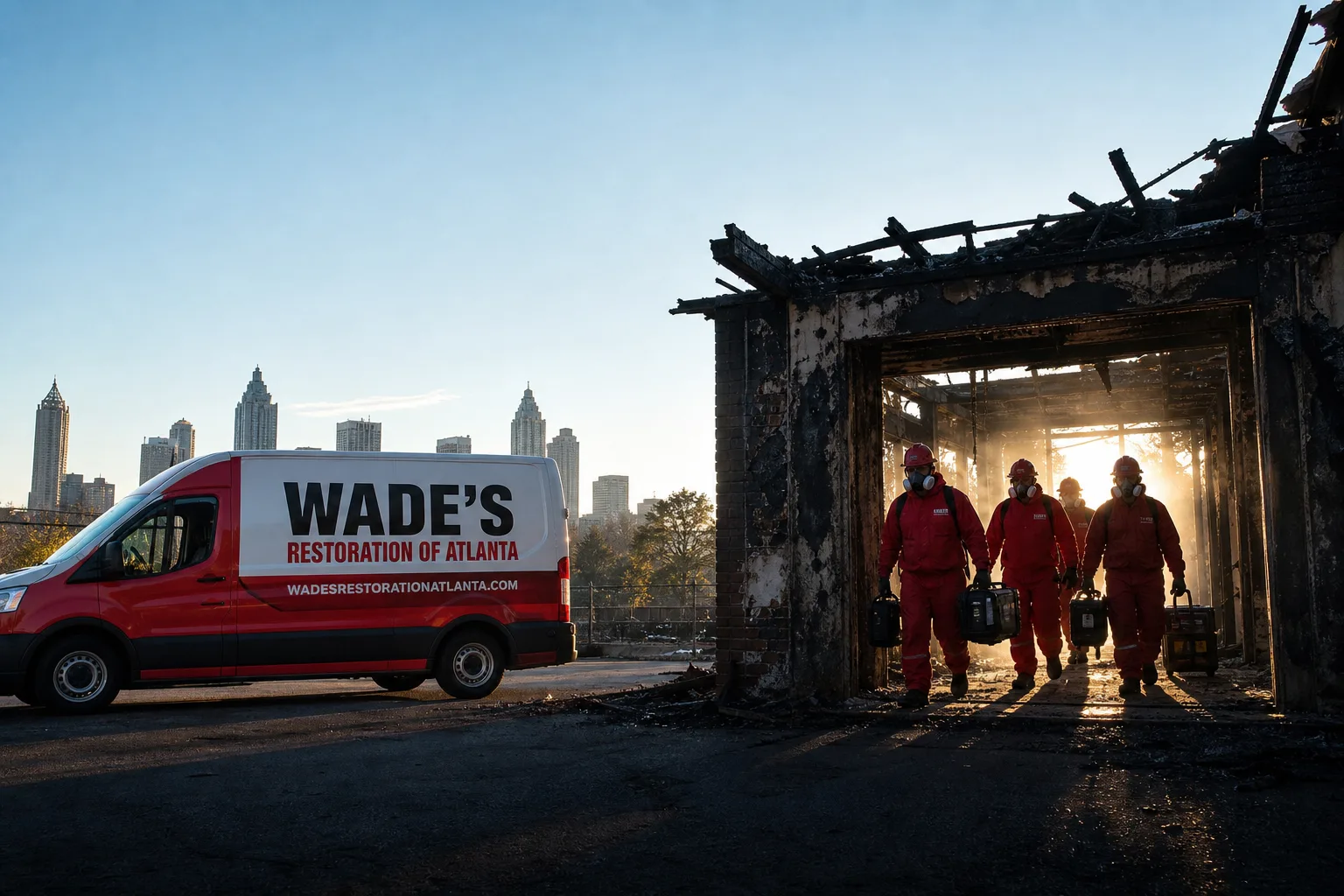
Fast, Reliable Water Damage Restoration Across College Park
Water damage in College Park moves fast, especially during summer storms when the airport’s concrete sends runoff surging into crawl spaces along Main Street and the neighborhoods off Virginia Avenue. Wade’s Restoration of Atlanta answers the phone around the clock, and owner Wade Ferris heads out to College Park himself, usually with extraction equipment running inside the hour. If you’ve got water where it shouldn’t be, call (888) 690-3757 right now. We’re based nearby and we know College Park’s housing stock, from the 1920s bungalows near Woodward Academy to the mid-century ranches up by the airport’s cargo side.
The bigger question most homeowners in 30337 face isn’t whether to call someone. It’s whether the crew that shows up understands why water behaves the way it does here. In College Park, it often doesn’t follow the textbook. That’s where local experience stops being a talking point and becomes the difference between a dry house and a mold problem you don’t find for months.
Why Wade’s Restoration of Atlanta Is College Park’s Preferred Water Damage Restoration Company
Wade’s Restoration has been serving metro Atlanta since 2007, and we’ve worked enough jobs in College Park to know the streets, the building quirks, and the restoration challenges that come with living next to the world’s busiest airport. Homeowners here tend to be skeptical of big national chains. They should be. Wade publishes his name, his license number, and his address. You’ll see him again at the coffee shop on Main Street. That accountability matters when someone’s about to cut into your walls.
We don’t hide behind a call center. When you dial (888) 690-3757 at 2 a.m., a live person answers. Often that’s Wade himself. He’ll ask about the water’s path, what the floor looks like, whether the ceiling is sagging. Then he gets in the truck. No ticket system, no “someone will call you back.” Response time to College Park from our metro office is consistently under an hour for true emergencies.
Our Water Damage Restoration in College Park work comes with a 90-Day Done Right Promise in writing. If it’s not right, we make it right. That’s not a slogan. It’s on every contract, signed, and Wade’s phone number is on the same page.
Our Water Damage Restoration Services in College Park
Emergency Water Extraction
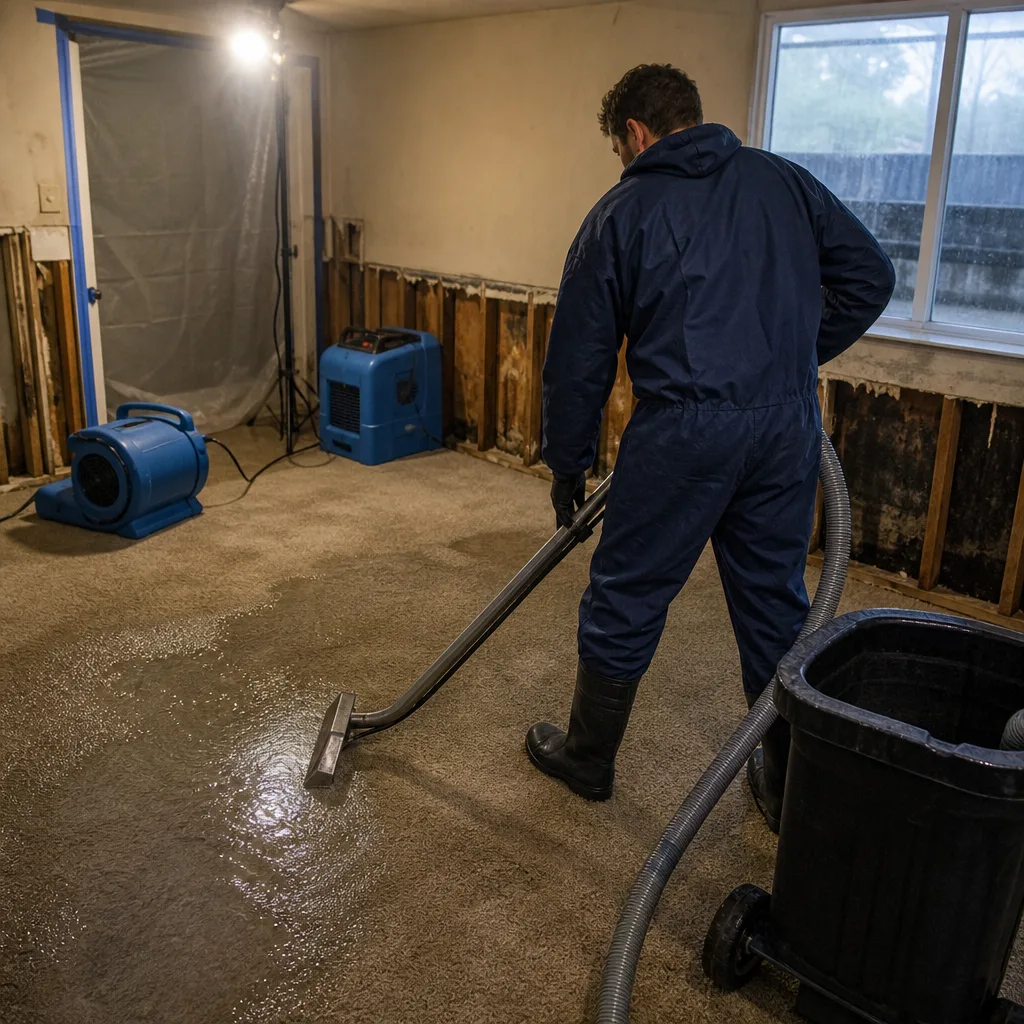
Water keeps moving after the source stops. In College Park’s older homes, that means it’s traveling behind original plaster walls and soaking into hardwood floors laid before 1930. Our crews arrive with Dri-Eaz extraction units and truck-mounted equipment sized for serious volume, not the rental units you can buy at a hardware store. We pull the standing water fast, then start mapping where the moisture went. In a Victorian on Main Street, that mapping matters more than most people realize.
We catalog moisture levels room by room and hand you the log. Every day. No other restoration company we know of in College Park does that consistently.
Structural Drying & Dehumidification
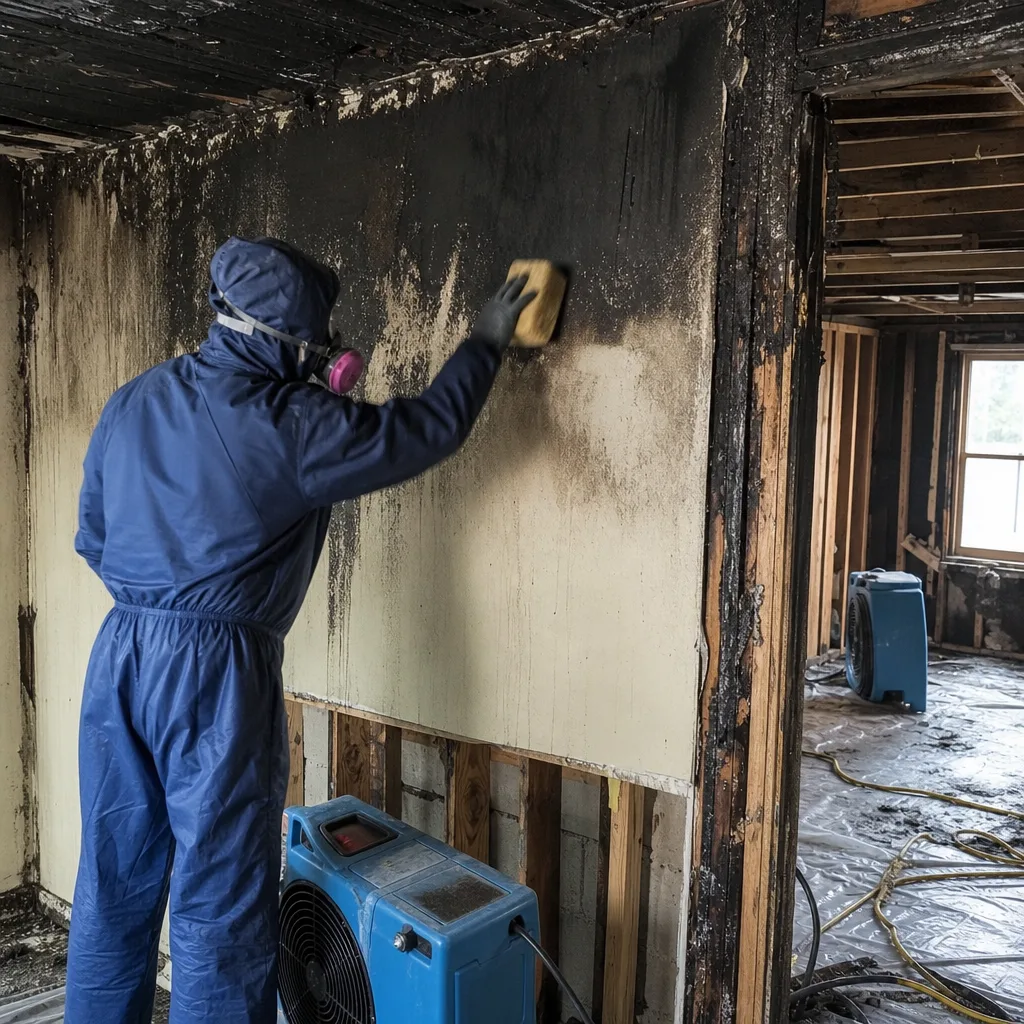
College Park’s humid subtropical air means your house won’t dry itself after extraction. We set Phoenix and Dri-Eaz dehumidifiers and air movers configured to the specific structure: plaster walls dry differently than drywall, balloon-framed houses need different airflow than slab ranches. The goal is getting every framing member, subfloor, and wall cavity below the threshold where mold can colonize. In College Park, that window is 24 to 48 hours, not the 72 hours you’ll hear quoted in drier climates.
Wade checks the moisture readings daily, adjusts equipment, and keeps the log. At the end of the job, you get the full record. If your adjuster questions whether drying was complete, that log answers them.
Flood Cleanup
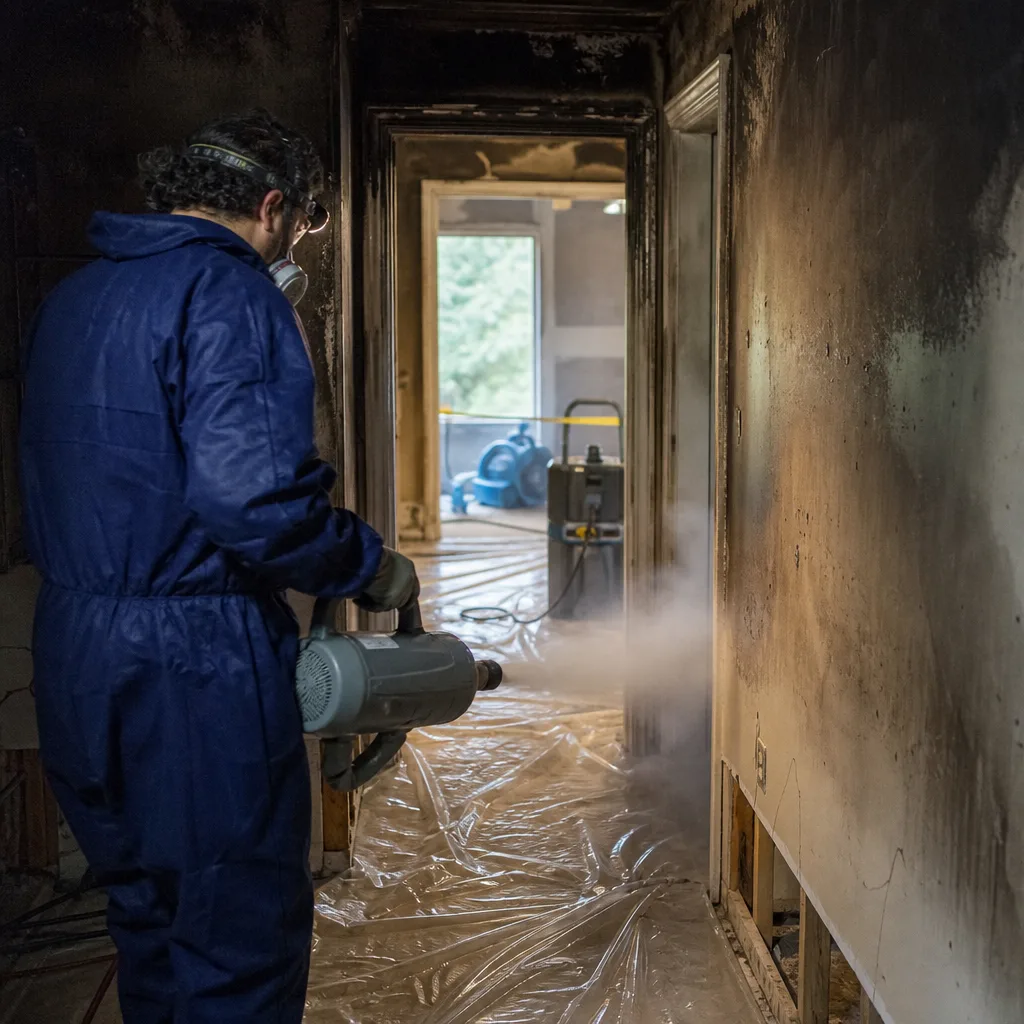
Airport stormwater is a real problem in low-lying parts of College Park. The runways, taxiways, parking decks, and cargo aprons at Hartsfield-Jackson create thousands of acres of impervious surface. During Atlanta’s intense summer convective storms, that water has to go somewhere, and in neighborhoods near the airport’s drainage basin, “somewhere” is often a crawl space off Camp Creek Parkway or a basement on Rugby Avenue. Sump pumps can’t keep up with the volume.
Floodwater isn’t clean water. It carries jet fuel residue, brake dust from airport roadways, lawn chemicals, and whatever else it picked up crossing commercial property. We treat it accordingly, with full extraction, antimicrobial application where warranted, and drying to documented standards. Wade deals directly with your insurance adjuster, sending photos and moisture data as the job progresses, so you’re not relaying technical information between two people who’ve never met.
Burst Pipe Restoration
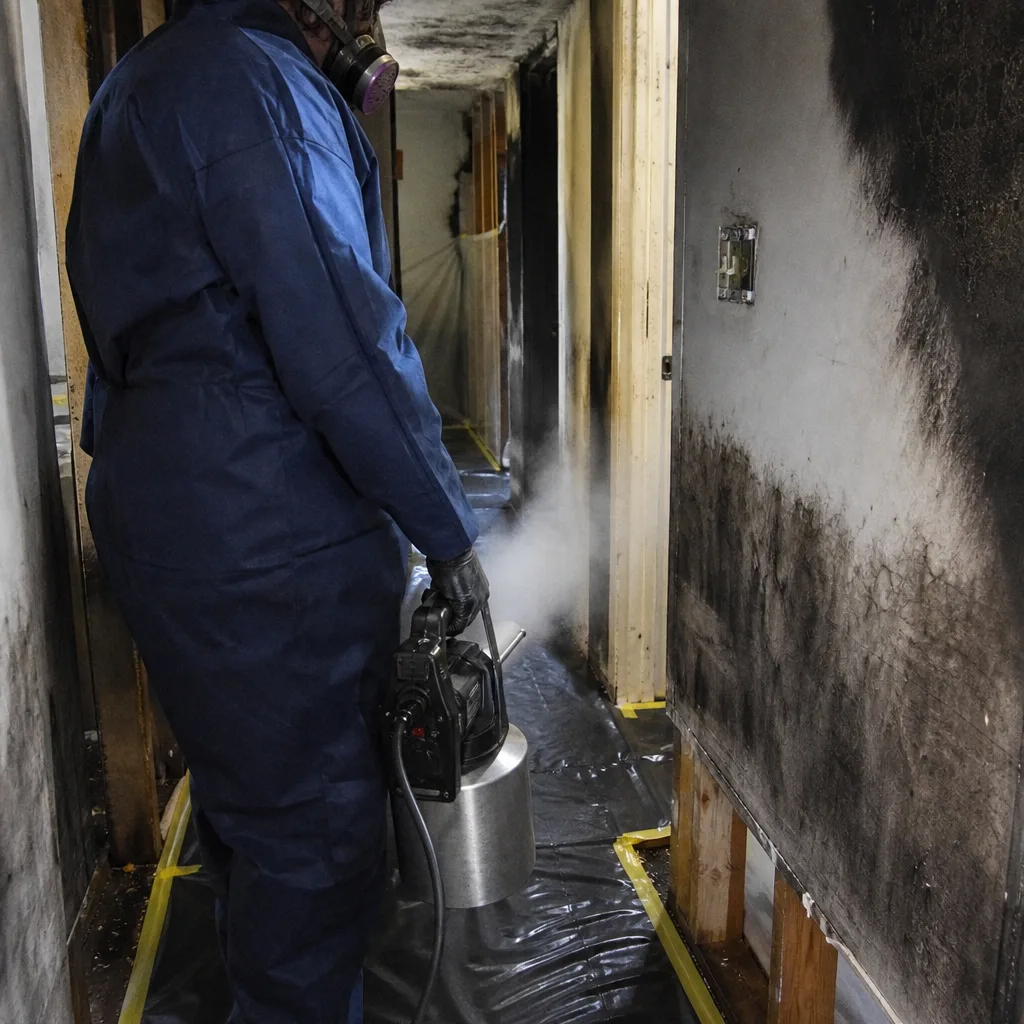
College Park’s older housing stock includes plenty of galvanized supply lines installed before 1960. These corrode from the inside, and when Atlanta gets a hard freeze like the January 2014 or January 2022 events, those pipes split. We’ve cut open walls in College Park’s historic district and found splits running four feet down a single galvanized run. The water follows gravity and framing, saturating plaster, lath, insulation, and flooring before anyone spots it.
We locate the source and stop it first. Then extraction, containment, structural drying, and repair. In homes with original plaster, we’re careful to dry in place where possible rather than demoing walls that can’t be rebuilt to match. That’s the kind of judgment you only get from crews who’ve worked these houses before.
One January, our crew responded to a burst pipe in a Victorian-era home on Main Street in the College Park Historic District. Galvanized supply lines had split behind original plaster walls, and our Dri-Eaz extraction and structural drying equipment had to work around multiple layers of lead paint requiring containment. Within 48 hours the area was stabilized and dried, with no mold colonization despite the warm, humid air moving in after the freeze. The homeowner wasn’t just dry. She had a moisture log proving every step.
What happens when you call
- 1
A real person answersNo phone trees - you reach a local pro.
- 2
You get an upfront price rangeHonest numbers before anyone is dispatched.
- 3
A background-checked tech heads outLicensed & insured, dispatched right away.
- 4
You approve before work beginsNothing starts until you say go.
Trusted Brands We Service in College Park
We run professional-grade equipment from Dri-Eaz, Phoenix, and XPOWER because it holds up to the volume of work College Park generates. A single flooded commercial space near the airport requires industrial dehumidification capacity, not a residential-grade machine. We stock parts and filters for the equipment we run, so we’re not waiting on a distributor when a unit needs service mid-job. If you’ve had a restoration company in before and you’re not sure if their drying was complete, ask us for a second opinion on any written estimate. That’s free. No charge for that.
Common Water Damage Restoration Problems We See in College Park Homes
- Hidden mold in FAA noise-mitigated homes: Properties in 30337 that received Part 150 noise-abatement window and door sealing grants have unusually tight building envelopes. Good for airplane noise. Terrible for trapped moisture. We regularly find advanced mold colonies behind walls and in attics where a small leak sat for weeks, invisible from the living space. A sealed house can’t breathe, and the moisture finds the coolest, darkest cavity and stays there.
- Stormwater flooding from airport impervious surface: The airport complex pushes runoff into surrounding low-lying crawl spaces faster than any sump pump can discharge it. We’ve seen crawl spaces with two feet of standing water after a 45-minute storm, in houses that had never flooded before the airport’s latest expansion.
- Original plaster walls and lead paint slowing restoration: In the College Park Historic District, homes from 1890 to 1930 have plaster over wood lath, not drywall. Plaster holds moisture longer and drys unevenly. Lead paint, common in these houses, triggers strict containment protocols during any wall opening. A restoration crew that doesn’t know this can spread lead dust through a house while “fixing” water damage.
- Galvanized pipe failures in older housing stock: Pre-1960 galvanized supply lines corrode internally until a freeze or pressure surge splits them. The leak often starts inside a wall cavity and runs for days before anyone sees water. By then, the damage is structural, not cosmetic.
Pricing for Water Damage Restoration in College Park, GA
Here’s what water damage restoration actually costs in College Park, because hiding numbers doesn’t help anyone who’s standing in a flooded kitchen at 2 a.m.
- Emergency water extraction: $400 to $1,200 for a typical single-room event, depending on water volume and whether contents need moving.
- Structural drying & dehumidification: $800 to $2,500 for 3 to 5 days of equipment and daily moisture monitoring, sized to the affected square footage.
- Flood cleanup (Category 3 water): $2,500 to $7,000 for a crawl space or basement, including antimicrobial treatment and debris removal. Airport runoff contamination raises the scope.
- Burst pipe restoration: $2,000 to $6,000 typical for a wall or ceiling loss with plaster repair, depending on lead paint containment needs.
Every job gets a written scope and price before work starts. No one shows up and changes the number at the door. We also run a $40 Off Any Repair Over $200 offer, a free second opinion on any written estimate, and no trip charge inside our own county. Seniors and veterans get 10% off, always. Call (888) 690-3757 for an exact quote. Estimates are free.
We Also Serve Cities Near College Park
If you’re in Hapeville, East Point, Riverdale, or Union City, we cover those areas too. The airport’s influence doesn’t stop at the College Park city line, and neither does the stormwater. Call (888) 690-3757 and we’ll confirm response time to your address right over the phone.
Serving College Park, GA - Our Local Coverage Area
We’re based in the College Park area and know this community well. Use the map below to see our service coverage - if you’re nearby, we can almost certainly help.
FAQs - Water Damage Restoration in College Park
Mold colonization can begin within 24 to 48 hours of a water intrusion in College Park. Our humid subtropical air means even a small pipe leak inside a wall can support mold growth faster than in drier metro areas like Denver or Phoenix. That’s why we treat every water event as time-sensitive, even if the visible water is gone. Call (888) 690-3757 the day you discover the leak, not after the weekend.
Yes. Homes in the College Park Historic District were built largely between 1890 and 1930, and many retain multiple layers of lead paint. When we open a wall or ceiling for drying, federal RRP lead paint rules apply. That means containment, HEPA filtration, and careful debris handling. A company that skips this can contaminate your whole house. Wade’s Restoration follows the full protocol and documents it. If you’re in the historic district, ask any restoration company you call whether they’re RRP-certified before letting them swing a hammer.
FAA Part 150 grants paid for new windows, doors, and sealing on many College Park homes under the airport flight path. That’s a good program, but it creates a tightly sealed envelope that traps interior moisture. When a small leak occurs, the water vapor has nowhere to go. It condenses in wall cavities and attics, feeding mold that grows behind Sheetrock, behind vapor barriers, under insulation, for weeks or months before anyone sees it. We check sealed homes with extra care, using moisture meters and thermal imaging to find what the homeowner can’t see. If you live in a noise-mitigated home in 30337, this is a real risk, and it’s specific to College Park.
The airport’s runways, taxiways, cargo aprons, and parking decks are a massive impervious surface. During a heavy summer storm, that water sheets off and flows into the surrounding drainage basin, which includes low-lying residential streets on the airport side of College Park. Crawl spaces flood faster than sump pumps can discharge. We’ve responded to flooded crawl spaces after storms where the house itself stayed dry, and the entire flooding event came from runoff, not a leak. If your crawl space floods during ordinary summer storms, call us. We’ll document the water source and the extent, which matters when you file an insurance claim for stormwater intrusion.
Plenty, and most of it involves galvanized supply lines that split during freezes. We’ve worked in Victorians on Main Street, bungalows near Woodward Academy, and mid-century ranches throughout 30337. The older College Park houses share common failure modes: corroded galvanized pipes, original plaster walls that hide leaks, and balloon framing that lets water travel vertically from a bathroom to a kitchen ceiling. We know these houses because we’ve been inside them. Call (888) 690-3757 and Wade will ask the questions that tell him whether your house is the typical 1920s bungalow with a full basement, or a 1950s slab ranch with supply lines in the attic. The answer changes the whole restoration approach.
If you’re standing in water in College Park right now, stop researching and call (888) 690-3757. Wade answers. He’ll tell you what to do first, what not to touch, and when he can be there. If it’s not urgent, call anyway and ask for a free second opinion on any estimate you’ve already received. No charge for that. No pressure. You’ll get Wade’s cell number and a straight answer.
Written by Wade Ferris, Owner at Wade’s Restoration of Atlanta, serving College Park since 2007.