
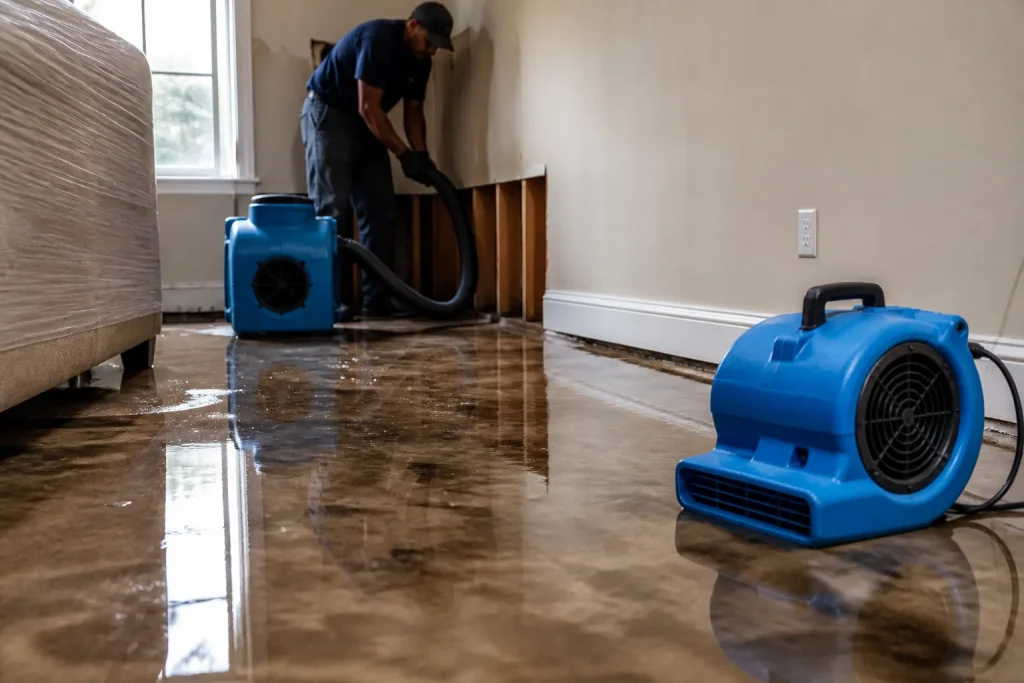
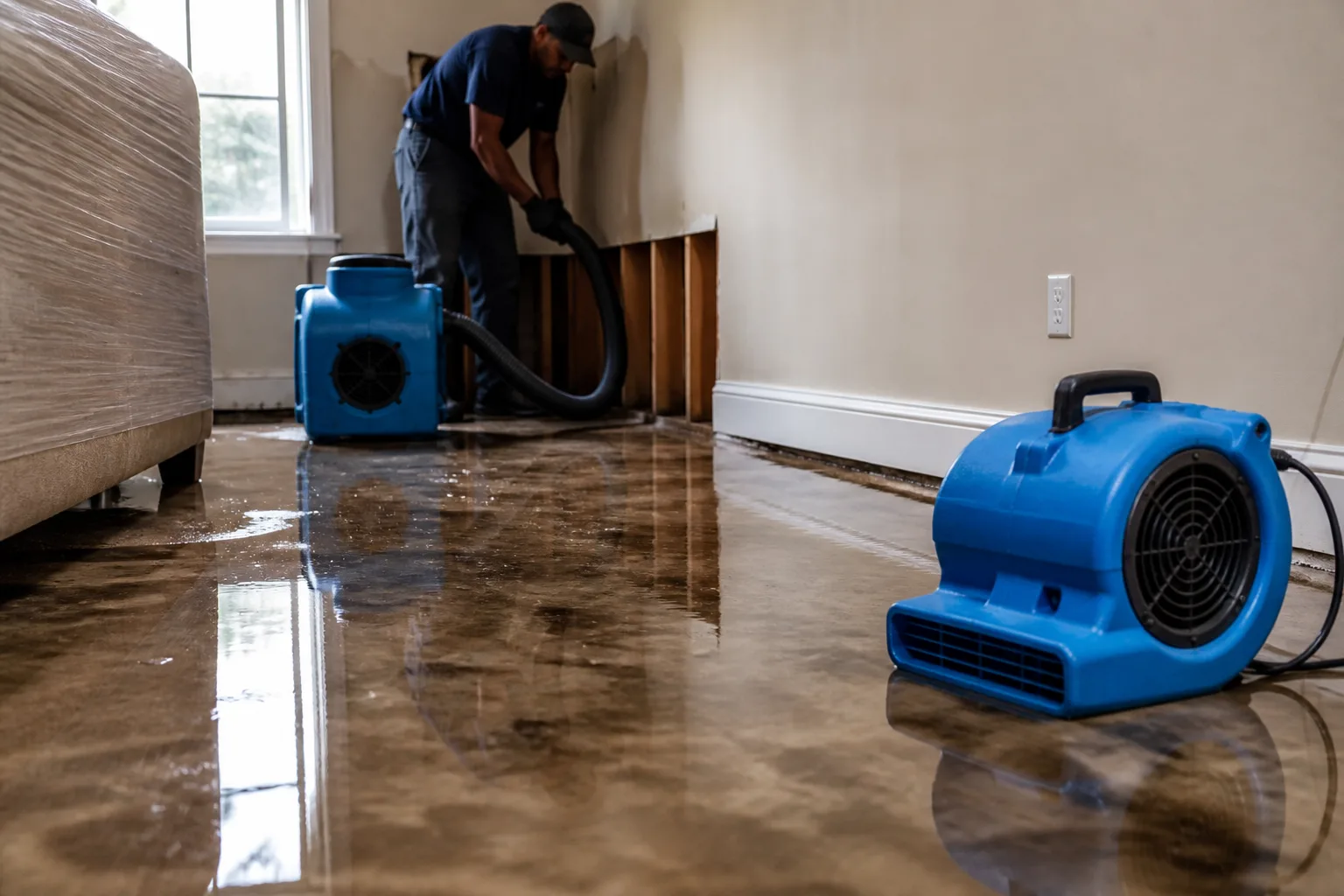
Water Damage Restoration What It Really Costs: What Atlanta Homeowners Pay in 2026
Water damage restoration in Atlanta typically runs $3,200 to $8,500 for a standard clean-water job like a burst pipe, with finished basements and sewage involvement pushing bills past $12,000. That range is wide because restoration is priced line by line using software called Xactimate, and the decisions made in the first two hours determine where you land inside it. If you’d rather not wade through the math yourself, call (888) 690-3757 and we’ll walk you through it.
Why Two Honest Invoices for the Same Flooded Basement Can Be $10,000 Apart
Here’s the thing most guides skip: two restoration companies can look at the same flooded basement and produce wildly different invoices without either one lying. Both use Xactimate, the same pricing software insurers and contractors rely on. The difference is scope.
Say a supply line lets go in a finished basement in Decatur. One company categorizes the water as Category 2, tears out drywall 24 inches up from the floor, sets six air movers and two dehumidifiers, and bills the job at $9,200. Another classifies it Category 1, cuts only the wet drywall with no margin, runs four air movers, and lands at $6,400. Both invoices are line-item accurate. Both claims will likely get approved. But the second house might grow mold in a wall cavity six months from now because someone wanted to save the insurance company money that the homeowner was never going to see anyway.
That’s the core tension: the person signing the contract is often not the person paying the bill. Your insurance company pays, so the logical choice for a homeowner is often to approve the bigger scope. But not always. Sometimes a bigger scope means a contractor inflating equipment counts because more equipment days means more revenue. We’ll get into how to tell the difference.
Key takeaways so far:
- Xactimate is a line-item pricing database used by both contractors and insurance adjusters
- Same software, different scope decisions, very different bills
- The classification of water (Category 1, 2, or 3) is the first fork in the road
- You get more bill, not necessarily more house, from padded equipment counts
The Three Day-1 Decisions That Drive Your Final Bill
If you only understand three things about how a restoration invoice gets built, these are the three. In our experience at Wade’s Restoration of Atlanta home, these scope decisions are made within two hours of the first call, and most Atlanta homeowners aren’t in the room when they happen.
1. Demo extent: how much material comes out. Water wicks upward through drywall, so a contractor has to decide where to cut. Cut 24 inches above the water line and you might miss moisture that climbed higher. Cut 48 inches and you replace more drywall, tape, texture, and paint. The difference on a 20-foot wall is roughly $850 to $1,400. We take moisture readings with the same meters every day and hand you the full log at the end, so the demo line on the invoice corresponds to a number, not a guess.
2. Equipment count and days of drying. Air movers, dehumidifiers, and injectidry systems each bill per day. A 400-square-foot room might need four air movers or it might need seven, depending on saturation. An honest contractor runs the minimum that gets the structure dry within three to five days. A padded one runs extra equipment and lets it spin for a week. Ask for the daily moisture log. If they won’t hand it over, that’s your answer.
3. Water category classification. Category 1 is clean water from a supply line. Category 2 has some contamination, like a washing machine overflow. Category 3 is sewage or floodwater. Category 3 requires antimicrobial treatment, affected-material removal, and sometimes full containment, which multiplies the bill. The classification decision deserves a conversation.
Atlanta-Specific Cost Ranges for the Three Most Common Jobs
These numbers reflect what we’re seeing across metro Atlanta in 2026, from Marietta to Lawrenceville to College Park. They assume a standard single-family home with typical finishes. If you live in a 1920s bungalow with plaster walls and original hardwood, plan on the higher end.
- Burst pipe in a finished basement: $4,200 to $9,800. This includes extraction, demo of wet drywall and baseboard, drying equipment for three to five days, and rebuild of the removed areas. Finished basements cost more because carpet, pad, and bottom plates of interior walls all have to come out.
- Dishwasher overflow on hardwood: $1,800 to $4,600. Hardwood is a judgment call. In many Atlanta homes with solid oak flooring, the floor can be saved with targeted drying and refinishing rather than replacement. That’s the difference between a $1,800 claim and a $7,000 one.
- Roof leak into a drywall ceiling: $900 to $3,200 if caught early. This assumes the roof itself gets patched separately. You’re paying for drywall removal, drying of the ceiling cavity, and retexturing and painting. If the leak has been running for weeks, you’re now in mold remediation territory and the number changes.
On every water damage job in Atlanta, we use professional-grade equipment from Dri-Eaz, Phoenix, and XPOWER. Not rentals from the big box store. Drying a structure fast is a physics problem, and the equipment matters more than most homeowners realize.
What You Actually Pay Out of Pocket: Deductible Math Most Guides Skip
Here’s the part that surprises people. The total claim might say $11,000, but that is not what you pay. You pay your deductible, typically $1,000 to $2,500 on a standard Atlanta homeowner policy. The insurance company pays the rest. So the homeowner’s out-of-pocket is often less than the cost of a new washing machine.
But there’s a catch, and it matters in Atlanta specifically. If your policy has a separate wind and hail deductible and your water damage came from a storm through the roof, you might be looking at a percentage deductible based on your dwelling coverage. On a $400,000 house with a 2% wind/hail deductible, that’s $8,000 out of pocket before insurance pays a dime. We’ve seen Atlanta homeowners genuinely shocked by this when a tree limb goes through the roof in a summer thunderstorm.
The other number nobody mentions: depreciation. If your policy pays actual cash value rather than replacement cost, you eat the difference on everything that got wet. A ten-year-old carpet might depreciate to almost nothing. Ask your adjuster which kind of policy you have before you sign any restoration contract.
How to Tell a Thorough Invoice from a Padded One
A padded invoice is not fraud. It’s scope creep with a plausible face, and it’s the thing that makes Atlanta homeowners distrust restoration companies. Here’s how we recommend reading one.
A thorough invoice will have:
- Line items that reference specific rooms and specific materials removed
- Equipment counts that match the square footage and saturation level
- Daily moisture readings or a drying log attached
- Photo documentation of every phase: before, during drying, after
- A clear distinction between mitigation (drying, demo) and reconstruction (rebuild)
A padded invoice will have:
- Vague room references like “basement area” with no specific walls or materials
- Equipment running for more than five days with no explanation
- Line items for services that don’t correspond to visible work, like “contents manipulation” charges with no contents touched
- Refusal to provide moisture logs or daily readings
- Demo of materials that appeared dry in photos taken on day one
One thing we do differently: Wade Ferris takes moisture readings every single day and hands the homeowner the full log at the end. Almost nobody in this trade does that. If your contractor won’t show you the numbers behind the drying claim, ask yourself what they’re hiding. Usually it’s nothing sinister, just indifference. But indifference in this trade means you pay for it.
When You’re in Over Your Head, Call Before the Damage Spreads
Some water damage waits. A small roof leak that’s been dripping for months into an attic floor will be there tomorrow. A supply line rupturing behind a wall, feeding water into drywall and insulation and baseboards, is compounding by the hour. The faster water gets extracted and air starts moving, the less material has to come out, which directly shrinks the bill.
Wade Ferris has answered his own phone in Atlanta since 2007. That’s not marketing language. The number on the truck is the phone in his pocket. If a pipe lets go at two in the morning, to wade is what you do through a flooded basement at two in the morning, and it happens to be his name. Calls get answered by a live person 24/7, not a voicemail, not an answering service. If you’re in Atlanta and water is moving, call (888) 690-3757.
If the damage involves fire or smoke, our fire and smoke damage team in Atlanta handles that same kind of fast response. If you’re past water and into fungus, the mold side is a different protocol entirely. Whatever you’re dealing with, you’ll get a straight answer and a written scope before any work starts. Nobody quotes one price on the phone and a different one at the door here. That’s not how a neighbor runs a business.
The Bottom Line
Water damage restoration in Atlanta costs $3,200 to $12,000 on a typical claim, and the number is determined by scope decisions made early: demo extent, drying equipment, and water classification. Your out-of-pocket is usually just your deductible, unless a percentage wind/hail deductible or actual-cash-value policy applies. A fair invoice documents every line item with photos and moisture logs. A padded one hides behind vagueness. You can tell the difference if you know what to ask for.
If you’re in Atlanta and dealing with water damage right now, get a second set of eyes on the situation before you sign anything. Wade’s Restoration of Atlanta offers free estimates and free second opinions on any written estimate. Call (888) 690-3757 and talk to Wade directly.
Frequently Asked Questions
How much does water damage restoration cost in Atlanta?
Most Atlanta water damage jobs fall between $3,200 and $8,500 for clean-water incidents, with sewage or finished-basement work running higher. The final number depends on demo extent, equipment needs, and water classification. For an exact quote on your situation, call (888) 690-3757.
Will my insurance cover water damage restoration?
Most standard Atlanta homeowner policies cover sudden and accidental water damage from burst pipes or appliance failures. They typically do not cover gradual leaks or flooding from outside unless you carry separate flood insurance. Your deductible is usually your only out-of-pocket, unless a percentage wind/hail deductible applies.
How fast can a restoration company get to my Atlanta home?
Wade’s Restoration of Atlanta can have extraction running inside the hour because Wade answers his own phone 24/7. Faster extraction means less demolition, which means a smaller bill. If water is actively moving, call (888) 690-3757 right away.
How do I know if my restoration invoice is fair?
Ask for the daily moisture log, the photo documentation, and the line-item breakdown by room. A fair invoice shows specific materials removed, equipment counts that match the space, and drying data. If a contractor refuses to provide these, get a second opinion. We offer free second opinions on any written estimate in Atlanta.
Written by Wade Ferris, Owner at Wade’s Restoration of Atlanta, serving Atlanta since 2007.
Need Damage Restoration Help?
Call Wade's Restoration of Atlanta - licensed & insured, here with fast after-hours help in Atlanta.
(888) 690-3757