
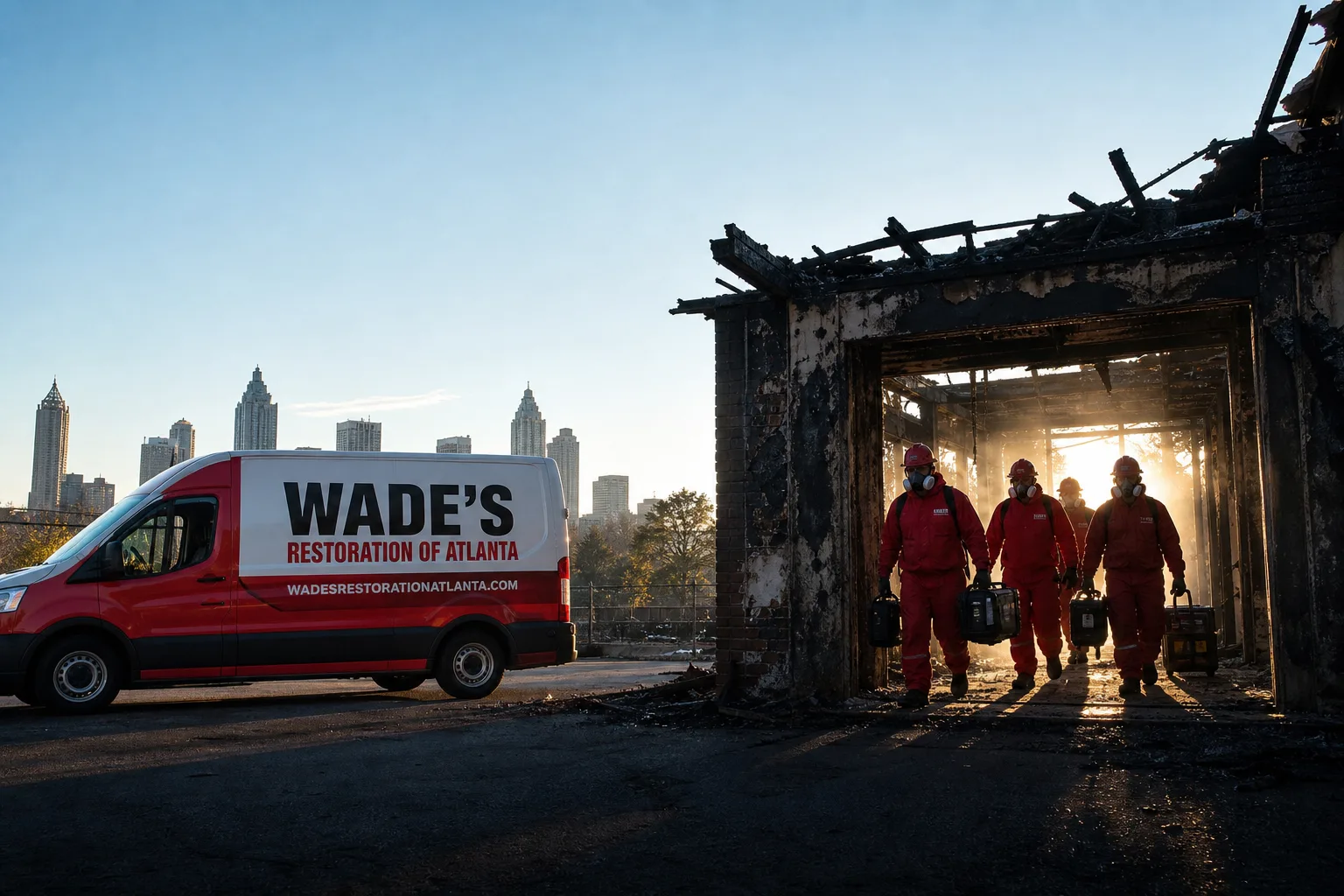
Fast, Reliable Mold Remediation Across Austell
Mold remediation in Austell, GA typically runs $1,800-$6,500 depending on how far the growth has spread and whether hidden plumbing leaks or crawlspace moisture are feeding it. Most Austell jobs take 3-7 days once containment is set, and we can usually have a crew on your street within hours of your call. If you’re seeing dark spots on baseboards, smelling must along wall cavities, or dealing with recurring condensation on slab floors, call Wade Ferris at (888) 690-3757 and he’ll tell you straight what you’re dealing with.
Wade has worked Austell homes long enough to know the 1970s brick ranch on Clay Road won’t mold the same way a 1990s split-level off Austell-Powder Springs Road will. Slab-on-grade construction, polybutylene supply lines, and red clay that holds water against foundation edges: that’s the triangle that keeps Austell homeowners calling us back. You don’t need a national chain reading off a script. You need someone who knows why the mold came back after the last guy “fixed” it.
Why Wade’s Restoration of Atlanta Is Austell’s Preferred Mold Remediation Company
Wade Ferris started this company in 2007 with his name on the truck and his cell number on the estimate. He still answers his own phone. When you call about mold in your Powder Springs Road rancher, the person you talk to is the same person who’ll walk your crawlspace with a moisture meter. That’s the whole business model. It works because Austell is the kind of place where you run into your contractor at the Pig on Saturday and he knows you’re going to ask about the job.
Our crews working the 30106 and 30168 ZIPs pull back drywall in Austell homes every week and find what the last contractor missed: moisture wicking up through slab edges, polybutylene stub-outs with hairline fractures, and crawlspace wood sitting above 15% moisture content. We log moisture readings every single day and hand you the full record when the job closes. That’s not a service add-on. That’s how Wade has always worked, and it’s why Austell homeowners call us back when the next problem shows up.
Response time to Austell is fast, and Wade means it. Call at 2 a.m. with a water line blowout feeding mold growth, and you’ll get a live person, not a voicemail tree. If you need us in an hour, that’s not a promise we make lightly. But it happens regularly for Austell customers, because Wade schedules his life around the phone ringing.
We’re licensed, insured, and IICRC-certified. The technicians Wade sends to Austell are background-checked, uniformed, and trained on Dri-Eaz, Phoenix, and XPOWER equipment. You’ll know who’s in your house. You’ll know what they’re doing and why. And you’ll have Wade’s direct line if anything doesn’t sit right.
Our Mold Remediation Services in Austell
Every mold job in Austell starts the same way: finding the water. Until the moisture source is dead, remediation is just decoration. Here’s what that looks like on the ground in your ZIP code.
Mold Inspection & Testing
Austell’s slab-on-grade construction hides water movement behind baseboards and inside wall cavities for weeks before you see a single dark spot. Our mold inspection in Austell starts with visual assessment, then moisture mapping along slab edges, under windows, inside closets, and through the crawlspace. We use thermal imaging to trace moisture that doesn’t show on the surface, and we’ll take air and surface samples when you need documentation for an insurance claim or a real estate transaction.
If your 1980s rancher smells musty but nothing’s visible, don’t wait for the blooms. Hidden mold behind a polybutylene leak can colonize framing in under a month. An inspection in Austell runs $250-$500 depending on the size of the home and how many sample types you need. Wade gives you the findings in plain English and will tell you if you actually need remediation or just ventilation and dehumidification.
Mold Removal
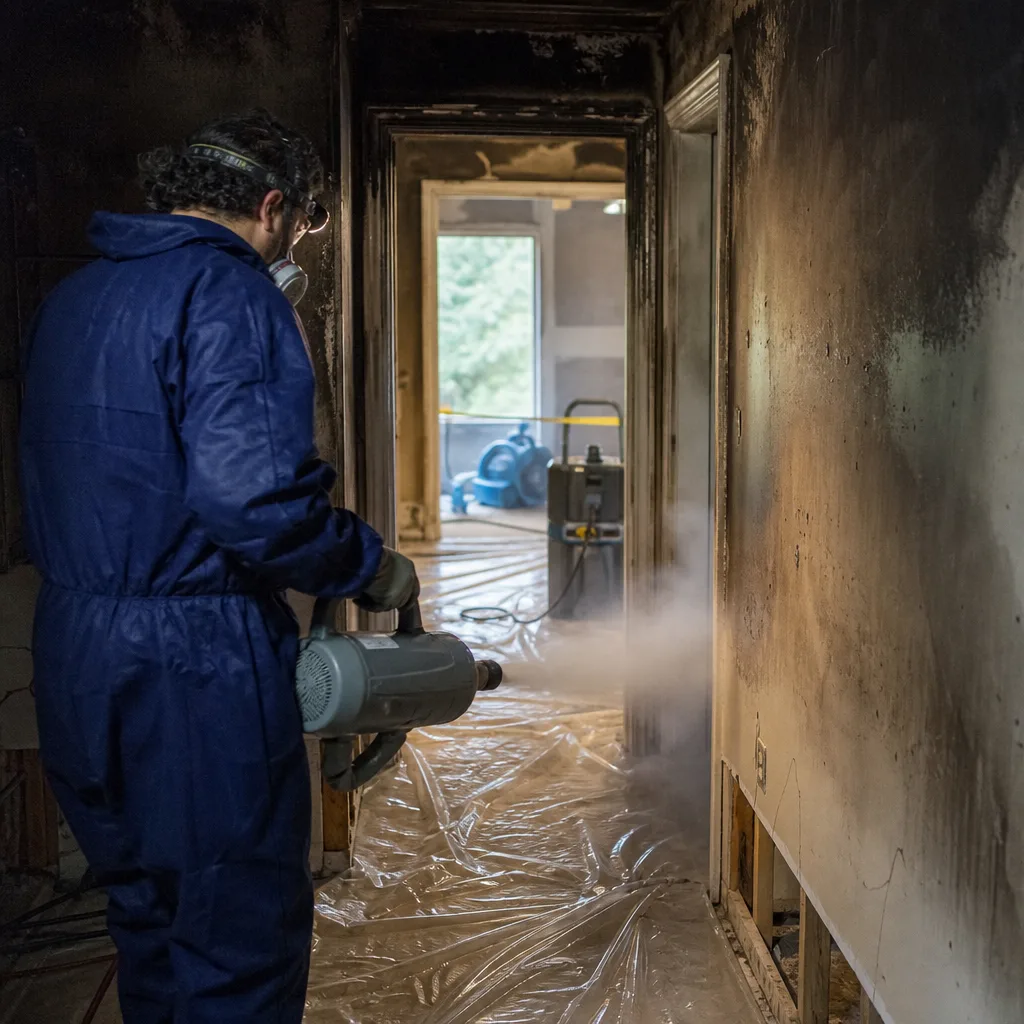
Mold removal in Austell isn’t surface scrubbing. We contain the affected area with negative air pressure, remove saturated drywall and insulation, then treat framing and cavities with antimicrobial agents that stop spores from re-establishing. The work is messy, but it’s the only approach that holds up in Austell’s humid climate, where secondary colonization starts within 24-48 hours of a moisture event. We run HEPA air scrubbers throughout the job, not just during the tear-out, because spores aerosolize every time you disturb a cavity.
Typical mold removal in Austell runs $1,800-$4,200 for visible growth contained to a single room or wall section. If the growth has spread through multiple rooms or into the crawlspace, the range climbs accordingly. We give you a written scope before we touch anything, so you know exactly what’s coming down and what’s going back up.
Black Mold Remediation
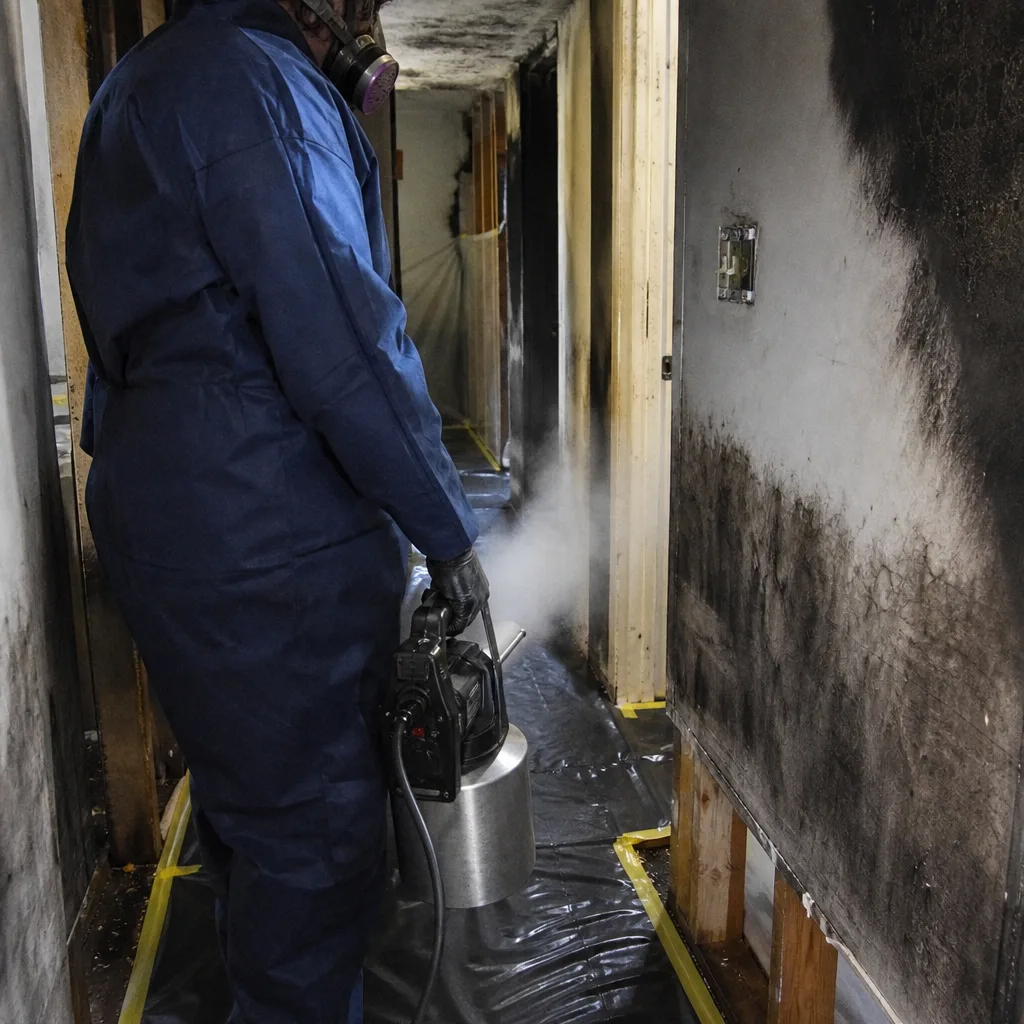
Stachybotrys chartarum, the “black mold” you’ve heard about, thrives in the dark, damp, low-oxygen spaces Austell’s slab ranchers create behind baseboards and inside wall cavities fed by slow plumbing leaks. It’s not more dramatic than other molds in a technical sense, but it does signal chronic moisture, and chronic moisture means the problem has been brewing a while. That changes the scope.
Black mold remediation in Austell follows the same protocol as any mold removal: contain, remove, treat, dry, verify. The difference is we pay closer attention to the hidden reservoir. Polybutylene supply lines running through 1970s-1990s slabs are notorious for slow, long-term seepage that creates exactly the conditions Stachybotrys loves. We’ll treat the visible growth, and we’ll find the leak feeding it. Without that step, you’re paying for a band-aid.
Air Quality Restoration
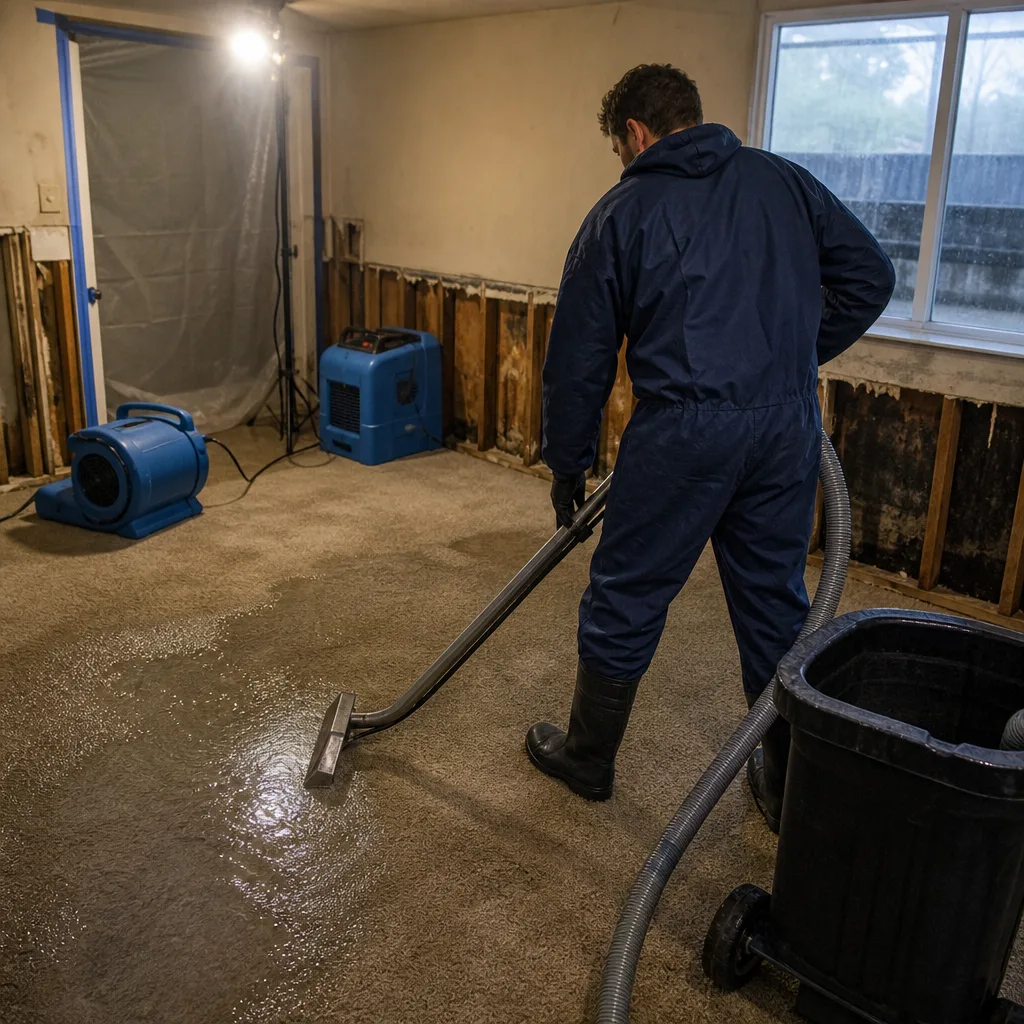
After a mold removal in Austell, the air inside your home carries thousands of spores per cubic meter. That’s not paranoia, it’s physics. We run HEPA air scrubbers during and after the remediation process, and we take post-remediation air samples to verify spore counts have dropped to normal background levels for your neighborhood.
Air quality restoration in Austell homes is especially important because our summers hold humidity high enough that airborne spores find new moisture quickly. If you’ve had mold removed and the musty smell returned within weeks, the scrubber stage probably got skipped. We don’t skip it. Your post-remediation clearance test is part of the job, not an optional line item.
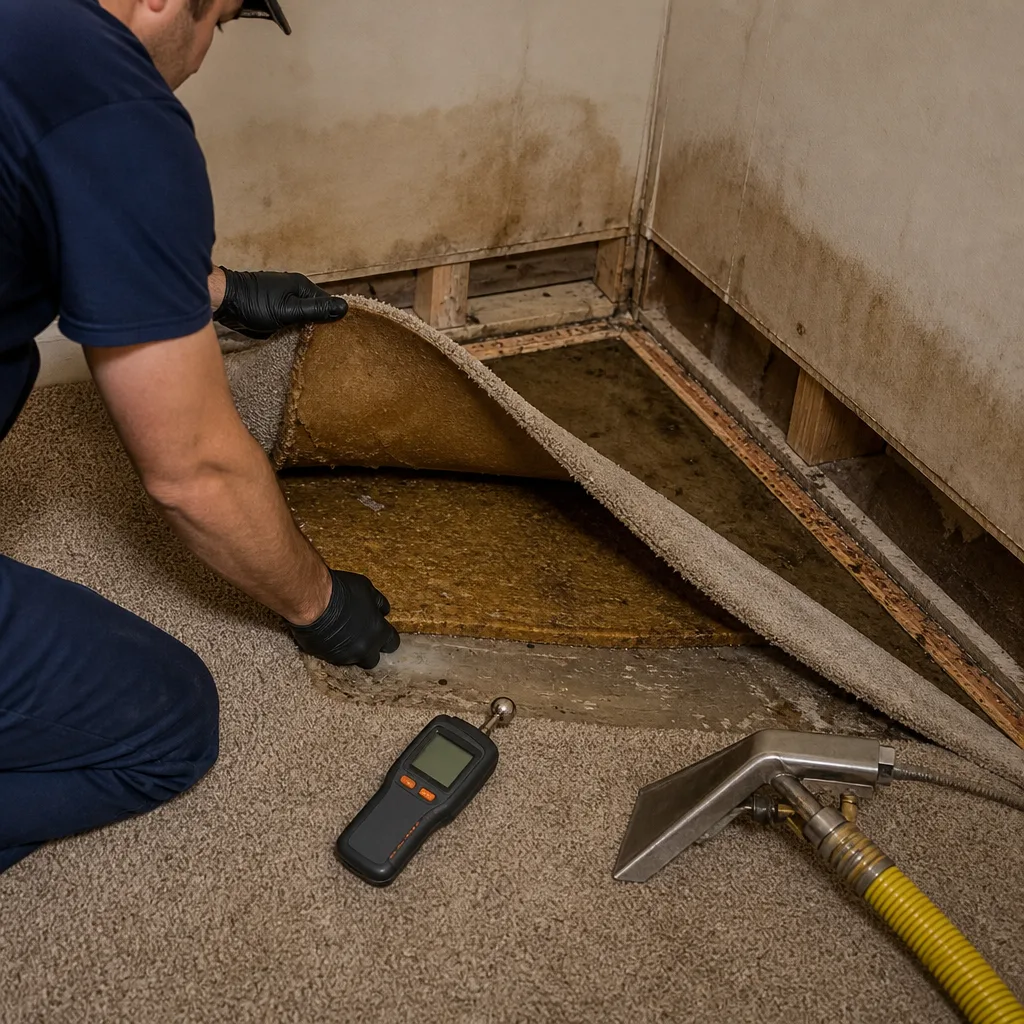
Crawl Space Treatment
Austell’s red clay is the enemy of dry crawlspaces. It drains slowly, holds water against foundation walls, and keeps the space under your house humid long after the rain stops. Mold in Austell crawlspaces starts on floor joists and subflooring, then moves into wall cavities. By the time you smell it in the living room, it’s been growing for a while.
Crawl space treatment in Austell usually involves removing contaminated insulation, treating structural wood with an antimicrobial, sealing the ground with a vapor barrier, and often installing a dehumidifier sized for the actual cubic footage. Low-capacity dehumidifiers can’t pull structural wood below 15% moisture content in Austell’s clay-heavy conditions. We use Phoenix and Dri-Eaz units built for exactly this climate.
Moisture & Humidity Control
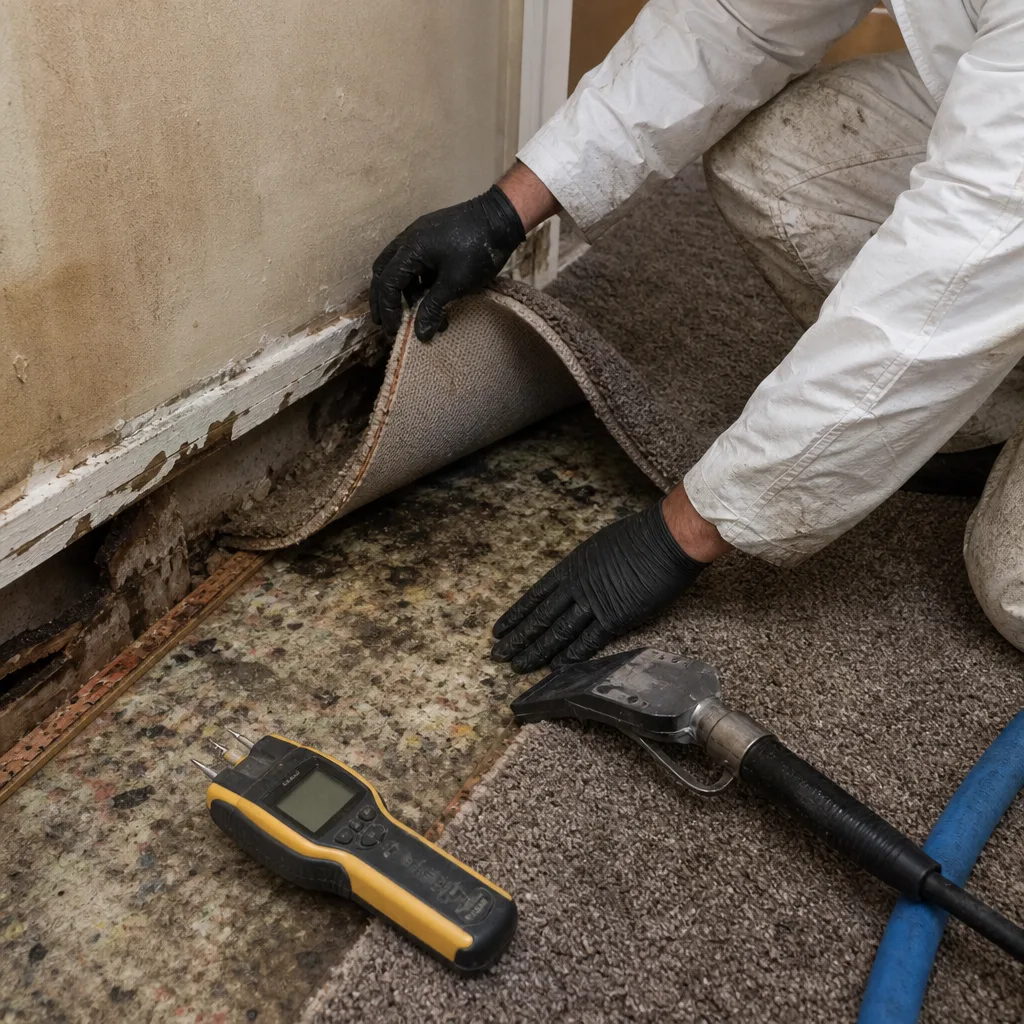
Mold doesn’t come back in Austell because the cleaning crew did a bad job. It comes back because the relative humidity under the slab or in the crawlspace stayed above 60%. Moisture control is the part of mold remediation that determines whether you see us again in six months.
We assess the whole moisture envelope, not just the room with the bloom. That includes downspout discharge, slab-edge drainage, crawlspace ventilation, HVAC condensate, and supply-line condition. Then we lay out what needs to change. Sometimes it’s a dehumidifier. Sometimes it’s grading soil away from the foundation. Sometimes it’s a re-pipe. Wade’s job is to tell you which one and why.
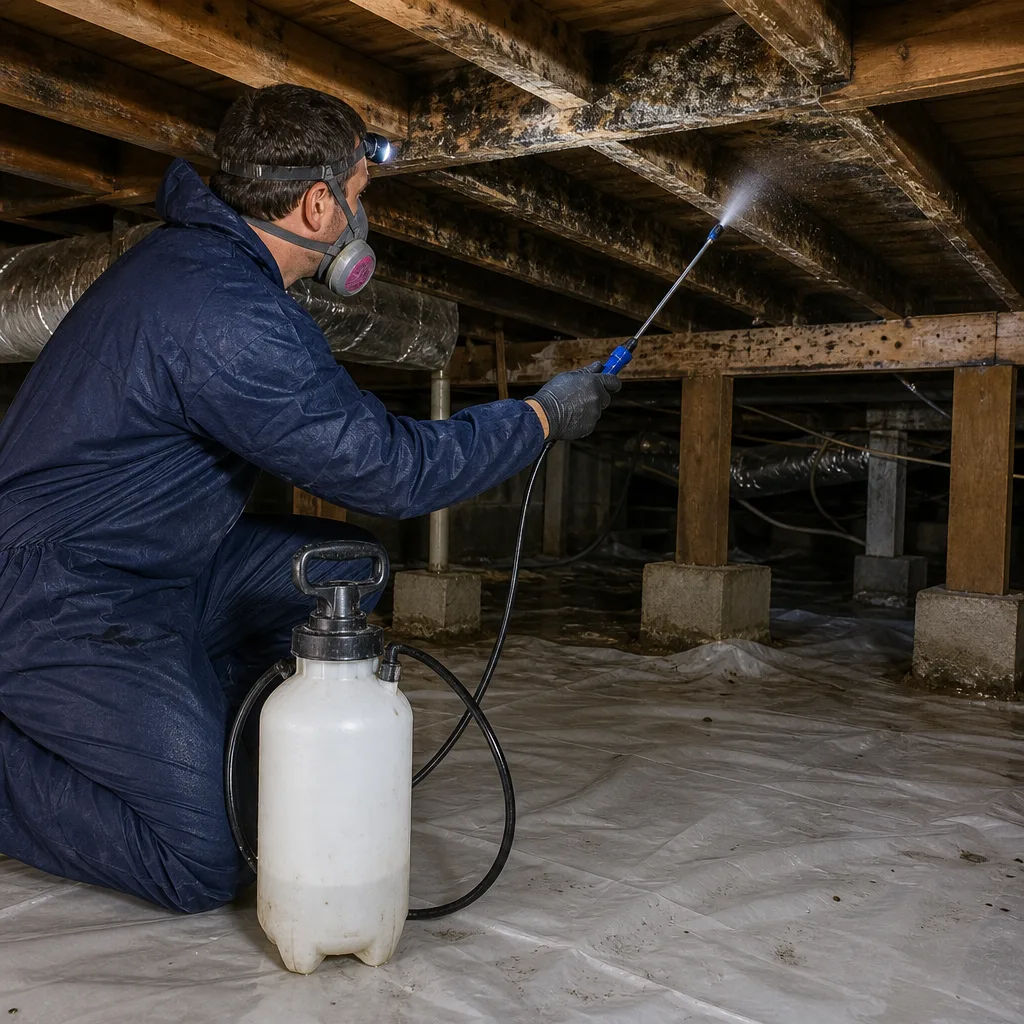
What happens when you call
- 1
A real person answersNo phone trees - you reach a local pro.
- 2
You get an upfront price rangeHonest numbers before anyone is dispatched.
- 3
A background-checked tech heads outLicensed & insured, dispatched right away.
- 4
You approve before work beginsNothing starts until you say go.
Trusted Brands We Service in Austell
We run professional-grade equipment on every Austell job because the hardware matters. Dri-Eaz and Phoenix dehumidifiers built for crawlspaces and slab-edge drying, XPOWER air movers that hold up through multi-day tears, and HEPA air scrubbers that actually filter down to the spore level. If you’ve got a dehumidifier from the hardware store fighting a losing battle under your split-level, we’ll tell you straight: it’s not enough for Austell’s humidity. We bring the right tools, we know how to set them, and we monitor daily with moisture logs we hand you at the end.
Common Mold Remediation Problems We See in Austell Homes
- Polybutylene plumbing feeding hidden mold. Austell’s 1970s-1990s housing stock was plumbed with polybutylene supply lines that degrade from the inside and rupture without warning. When we cut into a mold-damaged wall in the 30168 ZIP, we expect to find poly-pipe. If the source isn’t replaced, the next leak re-contaminates the same space.
- Clay soil holding moisture against slab edges. Georgia red clay wraps around Austin’s foundations and doesn’t let go. Water moves horizontally along the slab edge and into wall cavities, creating mold behind baseboards even when the interior feels dry. Fixing the mold without addressing exterior drainage is putting a match out while the gas is still on.
- DIY surface cleaning that misses the reservoir. We see it constantly in Austell: homeowner scrubs the visible mold with bleach, paints over the stain, and three weeks later it’s back. The growth inside the wall cavity was never touched, and bleach on drywall actually adds moisture to the substrate. It’s a temporary fix that gives mold time to spread.
- Undersized dehumidifiers in crawlspaces. Austell summers can sit at 90% humidity for weeks. A crawlspace with clay soil and open vents will never dry below the mold threshold without a properly sized dehumidifier. We regularly replace units that were too small from the start and show homeowners joist moisture readings above what dormant mold needs to reactivate.
Pricing for Mold Remediation in Austell, GA
Mold remediation costs in Austell run $1,800-$6,500 for most residential jobs. A contained single-wall removal with HEPA scrubbing and air clearance typically runs $1,800-$3,200. Add a crawlspace treatment and you’re looking at $3,000-$6,500 depending on square footage and how much insulation and structural wood needs treatment. Black mold that’s spread through multiple rooms pushes the top of that range. Air quality testing runs $250-$500. Full-home polybutylene re-pipes, which Wade will recommend when he finds degraded poly-pipe feeding the mold, add $4,500-$9,000 depending on home size.
What affects Austell pricing more than anything is access. Slab-on-grade ranches sound simple until you’re cutting drywall in a tight closet to trace a wall-cavity leak. Crawlspaces with red clay and low clearance add labor hours. If the home still has original polybutylene plumbing, that’s a conversation you’ll have before any estimate is final. Wade gives free estimates and free second opinions on any written estimate from another contractor. If you’re not sure the last guy scoped it right, call (888) 690-3757. Wade will look at it honestly and tell you what does and doesn’t need to happen.
Pricing note: the ranges above reflect typical Austell residential mold remediation scopes in the 30106 and 30168 ZIP codes. Every home is different, and your written estimate will reflect what Wade actually finds. Estimates are free. Second opinions are free. The Senior & Veteran 10% discount and $40 off any repair over $200 always apply when they’d help.
We Also Serve Cities Near Austell
Our crews work mold remediation in Austell every week, and we cover the surrounding communities too. If you’re in Mableton, Lithia Springs, Smyrna, or Fair Oaks, the same crew, the same equipment, and the same written-scope approach apply. Call (888) 690-3757 and Wade will tell you when he can be there.
Serving Austell, GA - Our Local Coverage Area
We’re based in the Austell area and know this community well. Use the map below to see our service coverage - if you’re nearby, we can almost certainly help.
FAQs - Mold Remediation in Austell
Because the moisture source never got fixed. Austell ranchers built in the 1970s-1990s typically sit on concrete slabs with plumbing running through or under the slab. When polybutylene supply lines develop slow leaks, water moves along the slab edge and behind baseboards, feeding wall-cavity mold that returns weeks after surface remediation. Unless the leak is found and fixed, and the slab-edge moisture addressed, you’re re-creating the same conditions. That’s why our Austell mold remediation always starts with source-finding, not just surface treatment.
Before structural rebuild, but the two happen together. If we find polybutylene pipe feeding mold growth during a remediation in Austell, we’ll scope the mold removal and the re-pipe as one coordinated job. Tearing out drywall gives us access to the plumbing lines anyway. Replacing the pipe first means the new work goes into a dry, clean cavity rather than a contaminated one. Wade’s crew has done this sequence enough times in the 30106 and 30168 ZIPs that it’s routine for us. Insurance sometimes covers the mold remediation and the plumbing separately, which we’ll help you document.
Yes. In most Austell crawlspaces, you don’t need to excavate the clay. We remove contaminated insulation, treat the structural wood with antimicrobial agents, install or repair a proper vapor barrier over the soil, and set up a dehumidifier sized to actually pull the space below the mold threshold. The clay stays; the moisture gets managed. If drainage is bad enough that water ponds against foundation walls after rain, we may recommend exterior grading or a drain line, but that’s an addition to the crawlspace work, not always part of it.
A HEPA air scrubber pulls airborne mold spores and fine particulate out of the air and runs them through a filter fine enough to catch particles down to 0.3 microns. During a mold tear-out in an Austell home, disturbing contaminated drywall sends tens of thousands of spores into the air. Without a scrubber running, those spores settle everywhere, including rooms that weren’t contaminated. Yes, you need one. It’s part of every mold remediation we do in Austell, and it runs during the entire job, not just for an hour at the end.
Within 24-48 hours. Austell’s humid subtropical climate means interior humidity is already high, and once drywall or framing gets wet, spores that are always present in Georgia air have what they need. A slow polybutylene leak inside a wall cavity can be feeding mold for weeks before you notice anything. That’s why we stress daily moisture monitoring during any water or mold job in Austell, and why we hand you the moisture log when the job’s done.
Get Honest Mold Remediation in Austell
If you’re in the 30106 or 30168 ZIP and you’ve got mold, must, moisture, or a plumbing leak that’s been hiding too long, call Wade at (888) 690-3757. He’ll answer. He’ll ask the right questions. He’ll come look at your home himself and tell you what he actually found, what it costs, and what doesn’t need to be done. Estimates are free. Free second opinions on any written estimate. No trip charge inside the county.
Written by Wade Ferris, Owner at Wade’s Restoration of Atlanta. Serving Austell and surrounding Cobb County communities since 2007.