
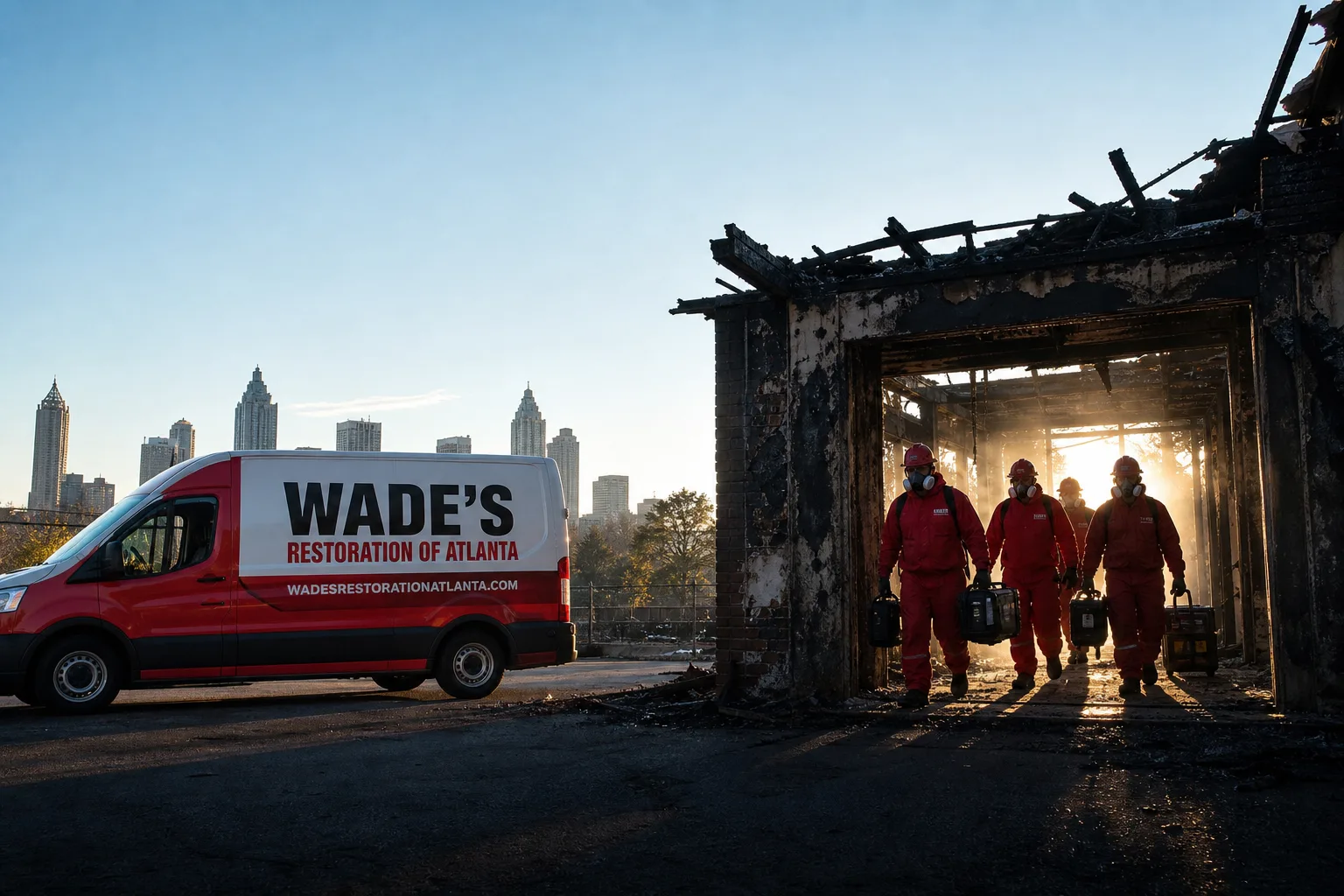
Fast, Reliable Mold Remediation Across Milton
Mold remediation in Milton usually costs between $2,100 and $6,800 for a typical contained area, and if you’re dealing with a finished walkout basement or a storm-damaged roof, the number moves toward the higher end fast. We head out to Milton the same day you call, because mold on OSB sheathing and LVL framing in these newer custom homes gets a foothold within 48 to 72 hours. Call (888) 690-3757 and Wade Ferris himself will talk you through what you’re seeing, whether it’s a small patch behind a bathroom vanity or a whole lower level that smells like a wet crawlspace.
Why Wade’s Restoration of Atlanta Is Milton’s Preferred Mold Remediation Company
Milton homeowners don’t tend to hand their keys to someone they can’t picture running into at the Kroger on Highway 9. Wade Ferris publishes his name, his address, and his license number, and he answers his own phone. That means when you call about mold in a finished basement off Freemanville Road, you’re talking to the man who will be standing in that basement with a moisture meter, not a call-center rep reading from a script.
Since 2007, we’ve worked inside Milton’s large custom estate homes, and we know what happens behind those stone and EIFS-clad walls when humidity sits too long. Ask anyone on your street. Wade’s name gets around. The 90-Day Done Right Promise is in writing on every mold job we do: if it’s not done right, he makes it right. No fine print, no phone tree.
Response time to Milton matters because mold does not wait for a tree-removal permit. When a wind-toppled oak sits on a roof for three days before the city clears it, rainwater has already soaked the OSB. By the time we get the call, the question isn’t whether there’s mold. It’s how far it’s traveled. We bring Dri-Eaz LGR dehumidifiers and XPOWER air movers sized for 10,000-square-foot homes, not the rental-grade units that struggle in a two-car garage.
Our Mold Remediation Services in Milton
Mold Inspection & Testing
Before anyone rips out drywall, you need to know what you’re dealing with and where it’s hiding. In Milton’s custom builds from the late 90s and 2000s, mold loves to sit inside wall cavities behind stone veneer and EIFS cladding, where you’ll never see it until it’s spread. We run air sampling, surface swabs, and moisture mapping across the whole structure, not just the visible spot. A visual inspection alone misses the colony growing in a finished basement’s framing.
Mold Removal
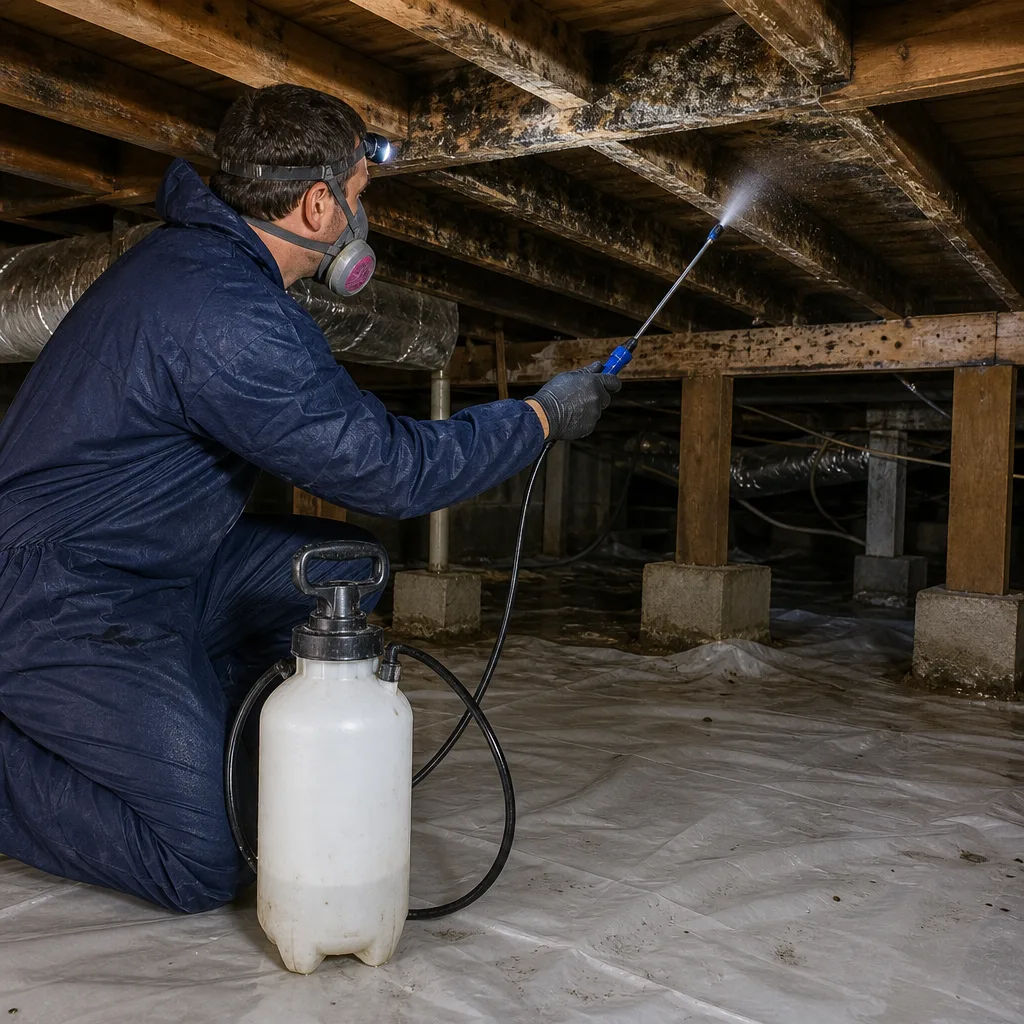
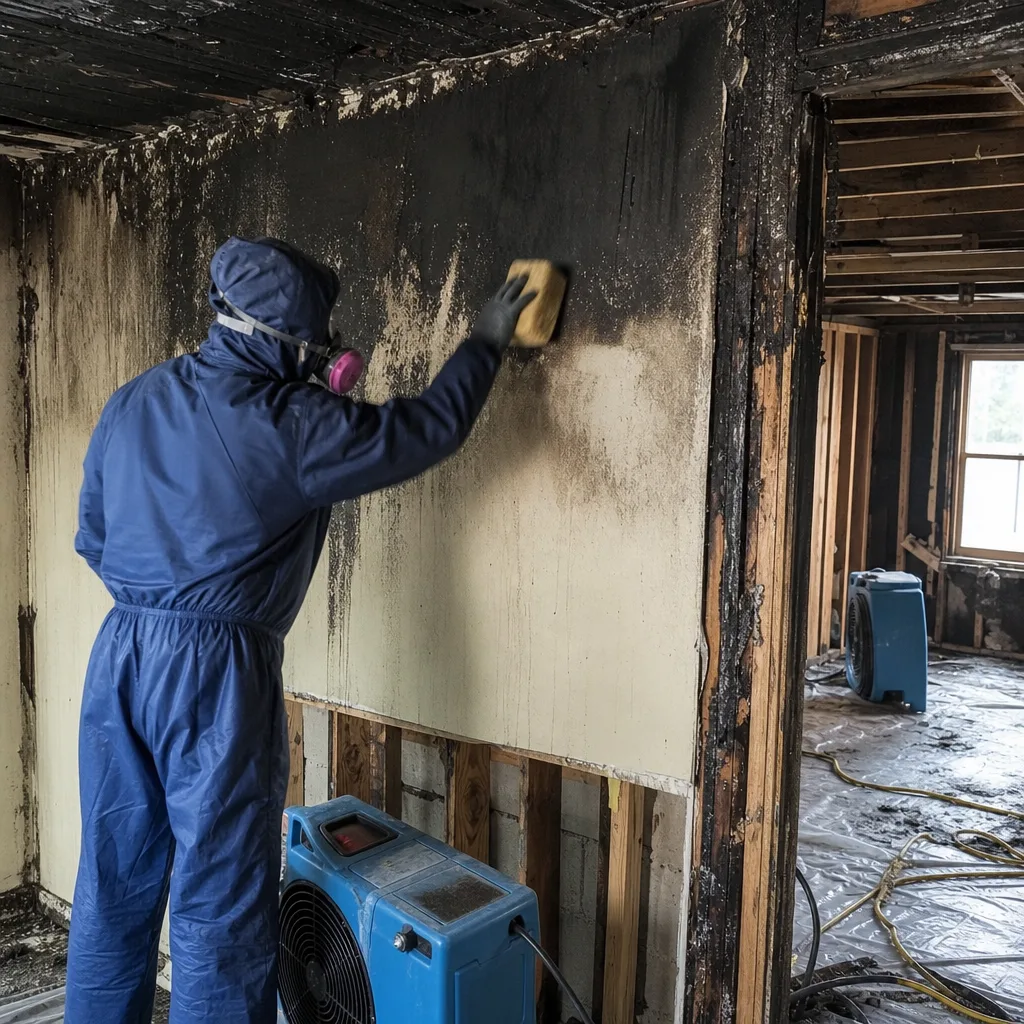
Removal means more than scrubbing the surface. On a Milton estate, we contain the work area with negative air pressure, cut out affected drywall and insulation, bag it, and treat the framing with an EPA-registered antimicrobial. Finished walkout basements get particular attention because the below-grade portions trap humidity against foundation walls. We don’t sign off until moisture readings in the framing are back to normal, and we hand you the daily log so you can see the numbers yourself.
Black Mold Remediation
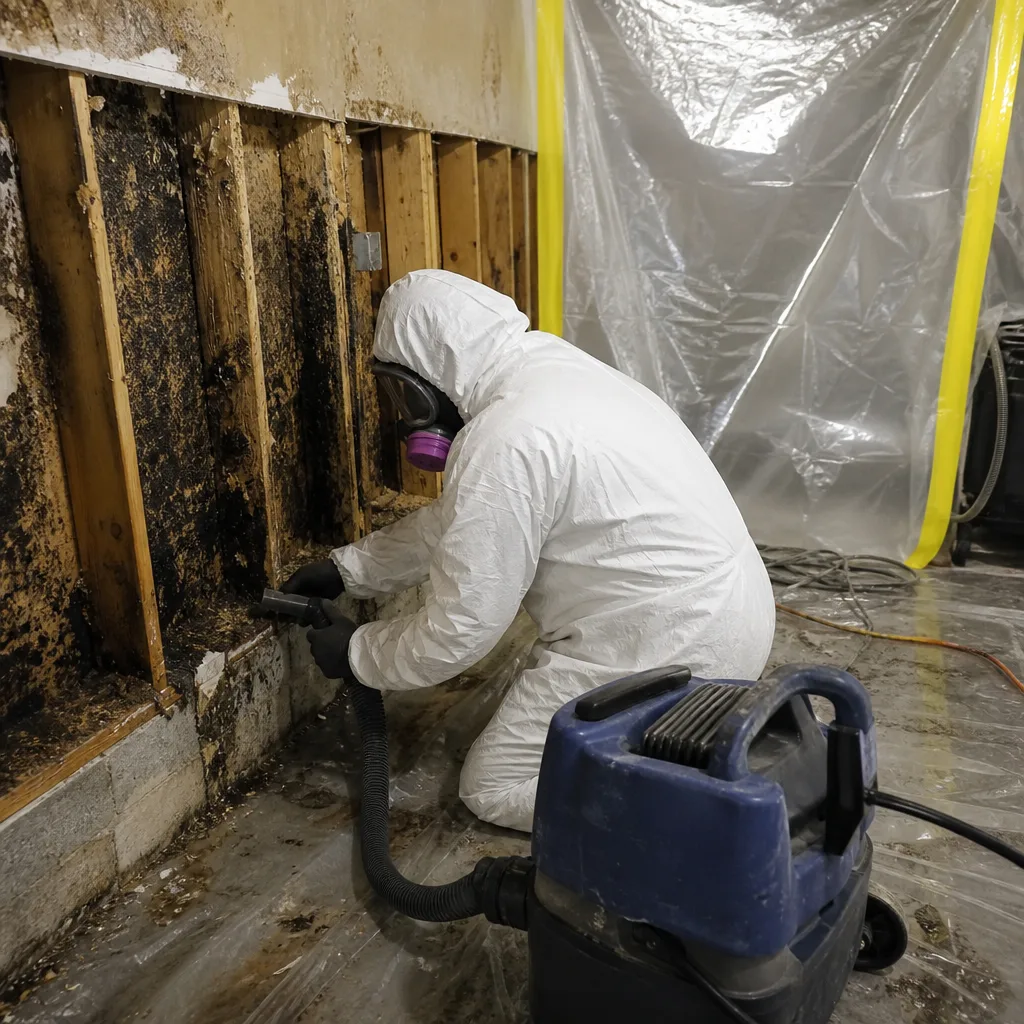
Black mold, or Stachybotrys, gets the most attention and the most panic, but the process is the same discipline applied with extra caution. In Milton’s humid summers, black mold shows up most often after a slow leak inside a wall cavity or a sewage backup that wasn’t properly dried. We contain it, remove it, and restore the air. If you have black mold in a crawlspace or basement off Arnold Mill Road, call (888) 690-3757 before you disturb it and send spores through the duct system.
Air Quality Restoration
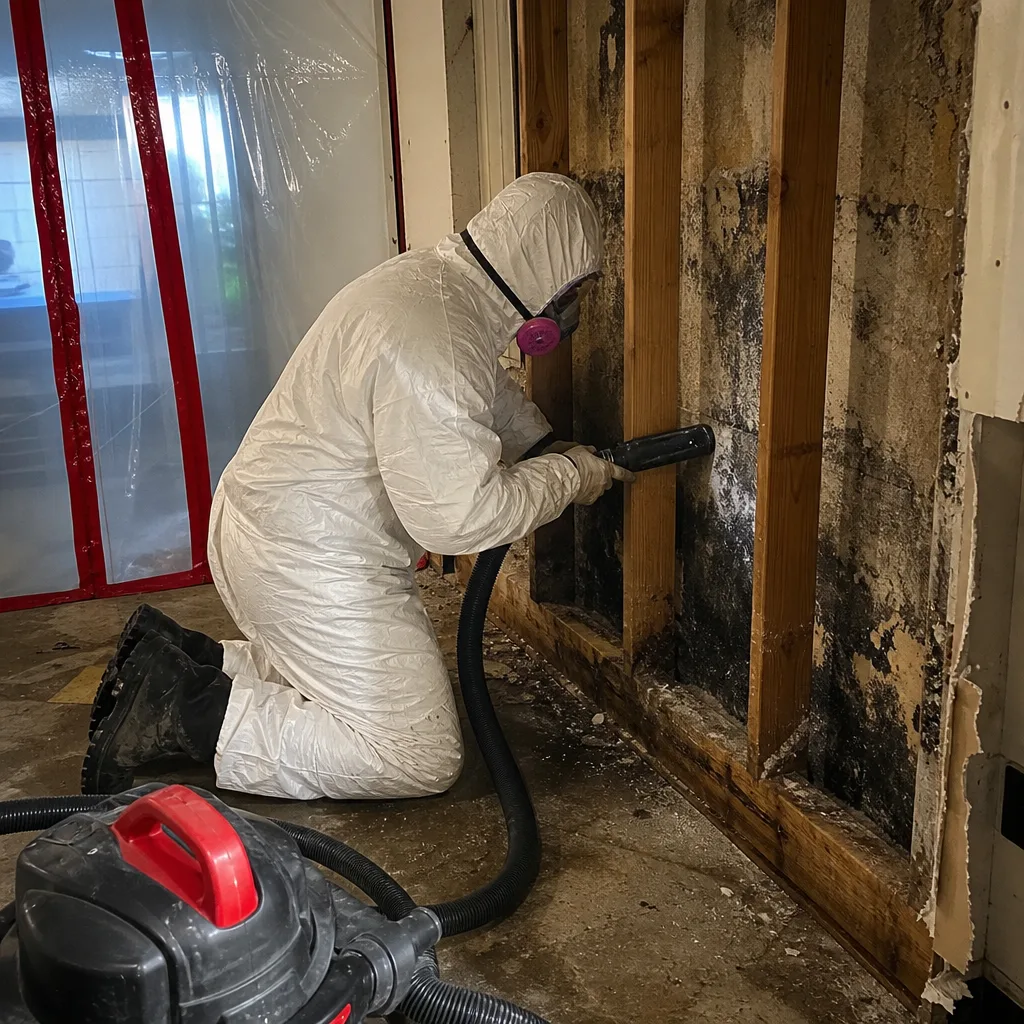
After the demo work is done, the air inside your house is what makes it livable again. We deploy HEPA-filtered air scrubbers and commercial dehumidifiers that pull moisture and particulates out of the air, then run a post-remediation verification so you can see before-and-after numbers. On multi-acre Milton lots with dense tree canopy, outdoor spore counts run high, which means the interior air has to be kept drier than you might think. We dial the humidity down to a target range and prove it with logged readings.
What happens when you call
- 1
A real person answersNo phone trees - you reach a local pro.
- 2
You get an upfront price rangeHonest numbers before anyone is dispatched.
- 3
A background-checked tech heads outLicensed & insured, dispatched right away.
- 4
You approve before work beginsNothing starts until you say go.
Trusted Brands We Service in Milton
We don’t show up with whatever equipment was cheapest at the supply house. Wade’s crew runs Dri-Eaz dehumidifiers, Phoenix and XPOWER air movers, and B-Air scrubbers, the same professional-grade gear used on commercial restoration jobs nationwide. For Milton’s sprawling footprint and finished basements, that matters. A homeowner-grade dehumidifier can’t pull enough moisture out of a 7,000-square-foot structure, especially one sitting on a partially soil-saturated lot off a private well. We stock local parts and supplies for Milton jobs so a second visit for a missing filter or fitting is rare. One trip, done right.
Common Mold Remediation Problems We See in Milton Homes
- Tree-canopy delays turn water damage into mold. Milton’s tree-canopy preservation ordinance means storm-felled hardwoods often sit on damaged roofs for days before city-approved removal. That rainwater soaks OSB sheathing and LVL framing, and mold colonizes within 48 to 72 hours before remediation can even start.
- Private wells and septic systems complicate water classification. On Milton’s rural corridors, a sewage backup in a basement isn’t just a plumbing issue. If it’s treated as clean water because nobody checked the septic system, pathogens and mold stay behind drywall and under flooring. You need a crew that asks the right question before cutting.
- Residential-grade drying equipment fails on large estate homes. A 10,000-square-foot custom house with a finished walkout basement and high ambient humidity overwhelms the kind of dehumidifiers you rent from a hardware store. Wall cavities behind stone and EIFS cladding hold moisture for weeks. Mold hides there and comes back.
- Luxury finishes hide mold longer. Stone, brick, and EIFS cladding don’t wick or dry the way older siding did. By the time you see a stain or smell an odor, the colony inside the framing has often been growing for weeks. That’s why our moisture logs matter. You see the daily numbers, not a guess.
Pricing for Mold Remediation in Milton, GA
Here’s the straight answer. A contained mold removal on a single room in Milton typically runs $2,100 to $3,900. A finished walkout basement with widespread contamination and multiple contained zones runs $4,500 to $6,800. A full-crawlspace encapsulation plus mold treatment runs $3,800 to $7,200 depending on square footage and access. Air quality restoration adds $900 to $2,200 on most jobs. Factors that move the price: square footage, whether the HVAC system needs cleaning, and whether tree-removal or septic coordination is still pending. We write the scope before work starts, so the number we quote is the number you pay. Call (888) 690-3757 for a free estimate. Wade will walk you through it himself.
We Also Serve Cities Near Milton
We handle Mold Remediation all over north Fulton and beyond. If you’re in Alpharetta, Roswell, Johns Creek, or Peachtree Corners, the same crew and same equipment come out. And if you’re in Milton, you already know we’re close, we answer, and we show up.
Serving Milton, GA - Our Local Coverage Area
We’re based in the Milton area and know this community well. Use the map below to see our service coverage - if you’re nearby, we can almost certainly help.
FAQs - Mold Remediation in Milton
Milton requires city-approved tree removal before many storm-damaged roofs can be accessed, and that approval process routinely takes two to five days depending on storm volume and permitting backlog. During that window, rainwater keeps soaking into OSB sheathing and LVL framing in the home’s newer custom construction, and mold colonization begins within 48 to 72 hours. By the time remediation can start physically, the affected area is larger and the tear-out is more extensive. You can shorten the total timeline by calling us the moment you see water staining, even if the tree is still on the roof, because we can begin documenting and preparing containment before the permit clears. Call (888) 690-3757 and Wade will help you think through the sequence.
Yes, materially. Homes on private wells and septic systems, common along Arnold Mill Road and Freemanville Road, cannot be remediated the same way as homes on city sewer. A sewage backup on a septic lot often involves groundwater saturation around the foundation, which extends how long the below-grade structure keeps wicking moisture back in. We coordinate with a septic contractor before and during the job, and we classify the water correctly from the start, because treating a sewage-soaked basement as clean water leaves pathogens and mold behind drywall. The drying timeline on a septic lot runs longer, and our moisture logs will show you exactly why.
Milton’s housing stock from the late 1990s through the 2010s uses a lot of engineered wood, OSB sheathing and LVL framing, that holds moisture differently than the dimensional lumber in older homes. Engineered wood products are made from pressed wood fibers and resins, and when they get wet, they stay wet longer and colonize mold faster. Add Milton’s northern Metro Atlanta humidity and the dense tree canopy that shades these lots, and you have conditions where a small roof leak becomes a wall-cavity mold problem within a few days. That’s why we emphasize aggressive drying and verified moisture readings, not just visual inspection.
Yes, and it does regularly. Stone and brick veneers, and especially EIFS cladding, create wall cavities that do not breathe the way older siding did. Water that gets behind these finishes, whether from a wind-driven rain, a flashing failure, or a soaked roof deck, sits against the sheathing for weeks. The visible drywall inside may show nothing until the colony has spread through the cavity. On Milton’s estate homes, we always moisture-map the wall assembly behind these finishes before we say a room is clear. A stain on the interior is often the last sign, not the first.
It starts with containing the basement in sections, because finished walkouts on Milton’s acreage lots are often 2,000 to 4,000 square feet of living space with bathrooms, theaters, and bars. We seal off the affected area with negative air pressure, cut out wet drywall and insulation, treat framing with an antimicrobial, and run Dri-Eaz and Phoenix dehumidifiers paired with air movers sized for the volume. On a recent 7,000-square-foot estate off Freemanville Road, a wind-toppled oak punctured the roof over a finished walkout. By the time Milton’s tree-removal permit cleared, rainwater had saturated the OSB sheathing and LVL beams. Our crew sealed the basement, cut out the moldy drywall, treated the framing, and restored the space in one trip despite the soil-saturated crawlspace below. Every basement job ends with the daily moisture log in your hands.
Call Wade’s Restoration for Mold Remediation in Milton, GA
If you smell mold, see staining, or just bought a Milton estate and want the basement checked before you move furniture in, call (888) 690-3757. Wade Ferris answers. He’ll tell you what he thinks over the phone, schedule a visit that fits your timeline, and put the scope in writing before any work starts. No trip charge inside the county. Free second opinion on any written estimate. Senior and Veteran discount, always. That’s how we’ve done it since 2007, and that’s how it goes on every job in Milton.
Written by Wade Ferris, Owner at Wade’s Restoration of Atlanta, serving Milton since 2007.