
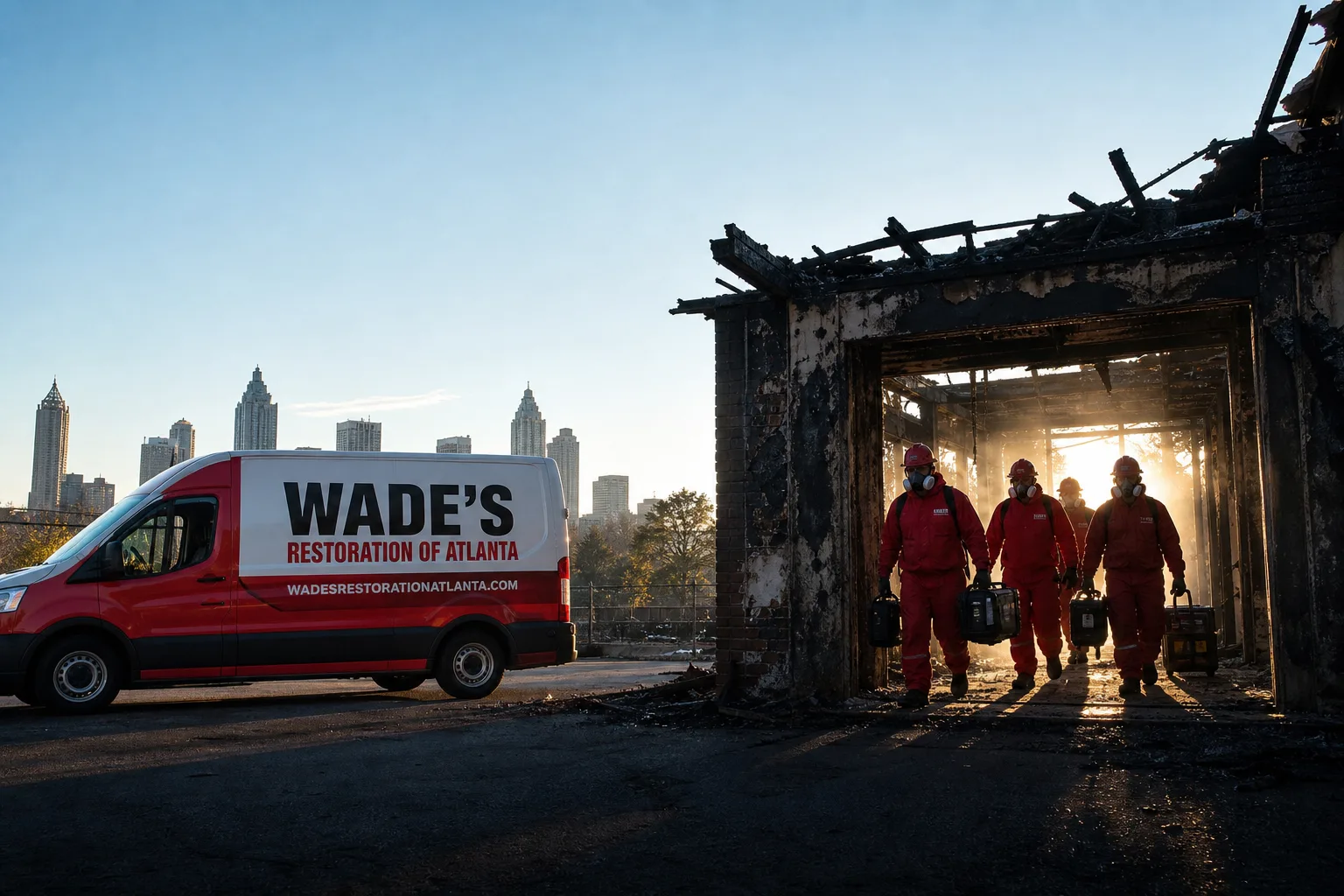
Fast, Reliable Mold Remediation Across Snellville
If you’ve found mold in your Snellville home, here’s what you need to know right now: in Snellville’s 30039 and 30078 ZIP codes, the most common cause is a hidden plumbing leak, usually from polybutylene supply lines still running through walls built in the 1980s and 1990s. That leak feeds mold for days before you ever see a stain. We respond to Snellville calls the same day and start with a documented moisture assessment, not a sales pitch. Call (888) 690-3757 and Wade Ferris, the owner, will answer. He has been doing this since 2007, and he still answers his own phone.
Why Wade’s Restoration of Atlanta Is Snellville’s Preferred Mold Remediation Company
Snellville homeowners call Wade’s Restoration because the guy who answers the phone is the same guy who shows up with the moisture meter. Wade Ferris runs this company himself. He’s not a franchise manager or a rotating crew lead. When you call about black mold in a crawlspace off Scenic Highway, you’re talking to the man who’ll be under your house. Ask anyone on your street. In a town the size of Snellville, word gets around, and Wade’s name has been attached to Mold Remediation work across Gwinnett County for nearly two decades.
We serve Snellville with crews that know the specific housing stock here. The subdivisions off Scenic Highway (SR-124), the older homes near Stone Mountain Highway, the mid-century splits throughout 30078: these houses aren’t the same as a 2015 build in Lawrenceville. We know what’s behind those walls because we’ve opened hundreds of them. Every Snellville job ends with a full moisture log in your hands, every reading Wade took, every day, on paper. Almost nobody else in this trade does that.
Our Mold Remediation Services in Snellville
Mold Inspection & Testing
A mold inspection in Snellville should start with the water source, not the visible growth. In the 30039 and 30078 ZIP codes, that usually means checking for polybutylene supply lines, crawlspace moisture, or an attic freeze split. Wade and his crew use Dri-Eaz and Phoenix equipment to map exactly where the moisture is, then take air samples inside and outside so you know what you’re dealing with before any remediation quote is written. We hand you the numbers. You decide.
Mold Removal
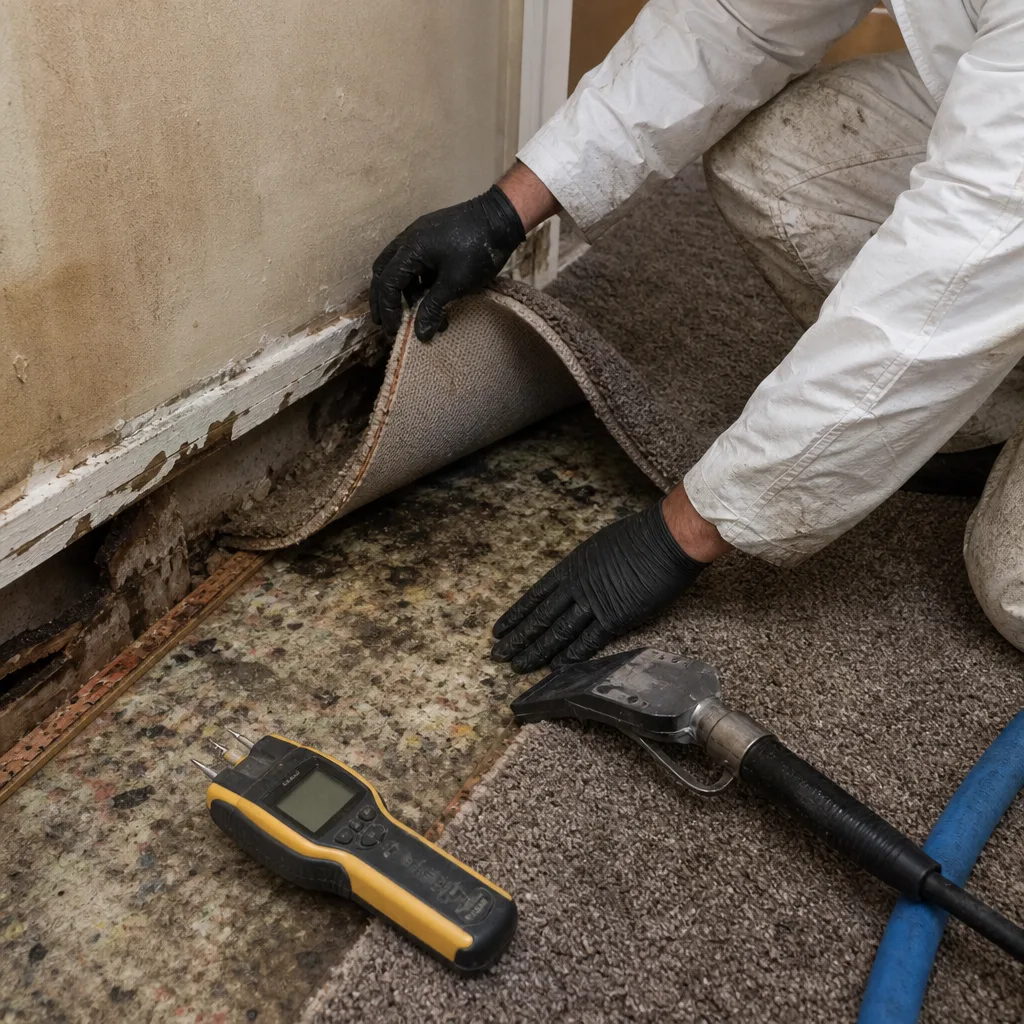
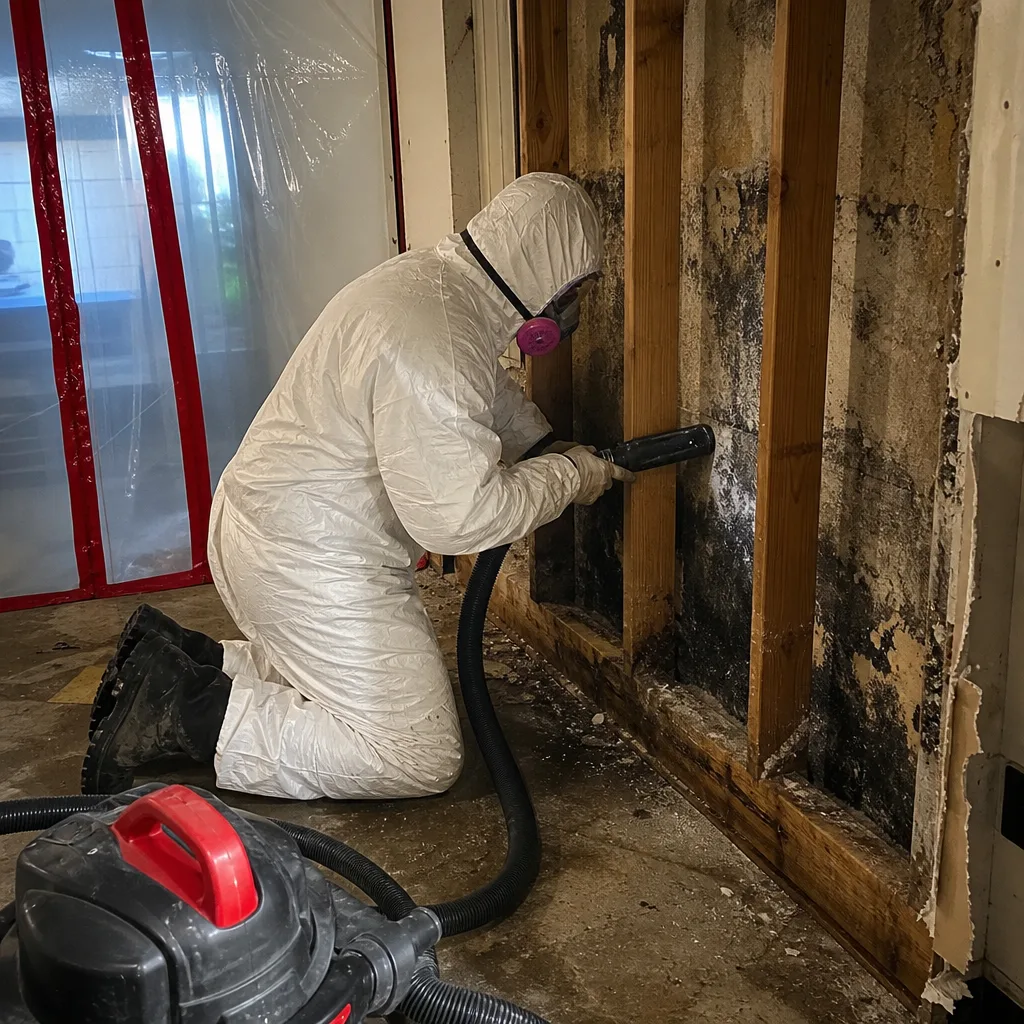
Mold removal in Snellville’s tract homes is never just a scrub-and-spray job when the growth is behind drywall. We contain the affected area with negative air pressure, remove the damaged material, dry the cavity to IICRC standards, and treat the framing. If the source was a leaking PB line, we document every step for your insurance adjuster. You shouldn’t have to be the one relaying messages between two parties. Wade talks to your adjuster directly, so you don’t have to.
Black Mold Remediation
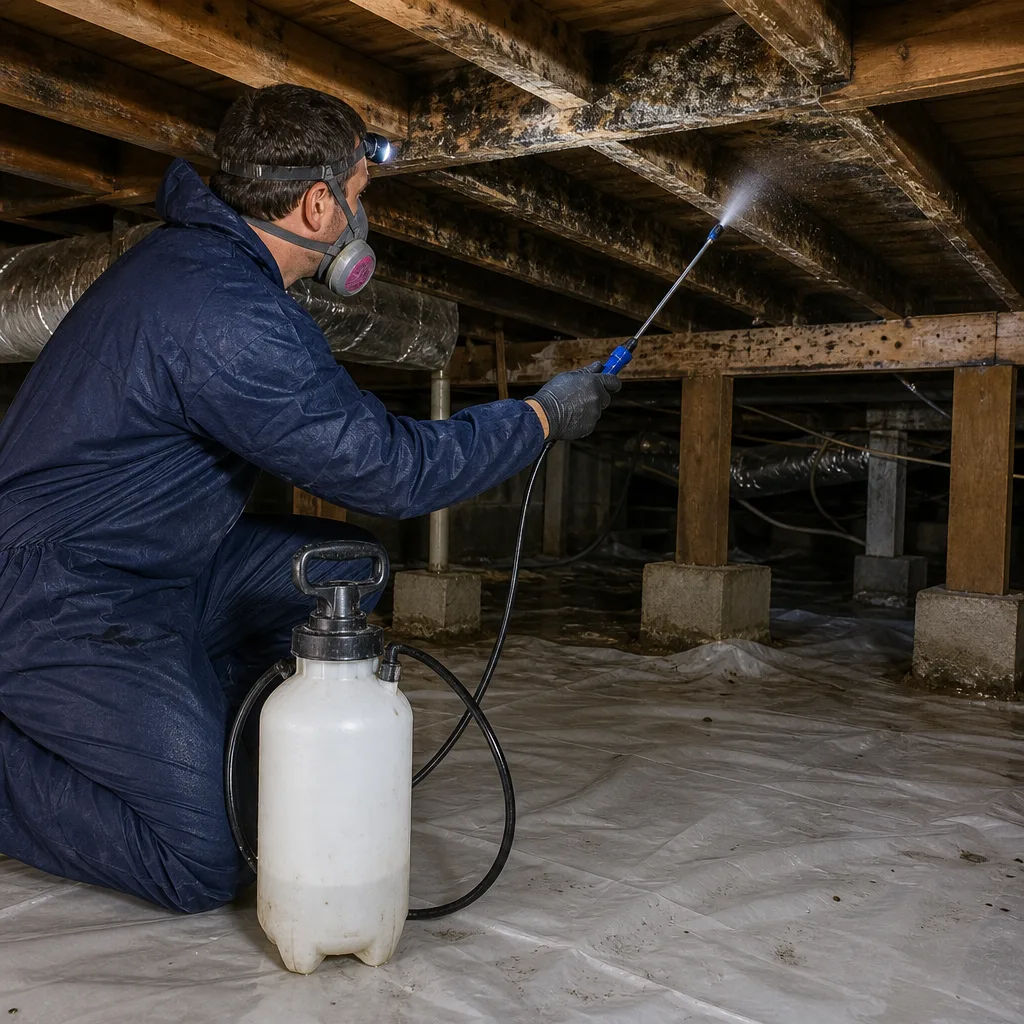
Black mold, or Stachybotrys, is what Snellville homeowners fear most when they see dark staining on drywall or subflooring. What matters is not the color but the moisture feeding it. A slab-on-grade home off Five Forks Trickum Road can have a pipe weeping inside a wall for a week before any stain appears. By then the mold has colonized the insulation. Our remediation process is the same no matter the species: find the water, stop it, contain it, remove it, dry it, verify it. Then we hand you the daily moisture log that proves it’s done.
Air Quality Restoration
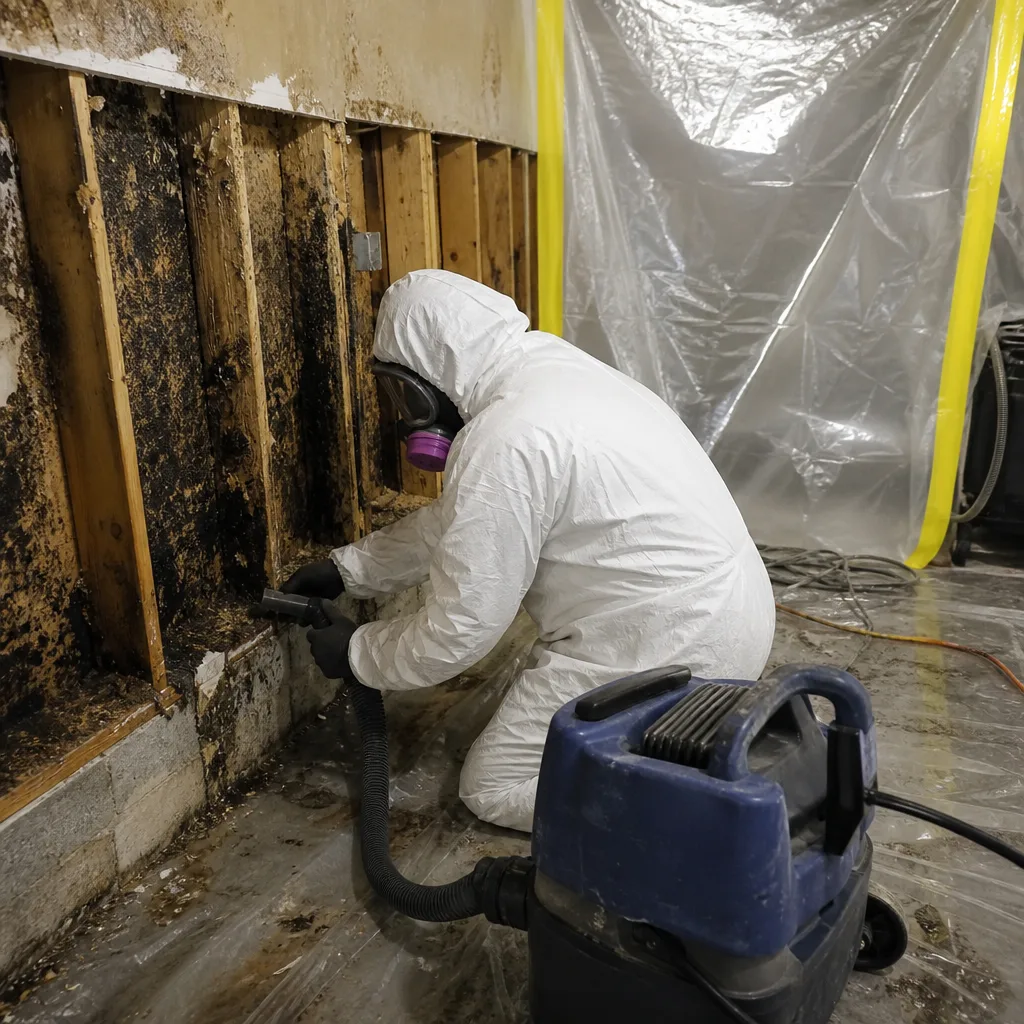
After mold remediation in a Snellville home, the air is what tells you whether the job worked. We run HEPA air scrubbers during and after the job, then take clearance air samples and compare them to the outside baseline. If the inside air isn’t cleaner than the air outside your house on Rosebud Road, the job isn’t finished. This is the difference between a company that removes mold and one that actually restores your home’s air quality. Wade writes it all down and gives it to you.
What happens when you call
- 1
A real person answersNo phone trees - you reach a local pro.
- 2
You get an upfront price rangeHonest numbers before anyone is dispatched.
- 3
A background-checked tech heads outLicensed & insured, dispatched right away.
- 4
You approve before work beginsNothing starts until you say go.
Trusted Brands We Service in Snellville
We run professional-grade equipment on every Snellville job: Dri-Eaz dehumidifiers, Phoenix axial fans, XPOWER air movers, and B-Air scrubbers. Wade’s credentials include IICRC certification and RIA affiliation, and as an IFA-recognized firm, our methods meet the industry’s hardest standards. For Snellville homeowners, that means the equipment in your hallway is the same gear used on commercial losses across the metro. We stock parts and replacements locally so we’re not waiting on a shipment when your crawlspace is sitting at 85% humidity.
Common Mold Remediation Problems We See in Snellville Homes
- Hidden polybutylene leaks behind kitchen and bathroom walls. Snellville’s 1980s and 1990s tract homes were commonly plumbed with gray PB supply lines that deteriorate from the inside out. Water seeps into wall cavities for days or weeks before the first stain appears on the outside.
- Red clay soil keeping crawlspaces wet long after rain stops. Snellville sits in the Georgia Piedmont. The clay here doesn’t drain. Storm water pools against foundation walls and lingers under houses, pushing crawlspace humidity past 70% for days.
- Attic freeze splits from minimal insulation around supply runs. Many Snellville homes built in the 1980s have undersized insulation in attic chases. A hard January freeze splits a supply line, and if the homeowner is away for the weekend, the water has been feeding ceiling mold for 48 hours before anyone notices.
- Deferred maintenance in rental and inherited properties. A portion of Snellville’s older inventory has passed from original owners to heirs or tenants. When a slow leak never gets reported, the first visible sign is often black mold blooming up a wall in a bedroom or garage.
Pricing for Mold Remediation in Snellville, GA
Here are real numbers for Snellville’s market. A straightforward mold inspection with moisture mapping and air sampling runs $300 to $550. Mold removal in a single wall cavity, including containment, material removal, drying, and treating, typically lands between $1,200 and $2,800. Black mold remediation in a crawlspace or attic with full containment and post-remediation verification runs $2,500 to $6,500 depending on square footage and how much material has to come out. Moisture and humidity control work, like sealing a clay-floor crawlspace and adding a dehumidifier, runs $1,800 to $4,200. Every Snellville job comes with a written scope before work starts. No surprises at the door. Call (888) 690-3757 for a free estimate, and don’t forget the standing offers: $40 off any repair over $200, a free second opinion on any written estimate, no trip charge inside our own county, and a permanent 10% discount for seniors and veterans.
We Also Serve Cities Near Snellville
Wade’s Restoration of Atlanta covers Snellville and the surrounding Gwinnett communities, including Lilburn, Loganville, Lawrenceville, and Stone Mountain. If you’re in one of those towns and seeing mold along a baseboard or smelling damp air from a crawlspace, call the same number: (888) 690-3757. Wade’s crew will be on the road before you hang up.
Serving Snellville, GA - Our Local Coverage Area
We’re based in the Snellville area and know this community well. Use the map below to see our service coverage - if you’re nearby, we can almost certainly help.
FAQs - Mold Remediation in Snellville
Mold colonization begins within 24 to 48 hours of a polybutylene pipe leak when moisture sits in a wall cavity. In a slab-on-grade Snellville home, the water has nowhere to drain, so it wicks upward through drywall and insulation. By day three, the mold is established. By day seven, it’s spreading behind the baseboards. Call (888) 690-3757 as soon as you suspect a leak. We’ll bring the moisture meter and find it before the mold wins.
No, the testing method is the same: interior and exterior air samples plus surface swabs where growth is visible. What changes is the urgency. Because polybutylene fails inside walls and feeds hidden mold for days, we recommend testing even after a “minor” leak that was caught early. In Snellville’s humid climate, a wall cavity that stays damp for 48 hours is already a mold risk.
Snellville’s heavy red clay soil drains slowly. When a summer thunderstorm drops two inches in an hour, the water pools against your foundation instead of soaking in. That standing water keeps the soil under your house saturated for days, and the humidity in the crawlspace climbs with it. French drains help, and so does encapsulation with a proper vapor barrier. Wade will show you the moisture readings and let you decide what makes sense.
Yes, and we see it most often in homes built between 1978 and 1995. When an attic supply line splits during a freeze, water runs down through the insulation and into the ceiling cavity. If the leak is slow, the water soaks the insulation and drywall from above before any stain shows through. Mold grows in the attic-side cavity first. By the time you see a yellow ring on the ceiling, the mold has been there for days. Call (888) 690-3757 for an attic moisture check after any hard freeze.
Three things: polybutylene plumbing, clay soil, and wood-frame construction with minimal insulation around supply runs. The PB pipe is the big one. Snellville’s 30039 and 30078 ZIP codes have one of the densest concentrations of polybutylene supply plumbing in the Atlanta metro, and Gwinnett County’s chlorinated municipal water accelerates the pipe’s internal deterioration. A sudden full-failure behind a kitchen wall is common. When that water hits a wood-frame wall with no drainage path, mold remediation in Snellville becomes a much bigger job than in a newer-build subdivision in Loganville or Lilburn. We plan accordingly.
Written by Wade Ferris, Owner at Wade’s Restoration of Atlanta, serving Snellville and Gwinnett County since 2007.