
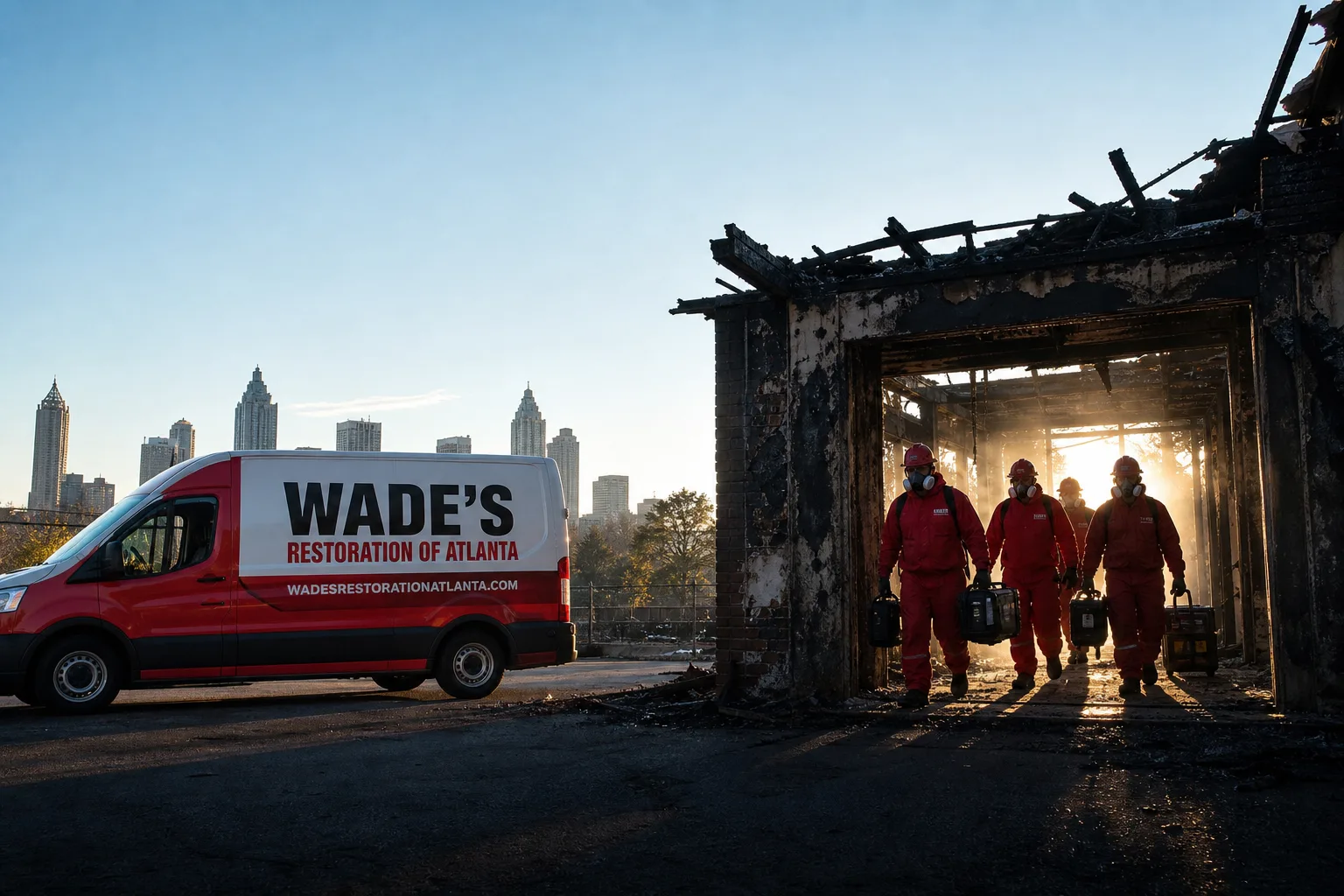
Fast, Reliable Storm & Disaster Restoration Across McDonough
Storm damage in McDonough doesn’t wait for business hours, and neither does Wade Ferris. If wind-driven rain just soaked your drywall or a garage door buckled under a spring squall line, here’s the straight answer: we answer the phone at (888) 690-3757, we’re on the road to your neighborhood inside the hour, and we start our Water Damage Restoration in McDonough before mold gets its 48-hour head start in Georgia heat. Wade’s Restoration of Atlanta serves homeowners across the 30252 and 30253 ZIP codes, from Lake Dow Road down to Kelleytown and over near Alexander Park, with the same crew Wade would send to his own house. No voicemail trees. No national call center. Just Wade or one of his guys, headed your way with professional-grade extraction gear, the same night if that’s when the storm hits.
What we know about McDonough specifically is that the storm isn’t your only problem. The house itself, built during the 1995-2015 building wave on Georgia red clay with OSB sheathing behind vinyl siding, is often the second emergency waiting to happen. Our Storm & Disaster Restoration team works these subdivisions every storm season, and we’ve learned where McDonough homes fail first.
Common Storm & Disaster Restoration Problems We See in McDonough Homes
Before we get into services and pricing, here’s what’s actually happening inside McDonough houses after a bad storm, based on what we see on the ground.
- Wind-driven rain saturating OSB wall sheathing. Vinyl siding looks fine from the street, but wind pushes rain horizontally into seams and around windows, where it wicks into oriented strand board. In McDonough’s summer humidity, that OSB starts growing mold within 48 hours. Most homeowners don’t know until the musty smell shows up two weeks later.
- Builder-grade vapor barriers that were never sealed. The 1995-2015 production homes throughout Henry County were built fast, and vapor barriers behind the siding were often stapled, not taped or sealed. We’ve opened walls in the 30253 area and watched wind-driven rain pour straight through gaps that should have been watertight from day one.
- Garage doors that aren’t wind-rated. Boom-era subdivisions rarely specified impact-rated or wind-rated garage doors. When a storm hits and the door flexes or a panel deforms, the pressure differential can blow out windows and even push interior walls inward. By the time the door jams, you’re no longer looking at a track repair. You’re looking at structural drying and sometimes wall reconstruction.
- Grading that pitches toward the foundation. Slab-on-grade homes in McDonough were frequently graded to move water toward the house, not away from it, because the lots were cut fast on red clay that doesn’t drain well to begin with. Post-storm flooding against the slab wicks up through the sill plate and into any drywall touching concrete.
Why Wade’s Restoration of Atlanta Is Who McDonough Calls After a Storm
Ask anyone on your street. Actually, that’s the whole point. McDonough is a place where the people who built your house all moved in around the same time, and when the same storm tears through a subdivision off Highway 81 or near Union Grove, neighbors talk. They know who showed up at 2 a.m., who called back, and who handed them a moisture log at the end of the job instead of a vague invoice. That’s the reputation Wade has built since 2007, and it’s the only marketing plan that matters in Henry County.
Wade is not a franchise. He owns the company, his name is on the truck, and his address and license number are published for anyone to look up. He answers his own phone. When a storm hits McDonough and a dozen neighbors call within the hour, Wade is the one coordinating which crew goes to which cul-de-sac, and he’ll tell you straight what he can get to first. The crews he sends are background-checked and uniformed, running Dri-Eaz, Phoenix, XPOWER, and B-Air equipment because that’s what actually pulls water out of OSB and drywall fast enough to beat the mold clock.
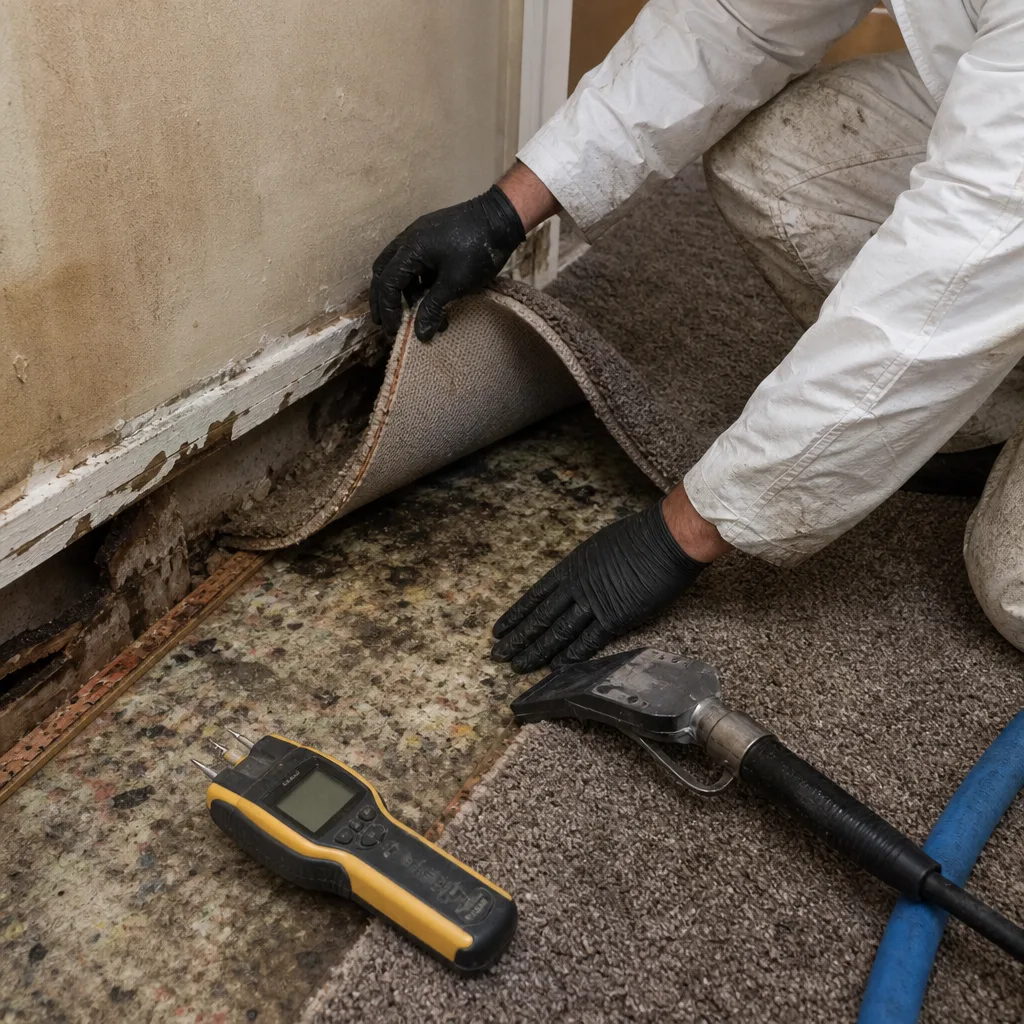
One thing that sets us apart in McDonough specifically: Wade takes moisture readings every single day and hands you the full log when the job is done. Almost nobody in this trade does that. You’ll see the numbers drop day by day, in writing, and you’ll know the drying actually worked behind the baseboards, not just on the surface. And every water, fire, and mold restoration job in McDonough carries the 90-Day Done Right Promise in writing. If it’s not done right, Wade comes back and makes it right. That’s not a marketing line. It’s stamped on the contract.
When you call about storm damage in McDonough, you’ll talk to a live person. Day or night. Wade handles insurance too, directly with your adjuster, so you’re not the middleman relaying information between two parties who never talk to each other. You hand him the claim number, he documents everything with photos, and he deals with the adjuster on your behalf.
Our Storm & Disaster Restoration Services in McDonough
Here’s what we actually do when a storm hits your McDonough home. Four services cover most of what we see, and each one starts with a free inspection and a written scope before we touch anything. No surprises at the door.
Storm Damage Cleanup
After high winds and hail tear through Henry County, McDonough yards and roofs collect debris fast: shingles, tree limbs, siding chunks, and sometimes sections of fence from the neighbor’s yard. We clear the hazards, document everything for insurance, and handle Reconstruction & Cleanup - McDonough to get the property safe before we start drying. The red clay soil here makes post-storm cleanup a little different; water pools on top of the clay instead of draining, so debris in the yard is often sitting in standing water that needs pumping before we can remove it without tracking contaminants inside.
Emergency Board-Up
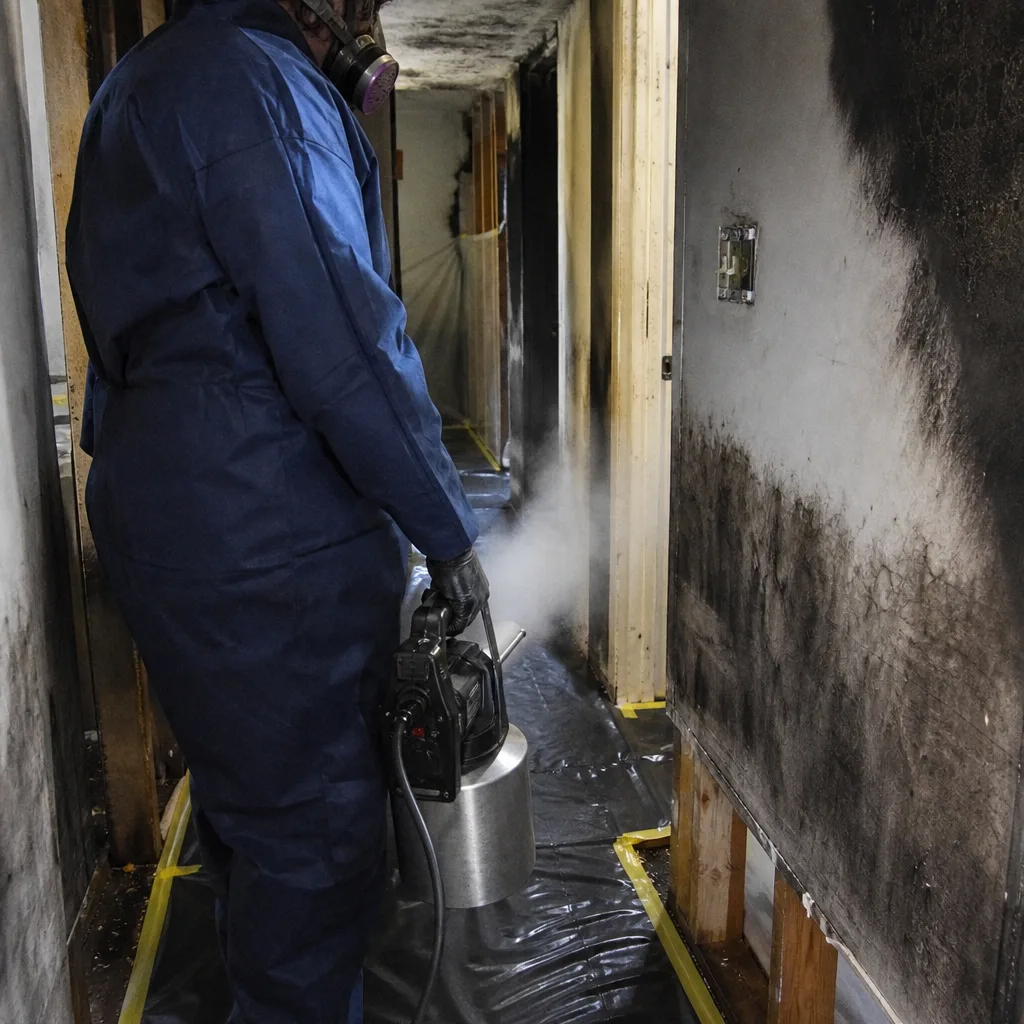
When a window blows out, a garage door buckles, or wind rips a hole in the wall, the house is open to weather, wildlife, and anyone walking by. We board up the opening the same night, usually within an hour or two of your call from anywhere in the 30252 or 30253 area. In McDonough’s storm season, the next squall line is often only hours away, so the board-up isn’t just security. It’s the thing that keeps a bad situation from becoming a full structural dry-out. We stock plywood, fasteners, and framing lumber on the trucks specifically for McDonough’s vinyl-sided, OSB-sheathed housing stock, because we know what those wall assemblies need to hold a patch under wind load.
Roof Tarping
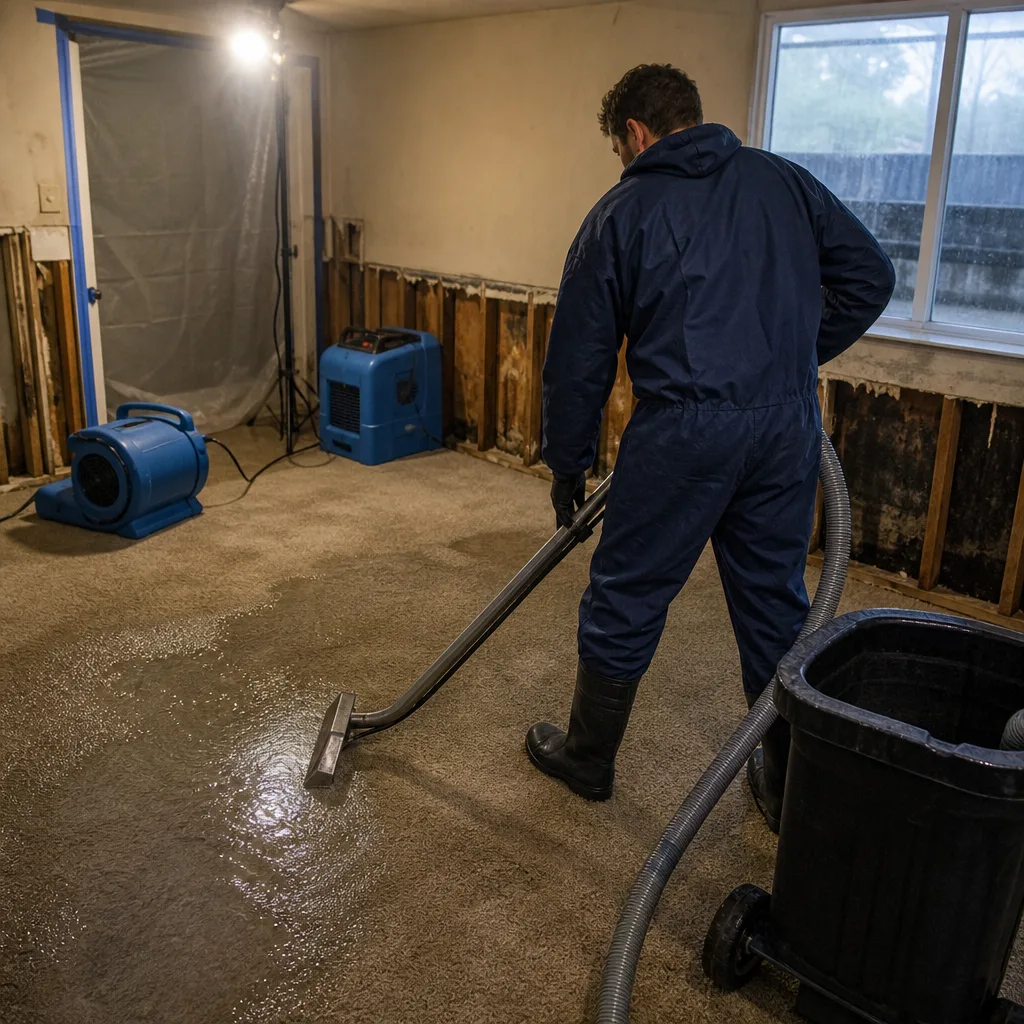
Hail and wind-driven rain can strip shingles and leave the roof deck exposed in minutes. We tarp the roof, seal the seams, and keep water out while you and your adjuster figure out the full repair scope. In McDonough, where summer storms dump an inch of rain in half an hour, the difference between a tarped roof and an exposed one is the difference between a shingle replacement and a full attic dry-out with mold remediation. Wade’s crew has the climbing gear and the training to do it safely in the dark, which is when most McDonough trees finally let go of their limbs.
Wind Damage Repair
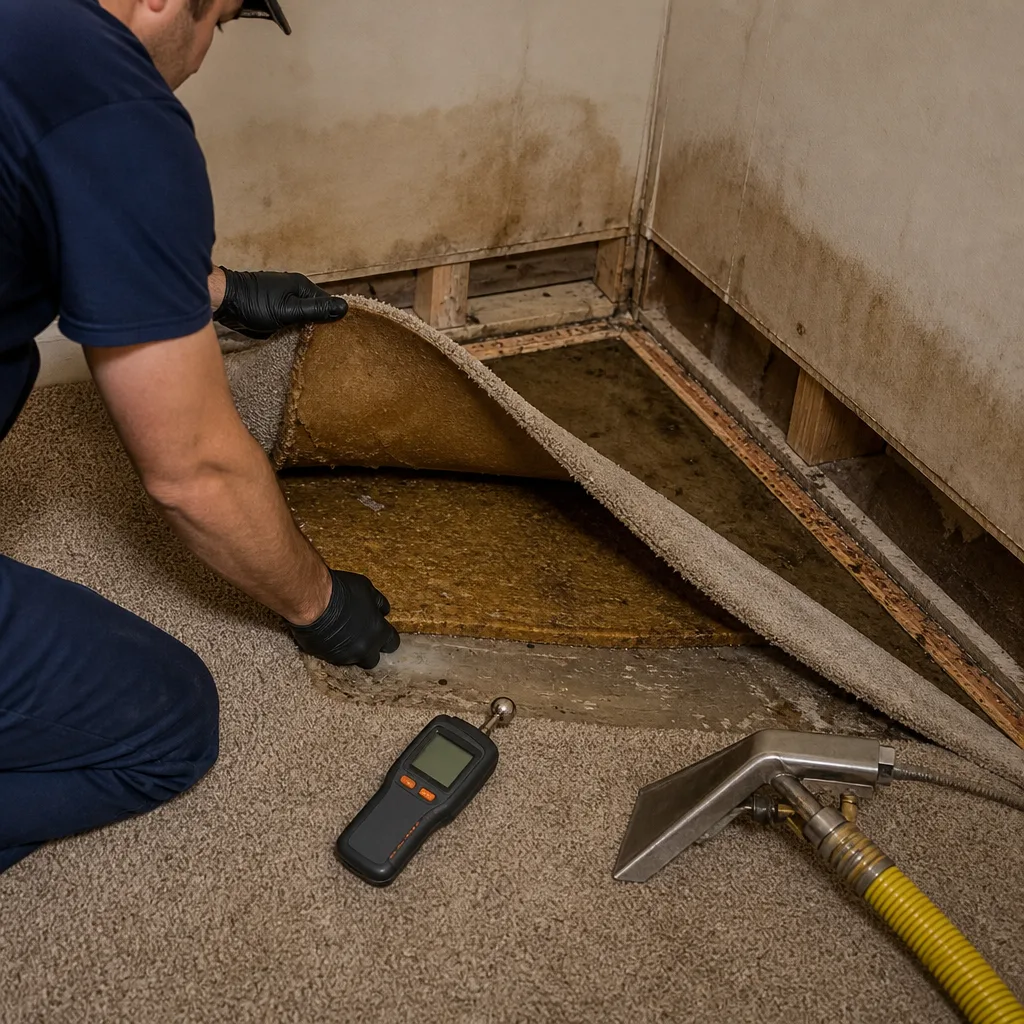
This is the one most McDonough homeowners underestimate. A garage door track that looks slightly bent or a panel that doesn’t sit flush gets patched cosmetically by the first handyman who shows up, and it fails the next time the wind blows. We re-tension tracks, replace deformed reinforcement, and reset panels to wind-rated specifications where the opening calls for it. On slab-on-grade homes specifically, we check how wind-driven rain got through the sill plate and into the drywall, because that’s where storm damage in McDonough turns into a mold problem nobody saw coming. Wind damage repair is the service McDonough calls us for most after a squall line, and it’s the one where our moisture readings and 90-Day Done Right Promise matter most.
What happens when you call
- 1
A real person answersNo phone trees - you reach a local pro.
- 2
You get an upfront price rangeHonest numbers before anyone is dispatched.
- 3
A background-checked tech heads outLicensed & insured, dispatched right away.
- 4
You approve before work beginsNothing starts until you say go.
What Storm Damage in McDonough Actually Looks Like: A Subdivision Cluster Event
Here’s the thing about McDonough that a generic storm restoration page won’t tell you: the suburb’s own building boom is the damage pattern. Between 1995 and 2015, Henry County converted farmland into subdivision after subdivision, and the houses were built to near-identical specifications. Same slab-on-grade foundations. Same vinyl siding. Same OSB sheathing. Same builder-grade vapor barriers. Same red clay lots, graded fast and often toward the foundation rather than away from it. When one storm hits, it doesn’t damage one house; it damages five houses on the same street in the same way, because they all have the same failure points.
We’ve seen it on cul-de-sacs in the 30252 area more times than we can count. A spring squall line tears through, wind-driven rain punches through failed vapor barriers, and three adjacent homes all have water in the same wall cavity behind the same siding seam. That’s a neighborhood-cluster event, not an isolated call, and it changes how we work in McDonough. We stage equipment for multiple homes at once. We talk to neighbors together, because everybody’s adjusting claims at the same time and half of them are asking the same questions about their garage doors and sill plates.
One job stays with our crew as a template for what McDonough storm restoration actually requires. After a spring squall line tore through a 30252 subdivision, our techs found wind-driven rain had punched through failed builder-grade vapor barriers in three adjacent homes on the same cul-de-sac. We used Dri-Eaz LGR dehumidifiers and XPOWER air movers to dry OSB wall cavities within 48 hours, then re-secured wind-rated garage door panels that had buckled under the pressure. In two of the three homes, we had to cut out wicking drywall along the sill plate, an all-too-common failure point on slab-on-grade construction.
That’s the McDonough information-gain hook in one paragraph: the suburb’s growth pattern, not just the weather, is why so many homes on the same street need storm restoration after the same event.
Trusted Brands We Service in McDonough
We don’t sell equipment, but we know what works on McDonough’s housing stock because we run it every day. Our trucks carry Dri-Eaz LGR dehumidifiers for the stubborn OSB and drywall drying these boom-era homes demand, Phoenix air movers for the wall cavities and sill plates where moisture hides, and XPOWER for rapid air movement in attics and crawlspaces after roof damage. McDonough’s hot, humid storm season means drying needs to be aggressive from hour one, not day three, and these are the machines that get the job done before mold takes hold. We keep a full stock of hoses, fittings, and replacement parts on the trucks because when we’re doing three houses on one cul-de-sac after a squall line, running back to the shop isn’t an option.
Pricing for Storm & Disaster Restoration in McDonough, GA
Storm restoration pricing in McDonough runs on the work actually needed, and we give you a written scope before anything starts. Here are the ranges we see in the 30252 and 30253 markets:
- Emergency board-up (single window or door opening): $180-$350, including materials and same-night labor
- Roof tarping (standard McDonough home, single-story or two-story footprint): $400-$900, depending on roof access and damage area
- Storm debris removal and yard cleanup: $200-$600 for typical post-storm debris, more if standing water requires pumping
- Wind damage repair to garage door track/panels: $250-$800, depending on whether reinforcement or full panel replacement is needed
- Full structural drying after wind-driven rain intrusion: $1,200-$3,500 depending on affected square footage and whether drywall removal is required
Every job in McDonough starts with a free inspection and a written scope, so the number we quote is the number on the contract. No trip charge inside our own county. Wade deals with your adjuster directly, and the 90-Day Done Right Promise applies to every storm restoration job we do in McDonough, in writing.
We Also Serve Cities Near McDonough
When we’re not on a McDonough job site, you’ll find our crews in the surrounding Henry County and metro-area communities: Stockbridge, Hampton, Lovejoy, and Conyers. Same owner on the phone, same response time to your door, same written scope before work starts. If you’re in one of those towns and you’re looking for Storm & Disaster Restoration in McDonough but need coverage nearby, call us and we’ll head your way.
Serving McDonough, GA - Our Local Coverage Area
We’re based in the McDonough area and know this community well. Use the map below to see our service coverage - if you’re nearby, we can almost certainly help.
FAQs - Storm & Disaster Restoration in McDonough
Mold can begin colonizing within 24 to 48 hours in McDonough’s summer heat and humidity, especially inside OSB wall cavities where there’s no airflow. That’s faster than most national restoration timelines assume, and it’s why Wade’s crew starts extraction and drying the same night you call, not the next morning. If water has been sitting behind vinyl siding or along a sill plate for more than a day, call (888) 690-3757 and we’ll start Biohazard & Crime Scene Cleanup in McDonough with the right equipment before mold takes hold. The 48-hour window is real in Henry County, not a scare tactic.
Because the subdivision was built in the same construction cycle, to the same specs, on the same red clay. Homes built between 1995 and 2015 in the 30252 and 30253 ZIP codes share identical failure points: builder-grade vapor barriers, slab-on-grade foundations, vinyl siding over OSB, and grading that often pitched toward the foundation. When a storm hits, wind-driven rain exploits the same weaknesses in every house on the block, and multiple neighbors need drying and repair simultaneously. That’s the McDonough pattern, and it’s why we stage crews and equipment for cluster events, not single calls.
No, most homes in McDonough’s boom-era subdivisions were built before current wind-load provisions were enforced, and wind-rated or impact-rated garage doors were rarely specified. That means your existing door may flex or deform under storm pressure, and a buckled panel or bent track leaves the house exposed to wind intrusion and water damage. Wade can assess whether your door and track meet current wind-load expectations for Henry County and recommend reinforcement if the opening calls for it. Call us for a free inspection before the next storm season, not after.
Call us at (888) 690-3757 first, and don’t try to operate the door. A bent track or loose panel means the door is no longer secured, and forcing it open or closed can cause it to jam off-track or collapse. More importantly, a deformed door leaves the opening vulnerable to wind pressure that can blow out windows and push interior walls inward, turning a track repair into a full structural dry-out. Wade or one of his crew can be on-site in McDonough within the hour, secure the door, and assess whether water has already wicked into the wall cavity behind the track.
McDonough’s Georgia red clay drains slowly, so post-storm water pools against foundations and saturates the soil beside slab-on-grade homes, wicking moisture up through the sill plate into drywall and OSB. The clay also makes grading problems worse, since water sits on the surface instead of moving away from the house. Our drying protocol in McDonough accounts for the clay: we check sill plates and low wall cavities specifically, and we use Dri-Eaz LGR dehumidifiers longer than we would on sandy soil. If your yard is still spongy two days after a storm, that water is still working against your foundation. Call (888) 690-3757 and we’ll take moisture readings and show you the numbers.
Call Wade’s Restoration of Atlanta for Storm Damage in McDonough
When the storm passes and your McDonough home is wet, open to the weather, or just doesn’t look right, call (888) 690-3757. Wade Ferris answers his own phone, day or night, and he’ll tell you straight what you’re dealing with and what it’ll take to fix it. Free inspection, free estimate, no trip charge inside Henry County. If you’re a senior or veteran, that’s a permanent 10% discount on every job. If you have a written estimate from anyone else, bring it in and Wade will give you a free second opinion, no charge for that either.
The storm already did its damage. Don’t let the next 48 hours do the rest. Call now.
Written by Wade Ferris, Owner at Wade’s Restoration of Atlanta, answering his own phone for McDonough homeowners at (888) 690-3757.