
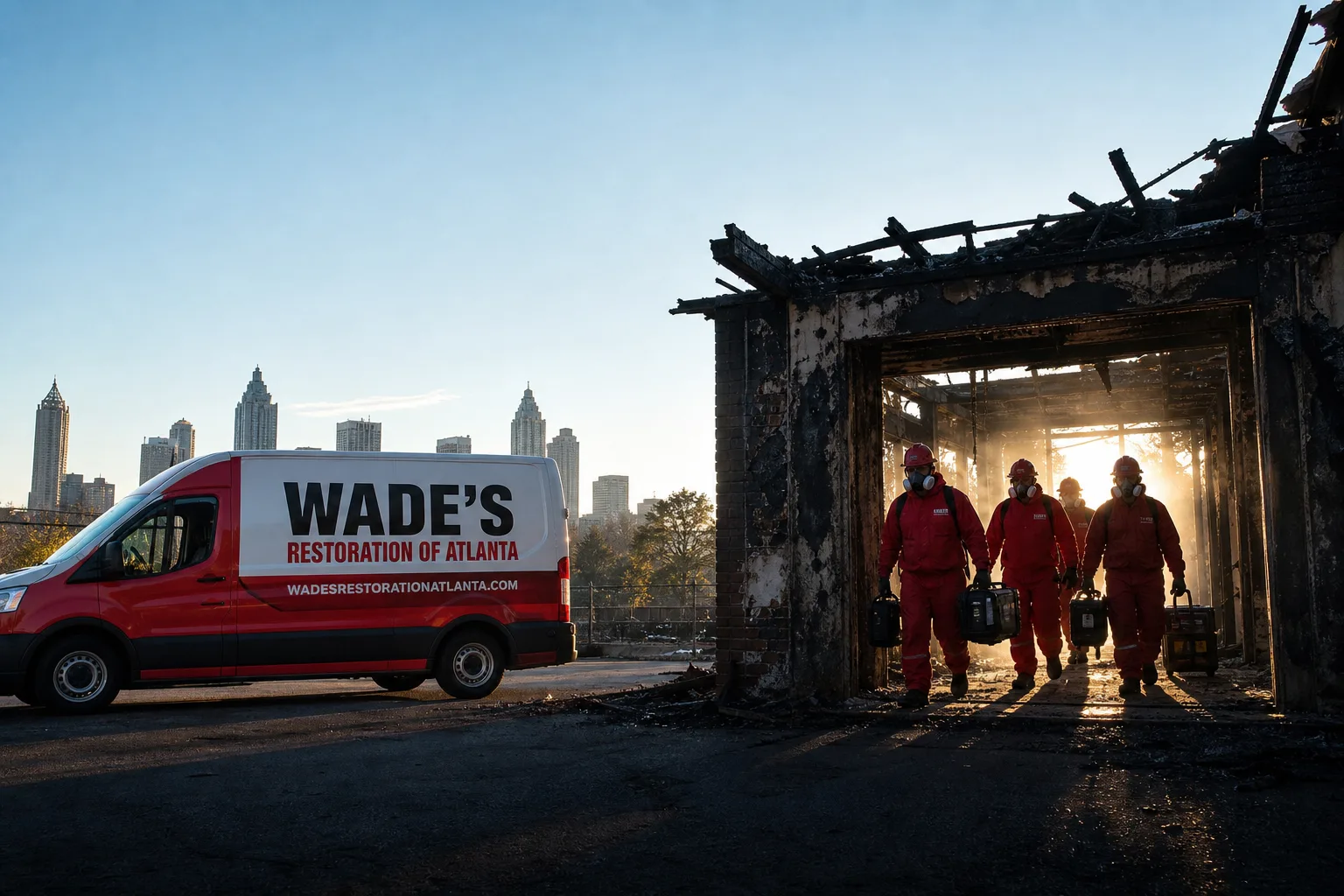
Fast, Reliable Storm & Disaster Restoration Across Sugar Hill
Storm damage in Sugar Hill rarely announces itself politely. You get a microburst off Lake Lanier at 4 a.m., a hail cell rolling down GA-20, or an ice event that drops a limb through the roofline, and suddenly the clock starts. Mold colonization in this part of Gwinnett County moves faster than it does inland, because the lake’s humidity sits in the air even when the sky clears. That’s why storm restoration here isn’t a next-week project. It’s a right-now problem, and the sooner extraction and drying equipment hits the affected area, the less structural damage you’re facing. Our Storm & Disaster Restoration team knows Sugar Hill’s alley-loaded townhomes, its 1990s vinyl-clad subdivisions, and the red clay that holds groundwater against foundations long after the rain stops. Call (888) 690-3757 and a live person answers, day or night.
Why Sugar Hill Homeowners Call Wade’s Restoration of Atlanta
Wade Ferris founded this company in 2007, and he still answers his own phone. That matters in Sugar Hill more than most places, because a lot of the storm work here happens in tight quarters: rear alley garages, zero-lot-line townhomes, breezeways measured in inches. The national outfits send whoever’s closest and largest. Wade sends his own crew, background-checked and uniformed, with equipment sized for Sugar Hill’s actual site conditions. Emergency board-up after a tree fall on Westbrook Road? Wade heads out. Roof tarping on a townhome cluster off Whitehead Road where the alley barely fits a pickup? He’s been there. Ask anyone on your street who’s had a storm come through. The name they’ll give you is usually his.
There’s a reason for that. When a summer microburst peeled shingles off a Sugar Hill home and the first crew on scene was a crew that had never worked a lake-proximity moisture problem, the drying was done wrong. Wade’s crew doesn’t treat storm water as clean, doesn’t stop at visible drywall, and doesn’t leave a dehumidifier running in a parking lane that blocks your neighbor’s garage door. For our Water Damage Restoration in Sugar Hill, we follow the same careful protocol. He’s local in the way that counts: he’ll be back in Sugar Hill on Saturday, and you’ll likely see him at the hardware store. That’s the oldest accountability system there is.
Our Storm & Disaster Restoration Services in Sugar Hill
Storm work in Sugar Hill breaks into a few buckets. Here’s what we actually do on Sugar Hill jobs, in order of how often they come up.
Storm Damage Cleanup
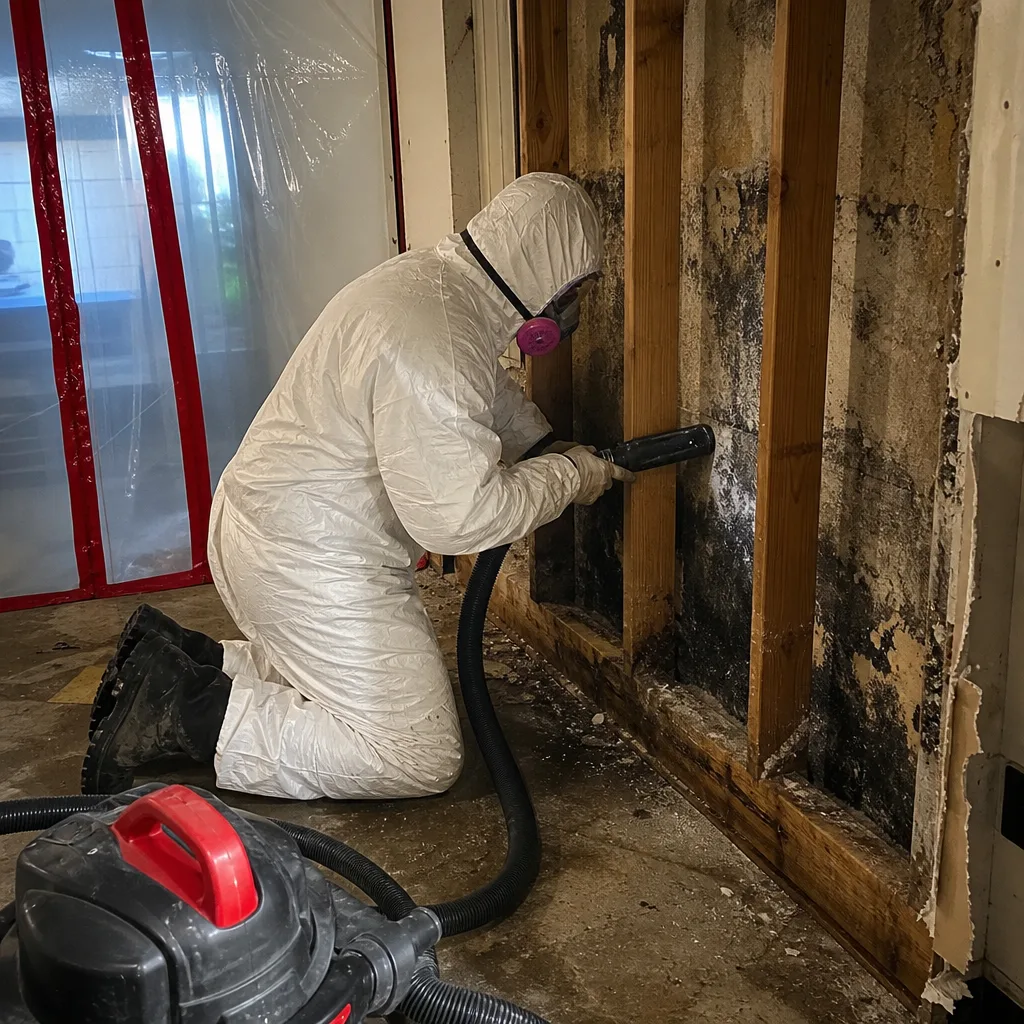
Sugar Hill’s Piedmont weather pattern means roughly 55 to 60 inches of rain a year, much of it arriving in summer thunderstorms that dump hard and fast. When a storm drops seven inches on red clay that drains poorly, water presses against foundations, saturates crawl spaces, and migrates into lower wall cavities. Storm damage cleanup in Sugar Hill means more than extracting standing water: it means treating the silt and organics that Georgia red clay runoff leaves behind. Skip that step and you’re looking at mold bloom inside 48 hours, especially this close to the lake. Our crews run antimicrobial protocols on every storm water intrusion, not just the pretty jobs.
Flood Damage Restoration
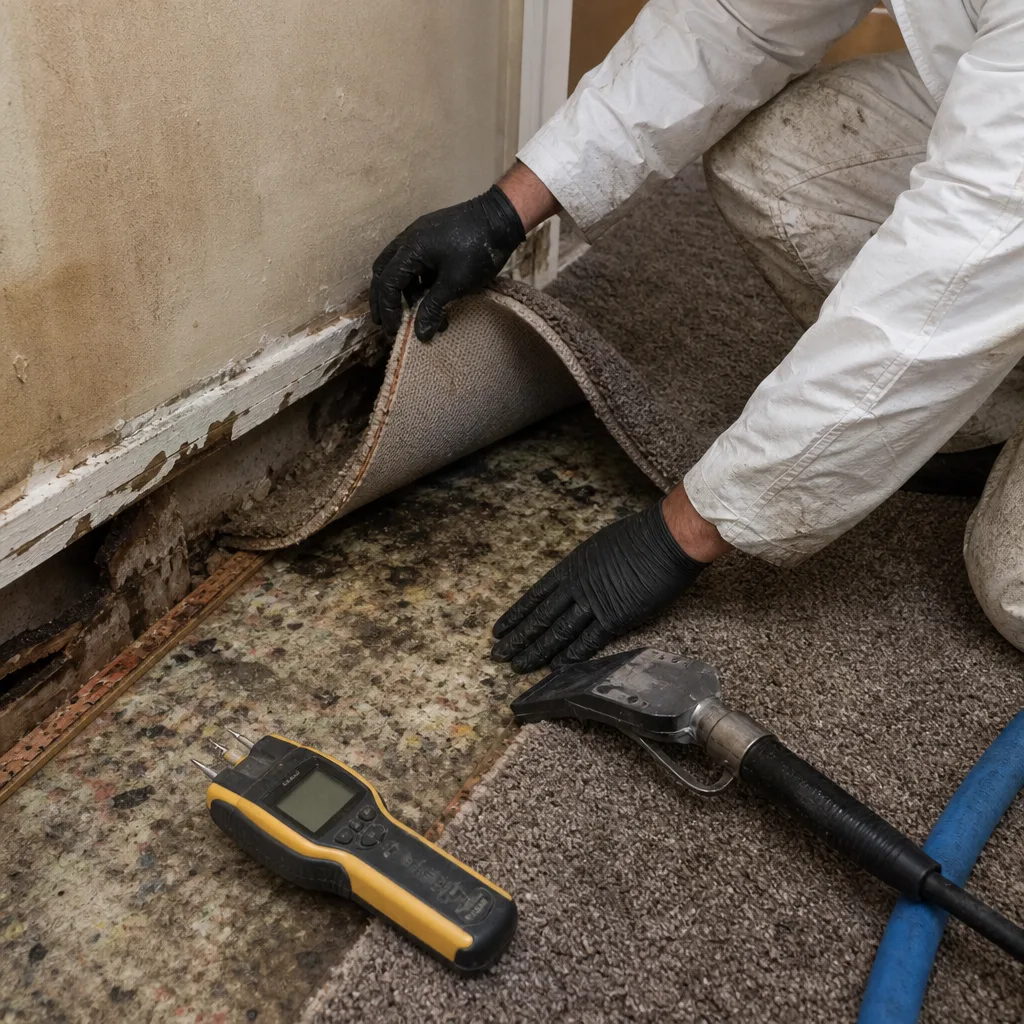
Flooding in Sugar Hill doesn’t always come from the sky. Lake Lanier’s fingers and coves push groundwater toward the subdivisions immediately south, and the clay soil holds it there. Townhomes north of GA-20 and west of Peachtree Industrial Boulevard testing elevated moisture in lower walls even with no acute storm event are a regular find for us. Flood restoration here requires aggressive structural drying, not just carpet removal. Dri-Eaz LGR 3500i dehumidifiers and XPOWER air movers get placed against wet framing, and we take moisture readings daily. You get the full log at job’s end. Almost nobody in the trade does that.
Emergency Board-Up
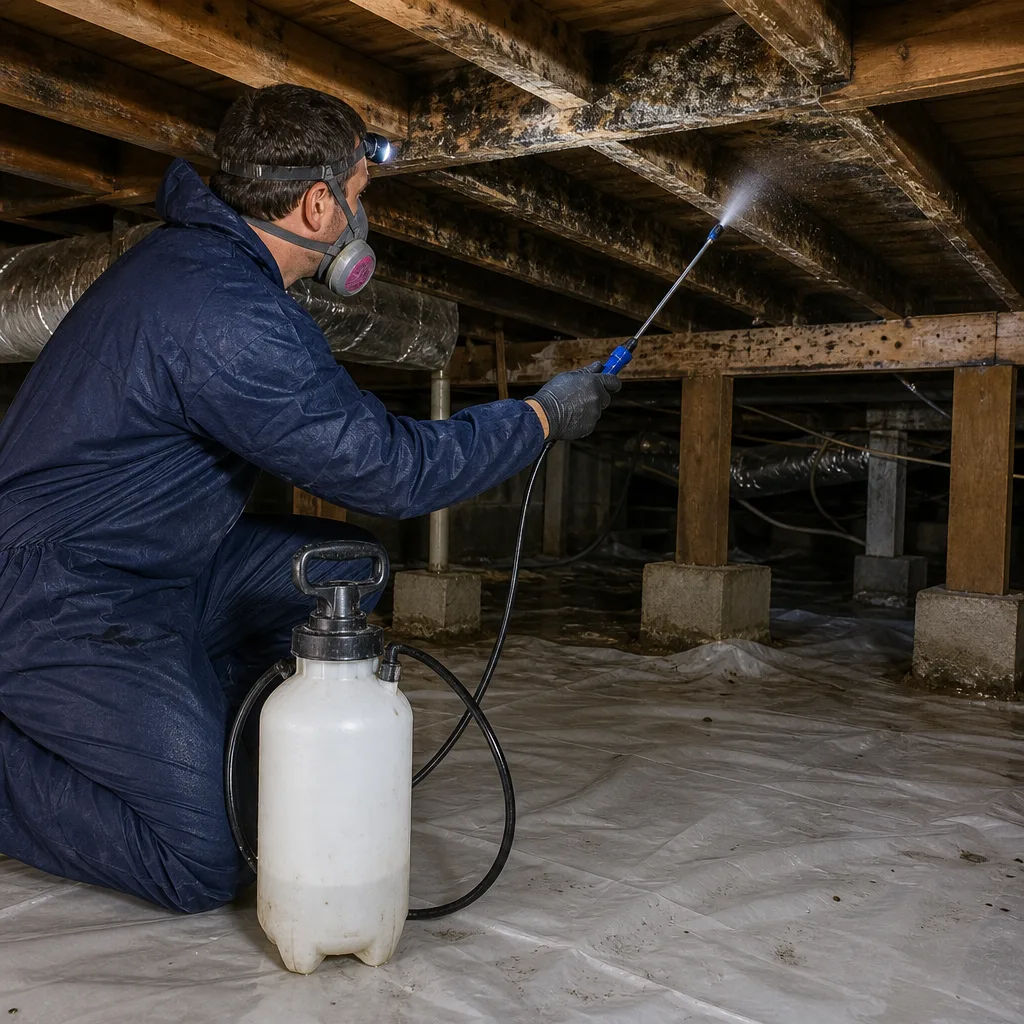
A tree limb through a Sugar Hill window at 1 a.m. leaves your house open to rain, raccoons, and whoever decides to take a look inside. Emergency board-up secures the opening fast, before the next cell rolls in. For Sugar Hill’s alley-loaded townhomes, that means working from rear entries with tight clearances, staging lumber without blocking a neighbor’s garage or the fire lane. We board the opening properly, not just nail a sheet of OSB over the hole and call it done. Then we photograph everything for your adjuster.
Roof Tarping
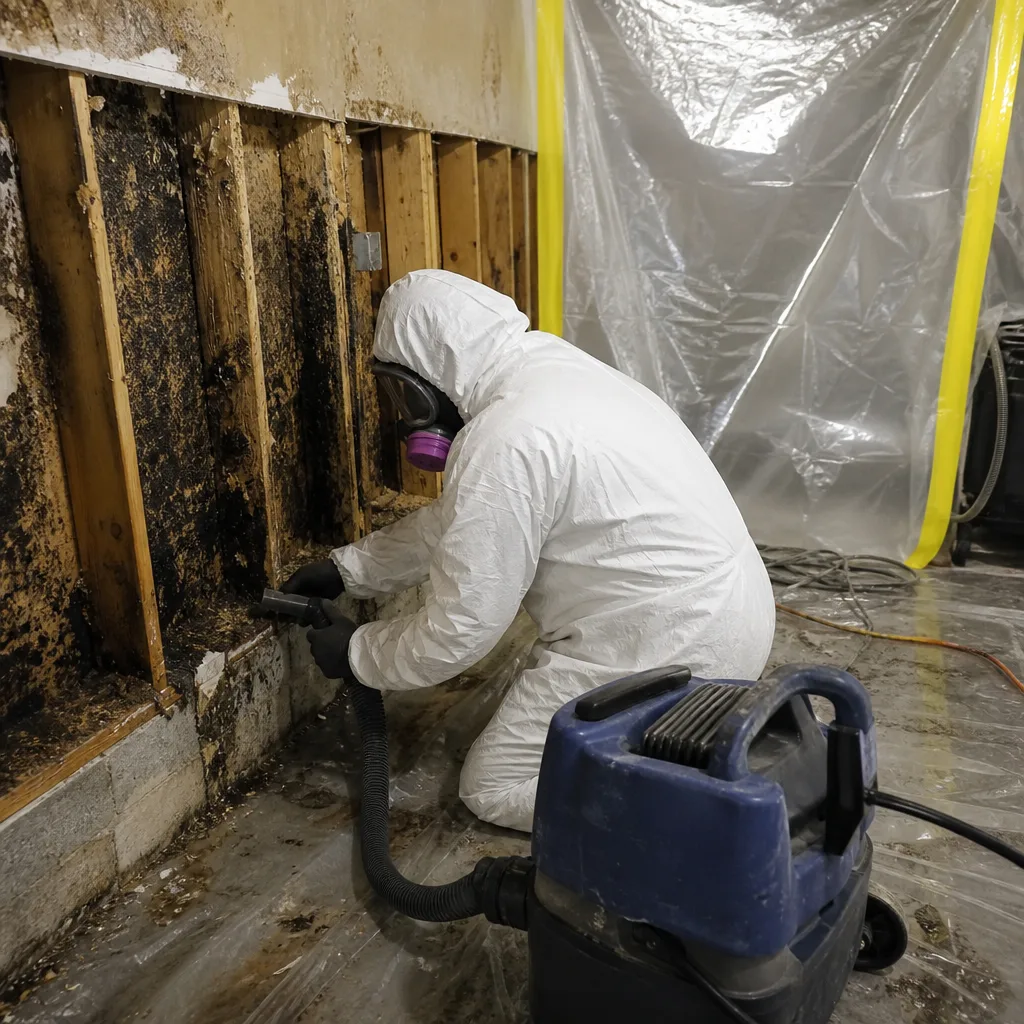
Roof tarping after hail or a microburst is the single most time-sensitive storm task in Sugar Hill. Once water gets past the shingles and into the OSB sheathing, the clock starts on delamination. Vinyl-clad 1990s construction absorbs moisture aggressively, and the lake humidity means that moisture doesn’t just air-dry. We tarp the breach the same day we’re called, using weighted, perimeter-sealed tarps that survive the next afternoon’s thunderstorm instead of ending up in a neighbor’s yard. On Whitehead Road, we tarped before the next storm hit, and that roof cavity was dry in 51 hours rather than becoming a full re-sheathing job. When damage goes beyond tarping, we also provide Reconstruction & Cleanup in Sugar Hill.
What happens when you call
- 1
A real person answersNo phone trees - you reach a local pro.
- 2
You get an upfront price rangeHonest numbers before anyone is dispatched.
- 3
A background-checked tech heads outLicensed & insured, dispatched right away.
- 4
You approve before work beginsNothing starts until you say go.
Trusted Brands We Service in Sugar Hill
We run Phoenix and Dri-Eaz equipment on Sugar Hill restoration jobs, with XPOWER air movers mixed in for compact spaces where a larger unit won’t clear an alley-loaded garage. The equipment itself matters less than the fact that we stock parts and know these machines. A Phoenix 200 Max LGR that hiccups on a Sugar Hill job where humidity is already pushing the envelope gets swapped fast, not repaired at a warehouse across town. For Sugar Hill’s lake-proximity moisture conditions, we size the equipment to the cubic footage and the moisture load, not to what’s easy to roll through the door.
Common Storm & Disaster Restoration Problems We See in Sugar Hill Homes
- Alley and breezeway clearance failures. Sugar Hill’s dense townhome clusters, particularly north of GA-20, leave 18 to 24 inches of side clearance. Full-size restoration equipment doesn’t fit. We compact-stage and run hose runs through breezeways, so drying never gets interrupted because a neighbor needed to get their car out.
- Storm water treated as clean when it isn’t. Red clay runoff carries silt and organic material into flooded crawl spaces. You can’t just pump it out and run fans. Antimicrobial treatment is mandatory in Sugar Hill, and a lot of crews skip it. Then mold shows up two weeks later and the whole job gets redone.
- Hidden moisture in lower wall cavities. This is the lake effect. Even after visible drywall is removed and the room feels dry, lower wall cavities near the slab can still read above 20% moisture because the soil outside stays chronically wet. If restoration stops at visible surfaces, you get delamination and callbacks. We test the cavities, not just the air.
- Improper tarp anchoring on steep rooflines. Sugar Hill’s Piedmont topography means many rooflines are steep-pitched, and afternoon thunderstorms come with gust fronts off Lanier. A poorly anchored tarp is a liability and usually gone by morning. We use perimeter sealing and weighted strapping rated for these wind loads.
Pricing for Storm & Disaster Restoration in Sugar Hill, GA
Storm damage cleanup in Sugar Hill typically runs $1,400 to $3,800 depending on square footage, water class, and how much framing got wet. Emergency board-up on a single opening runs $250 to $600 including materials and labor; a full townhome window-and-door board-up after a tree fall lands closer to $800 to $1,500. Roof tarping runs $400 to $950 for most Sugar Hill rooflines, with steep-pitch or two-story work at the upper end. Flood damage restoration with structural drying and daily moisture logging runs $3,500 to $9,000 on a typical Sugar Hill lower level, and properties near the lake that need encapsulation or extended dehumidification push higher. You’ll get a written estimate before any work starts, and we bill your insurance directly when that’s the route. Call (888) 690-3757 and Wade will walk the scope with you before you sign anything. No trip charge inside the county, and if you already have a written estimate from another company, bring it in for a free second opinion.
We Also Serve Cities Near Sugar Hill
Storm work brings us through Storm & Disaster Restoration in Sugar Hill and into the surrounding Gwinnett and Hall County corners. We regularly cover Buford, Suwanee, Flowery Branch, and Duluth, usually running multiple jobs on the same storm event. If you’re in one of those towns and a limb just came through your roofline, the response time is the same: call and Wade heads out.
Serving Sugar Hill, GA - Our Local Coverage Area
We’re based in the Sugar Hill area and know this community well. Use the map below to see our service coverage - if you’re nearby, we can almost certainly help.
FAQs - Storm & Disaster Restoration in Sugar Hill
We can usually have a roof tarped within 4 to 6 hours of your call in Sugar Hill, including townhome clusters with rear alley access. The limiting factor isn’t equipment size, it’s staging. Our compact rigs and hose runs fit through 18-to-24-inch breezeways, so we work from the alley without blocking your neighbor’s garage door. Call (888) 690-3757 and we’ll give you a real arrival window, not a call-center promise.
Yes. Sugar Hill’s lake-proximity humidity keeps ambient moisture elevated year-round, so any water intrusion spreads through wall cavities faster than it would inland. Even a single wet room near the lake usually warrants dehumidification in the affected cavity plus adjacent lower wall spaces. We test moisture readings before and after drying and hand you the log, so you can see the numbers drop to spec.
No. We use compact Dri-Eaz LGR 3500i dehumidifiers and XPOWER air movers sized for Sugar Hill’s tight clearances, and we stage them in the breezeway or on the garage apron, never in a shared alley or a neighbor’s access. On a Whitehead Road townhome after a microburst, the full drying setup fit in a 22-inch side breezeway while two Phoenix LGRs worked from the apron, and the neighbor’s garage door never had to close around our equipment.
We stage debris removal manually for Sugar Hill alleys that can’t take a full-size debris trailer. Crews carry debris in wheeled bins or contractor bags from the rear garage through the breezeway to a truck parked on the street, then haul it out. It’s slower than a big dump trailer, but it doesn’t block the alley, scratch a neighbor’s fence, or force you to wait on a tow for a stuck trailer. Call (888) 690-3757 and we’ll assess the access when we arrive.
It depends on moisture content and how long it’s been wet. Sugar Hill’s 1990s-era OSB sheathing can often be dried in place with Injectidry mats and aggressive dehumidification if we get to it within 48 hours and moisture content is below 30%. Once saturation passes 48 to 72 hours, delamination usually begins and replacement becomes the safer call. We’ll take readings of the sheathing, not just the room air, and give you a straight answer with the numbers in front of you.
Written by Wade Ferris, Owner at Wade’s Restoration of Atlanta, serving Sugar Hill and surrounding Gwinnett County.