
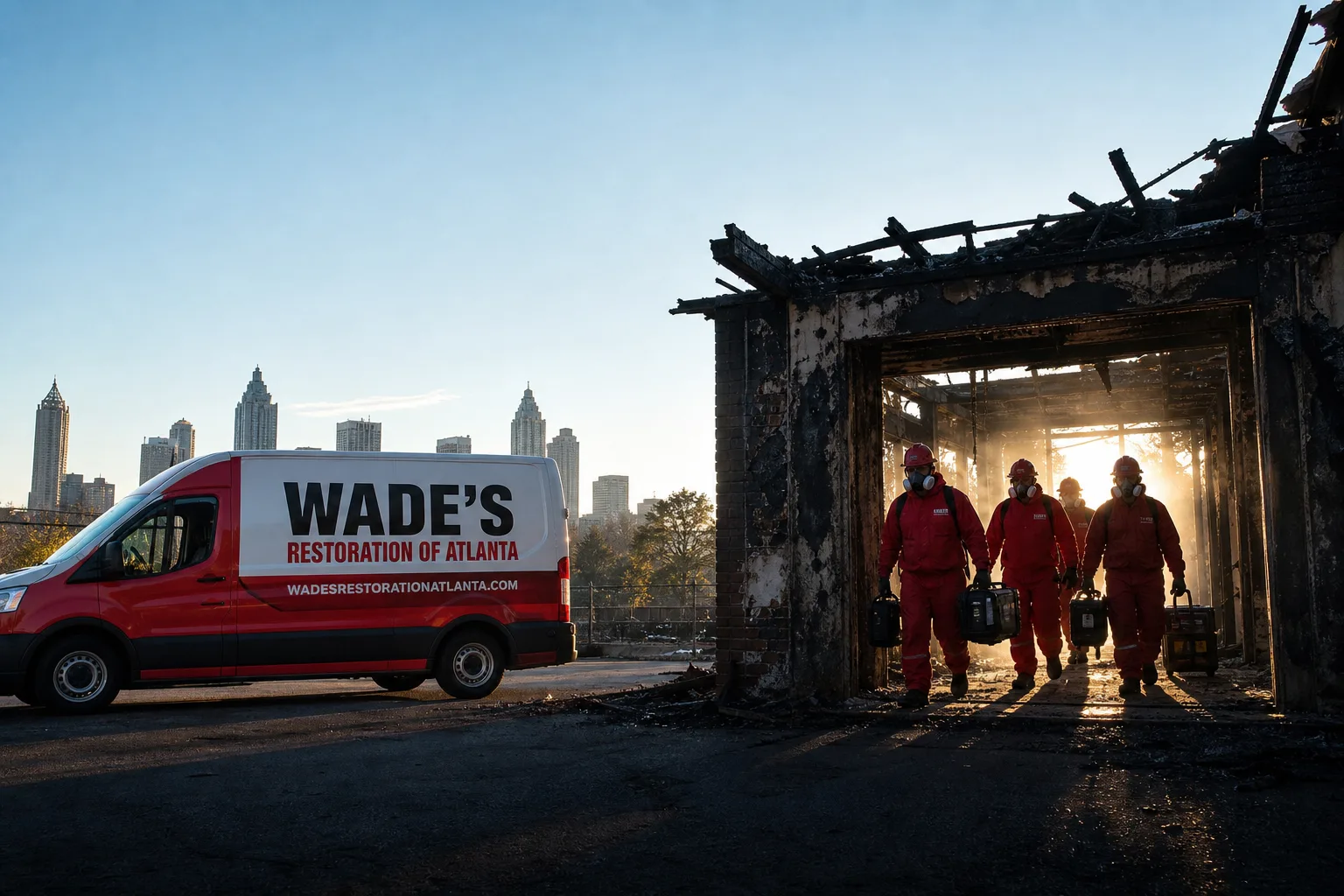
Fast, Reliable Water Damage Restoration Across Conley
Water damage restoration in Conley typically runs $2,800-$7,500 for a standard Category 2 or 3 extraction and structural drying job, and most calls we get from the 30288 ZIP can be answered by a live person and get a crew rolling inside the hour. That speed matters here more than most places. Conley’s flat ground, old pipes, and position in the South River watershed mean standing water does not wait politely. If you’re looking at a flooded basement off Cedar Grove Road or standing water in a crawl space near the Norfolk Southern terminal, call Wade Ferris at (888) 690-3757. He answers his own phone.
We know this community. We know the ranch houses on slab and the older ones on crawl spaces. We know what sheet flooding does to a 1962 brick-veneer split-level when a summer storm stalls over the rail yard. And we know that the people in Conley don’t want a call center or a national chain that sends a stranger with a tablet and a script. They want someone who will show up, take moisture readings every single day, and hand them the log when the job’s done. That’s how we work. Ask anyone on your street.
Why Wade’s Restoration of Atlanta Is Conley’s Preferred Water Damage Restoration Company
Wade’s Restoration has been owned and operated by Wade Ferris since 2007. He publishes his name, his address, and his license number. That’s not common in this trade, and it’s the reason Conley homeowners keep calling. When you call for Water Damage Restoration, you’re not getting routed through a national answering service. Wade picks up. If it’s two in the morning and there’s water coming through the ceiling, he’s the one on the line deciding whether to head out now or tell you honestly that waiting until daylight is safe. He’s been known to say, “I will be there myself,” and mean it.
Response time to Conley is measured in minutes, not days. The Atlanta dispatch office coordinates scheduling, but crews are on the road into 30288 throughout the day and overnight. We’ve pulled water out of homes off Old Conley Road, rerouted dry downs in Hapeville the same afternoon, and had a pump truck staged near Forest Park before the rain stopped. The 90-Day Done Right Promise is the backbone of every job: if it’s not done right, we make it right, in writing, stamped on the contract. Not a verbal assurance. Paper.
Conley homeowners also appreciate the straight-dealing approach. We give you a written scope before the work starts, not a vague “we’ll see what we find” handshake. Wade deals with your insurance adjuster directly, so you’re never the one stuck relaying information between two sides. And we don’t upsell you into a full gut-and-rebuild when drying and targeted repair is the honest call. A lot of national outfits make their money on volume. We make ours on walking into the hardware store on a Saturday and running into you without having to cross the street.
Our Water Damage Restoration Services in Conley
Emergency Water Extraction
When a supply line lets go or a storm pushes water under doors and through crawl-space vents, the first thing that matters is getting standing water out before it wicks into drywall, subfloor, and framing. In Conley’s older ranch homes, where original hardwood and plaster are common, every hour counts. Our crews run truck-mounted extraction units and Dri-Eaz LGR dehumidifiers sized for the space, not for the sales script. We’ll have extraction running inside the hour on most Conley calls. Call (888) 690-3757 and Wade or a senior tech on his crew will talk you through what you can safely do before we arrive.
Structural Drying & Dehumidification
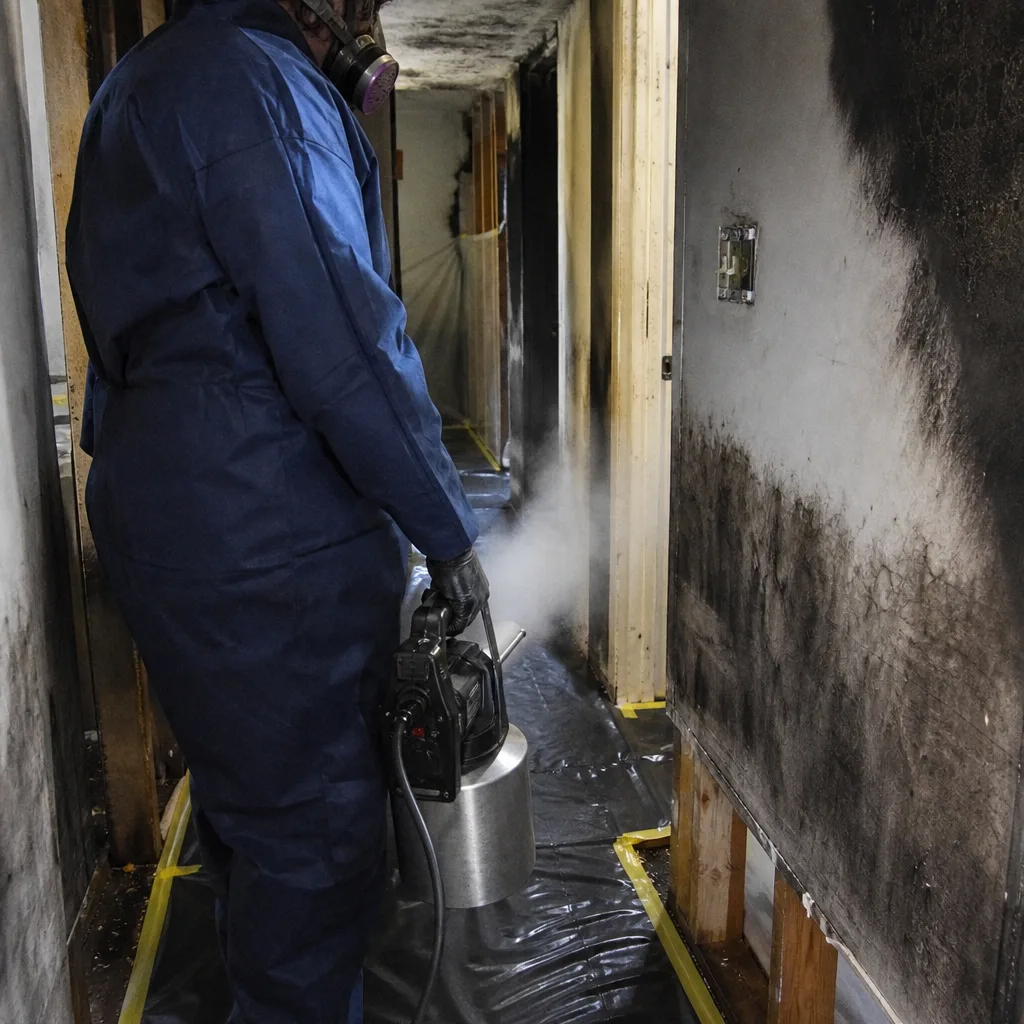
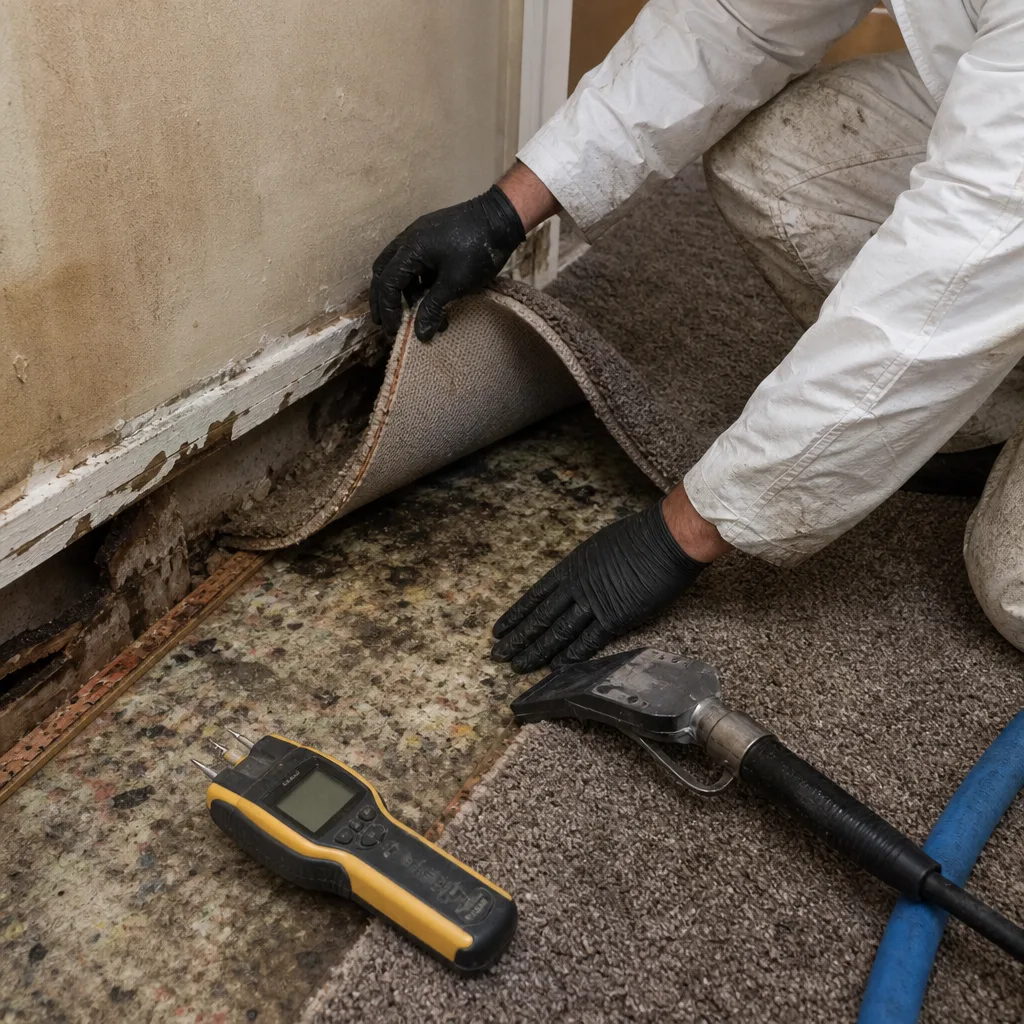
Drying a structure properly in Conley is different from drying one in a higher, better-drained part of Clayton County. Crawl spaces here hold humidity against brick foundations. If you pull the drying equipment before wood moisture equivalent falls below 16%, you’ve done the job wrong, period. We run daily moisture readings and hand you the complete log at the end. Nearly nobody in this business does that. It’s the difference between a dry-out that holds and a mold bloom that shows up six weeks later behind the paneling in your den.
Flood Cleanup
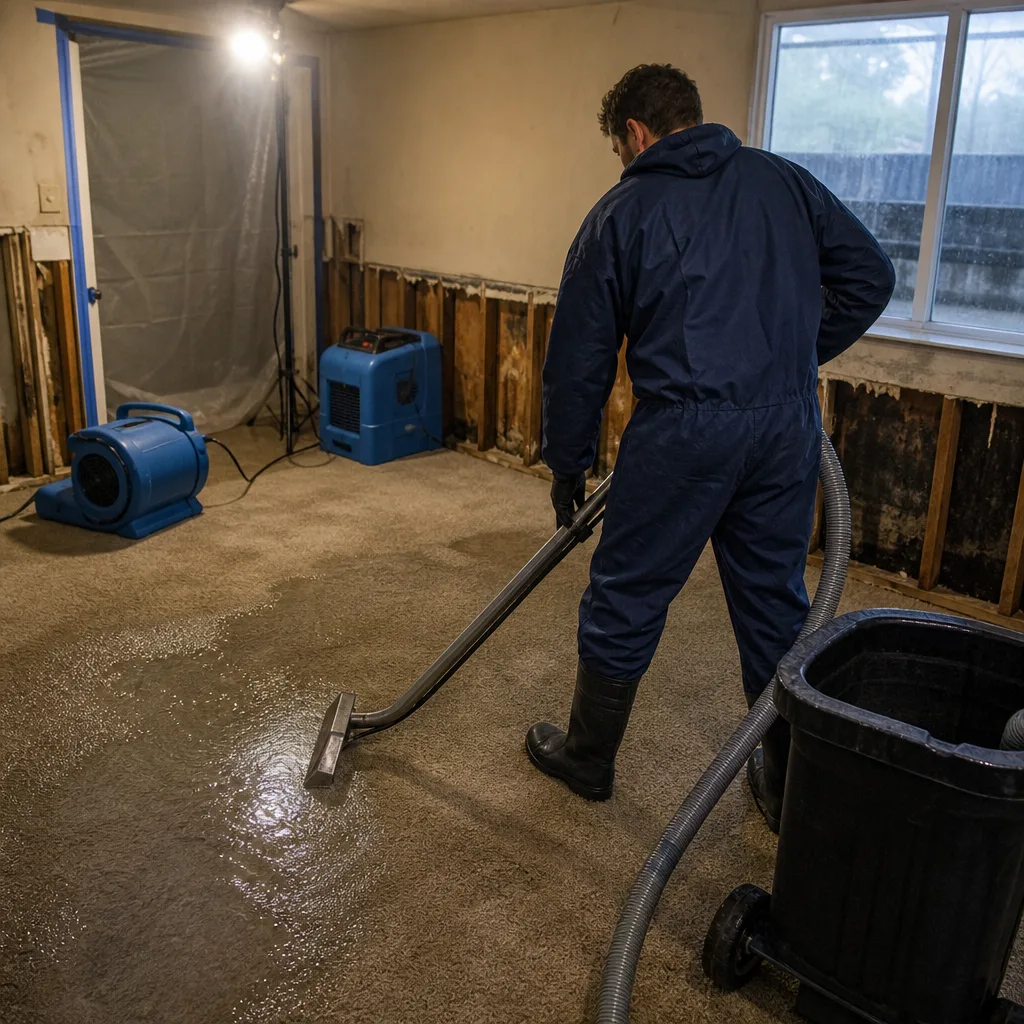
The South River watershed and Conley’s flat terrain mean even a moderate rainfall event can produce sheet flooding that moves fast across yards and into low doors. We have pulled water out of homes on both sides of the rail terminal where the water wasn’t from a pipe, a roof, or a sewer backup. It just came up and in. Flood cleanup here starts with category assessment: is this clean water, gray water, or worse? Then extraction, sanitizing, drying, and a written scope for what needs to be removed and what can be saved. We’re straight with you about that. Every time.
Burst Pipe Restoration
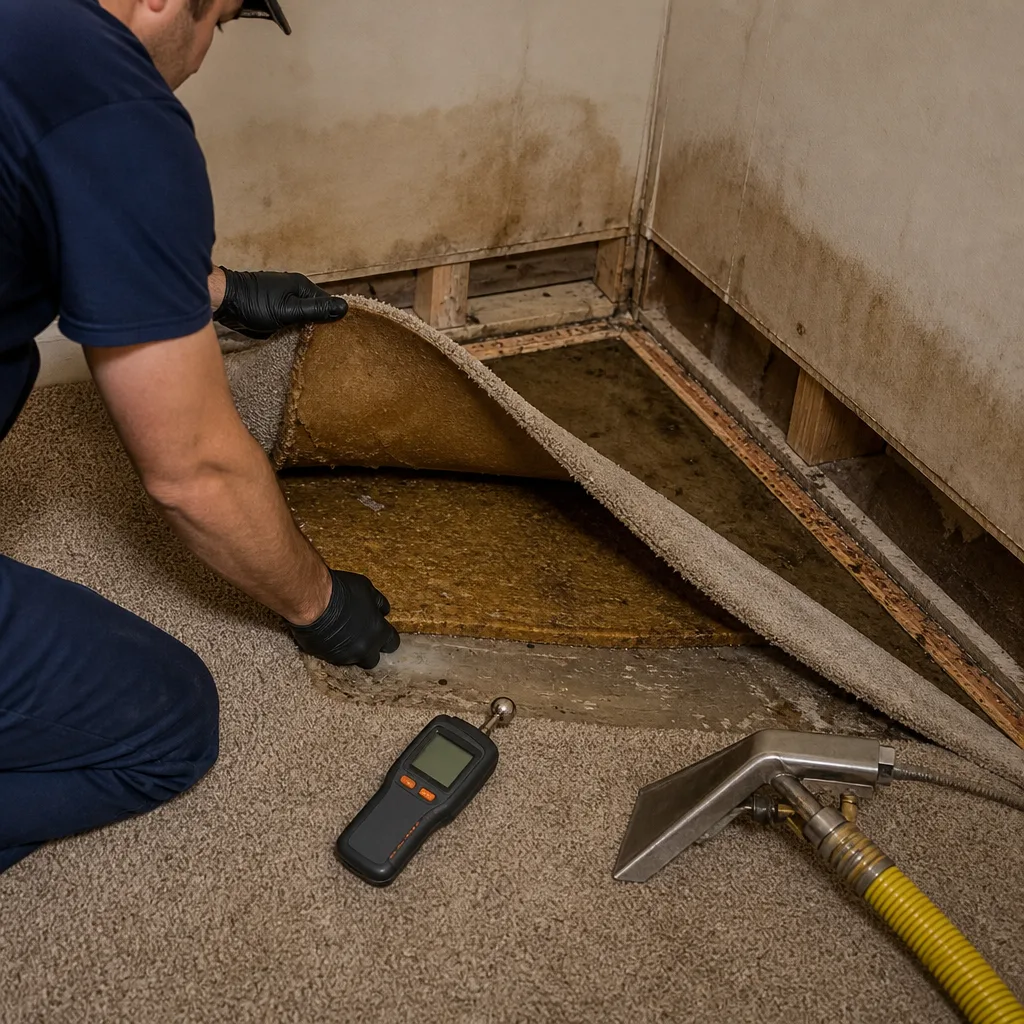
Conley’s housing stock runs heavy to 1950s and 1960s construction. That means original galvanized supply lines and cast-iron drains in a lot of these homes. When one lets go, the damage is often already extensive before anyone notices. A pinhole leak behind a wall in a hallway can soak insulation, wick down into the subfloor, and start attacking floor joists while you’re at work. We trace the full path of the water, not just the visible stain, and we scope the rest of the line before repairing. A burst pipe is rarely an isolated failure in a 60-year-old system. We’ll tell you the truth about what we see.
What happens when you call
- 1
A real person answersNo phone trees - you reach a local pro.
- 2
You get an upfront price rangeHonest numbers before anyone is dispatched.
- 3
A background-checked tech heads outLicensed & insured, dispatched right away.
- 4
You approve before work beginsNothing starts until you say go.
Trusted Brands We Service in Conley
We use professional-grade equipment from Dri-Eaz, Phoenix, and XPOWER on restoration jobs across Conley, and we’re familiar with the systems and materials in the older homes around the 30288 ZIP, which matters when you’re matching original thicknesses and profiles. Wade’s crew is IICRC-certified and RIA-affiliated, and we don’t send anyone into your home who hasn’t been background-checked. Our trucks stay stocked for the work Conley actually sees: submersible pumps for flooded basements, high-capacity dehumidifiers for tight crawl spaces, and moisture meters calibrated daily. If we say we’re bringing the right equipment, that’s what’s on the truck. No trip charge inside our own county, and if you’re a senior or a veteran, the 10% discount is permanent.
Common Water Damage Restoration Problems We See in Conley Homes
- Drying equipment pulled too early. In 1950s-70s brick-veneer ranch crawl spaces, crews that don’t track daily moisture readings will often pull dryers before wood moisture equivalent drops below 16%. The surface feels dry, the crawl space smells fine, and then mold blooms behind the paneling six weeks later. We chart readings every day and hand you the log.
- Post-flood air quality testing that ignores the rail yard. Conley sits beside the Norfolk Southern Conley Intermodal Terminal. Decades of freight and heavy equipment activity mean ambient particulates in this ZIP are already elevated. A third-party clearance test that doesn’t account for that baseline will fail or produce readings nobody can interpret. We coordinate baseline sampling first, then clearance testing after the dry-out. It takes longer, and it’s the right way to do it.
- Cast-iron drain repairs done with glued PVC and no lateral scope. An old cast-iron line fails in one spot, someone cuts out the bad section, glues in PVC, and the next backup happens forty feet downstream where the old pipe has bellied out or scaled shut. In Conley’s older homes, if we’re repairing a cast-iron drain, we scope the whole lateral before we do anything else. You don’t need to pay for a repair that won’t hold.
- Water hiding in crawl spaces that never get inspected after the dry-out. After a flood or supply-line break, the living space gets dried and painted, but the crawl space under the house stays damp because nobody looked. On many 1960s ranches off Cedar Grove Road and Old Conley Road, that’s exactly where the worst damage hides. We inspect and dry the crawl space as part of every water restoration job in Conley, not as an extra line item dangled after the fact.
Pricing for Water Damage Restoration in Conley, GA
Water damage restoration in Conley runs in honest ranges, and we’ll tell you what yours will cost before we start. A standard Category 1 or 2 water loss with extraction and structural drying typically runs $2,800-$4,500. If there’s sewage involved, you’re looking at $5,000-$8,000 because of sanitizing protocols, containment, and material disposal. A burst supply line that floods a finished basement can hit $7,500-$12,000 when drywall, flooring, and trim have to come out and be replaced. What drives the top end in Conley specifically? Crawl-space access, the age of your plumbing, how long the water sat, and whether the moisture readings bottom out clean or keep climbing, which happens more often in these older homes than people expect.
We offer a free second opinion on any written estimate: bring us another company’s written quote and Wade will look at it and tell you straight whether it’s fair, padded, or missing something. No charge for that. No trip charge inside our own county, either. Call (888) 690-3757 and we’ll get you a real number.
We Also Serve Cities Near Conley
If you’re a homeowner in Hapeville, Forest Park, Gresham Park, or Morrow, we handle water damage restoration there too, and we carry the same response time and the same 90-Day Done Right Promise with us. For full details on our water restoration services and coverage across the broader metro, visit our Water Damage Restoration in Conley page. Same crew, same Wade, same written guarantee.
Serving Conley, GA - Our Local Coverage Area
We’re based in the Conley area and know this community well. Use the map below to see our service coverage - if you’re nearby, we can almost certainly help.
FAQs - Water Damage Restoration in Conley
Conley sits low and flat within the South River watershed. When rain falls on the broader Clayton County drainage basin, a lot of that runoff concentrates through this corridor. Even a storm that wouldn’t flood a house in Forest Park can push sheet water under doors and through crawl-space vents in Conley. Add in the older housing stock with original plumbing and you get a recipe for water intrusion that has nothing to do with a leaky roof. If you’ve taken on water after a storm, call (888) 690-3757 and Wade will tell you whether it’s safe to wait for daylight or whether we need to be there now.
Decades of freight rail activity and heavy truck traffic around the Conley Intermodal Terminal have created an ambient particulate baseline that is higher in this ZIP than in most of Clayton County. When we dry out a home and then bring in a third-party environmental firm for post-remediation clearance testing, those tests have to establish a pre-existing baseline first or the numbers won’t make sense. We coordinate that process directly with the environmental lab and your adjuster. If you skip it, you can end up with failed clearance results that have nothing to do with your actual water damage.
No, not always. A pinhole leak at a threaded joint or a section with localized corrosion can sometimes be repaired without replacing the entire run. But in Conley’s older homes, we almost always recommend scoping the full interior line before we repair because the failure you can see is rarely the only problem. Galvanized pipe corrodes from the inside out. If one section has let go, the rest is usually thin in places too. We’ll show you the scope footage and tell you straight what can be repaired and what should be replaced. Call (888) 690-3757 and we’ll come look before you spend a dime.
In most cases, yes. The key is getting drying equipment into the crawl space itself and monitoring daily moisture readings in the framing and subfloor. We use high-capacity dehumidifiers and air movers positioned to draw moisture down and out, not up through your floors. If the hardwood above has already cupped or buckled, that’s a different conversation, but if you catch it when the water first appears, the floors can often be saved. The worst thing you can do is wait. Water in a crawl space does not dry on its own in Conley’s humid climate. It just spreads.
Because the wood never got below 16% moisture equivalent before the equipment was pulled, or because the crawl space was never addressed at all. Many restoration crews dry the visible living space and call it done. In Conley’s older ranch-style homes, the crawl space is where the water went first and where it lingers longest. We run daily moisture logs, we dry the crawl space, and we stay until the numbers hold. The 90-Day Done Right Promise is in writing on every job: if mold comes back, we come back. No debate.
Written by Wade Ferris, Owner at Wade’s Restoration of Atlanta, serving Conley and surrounding communities since 2007.