
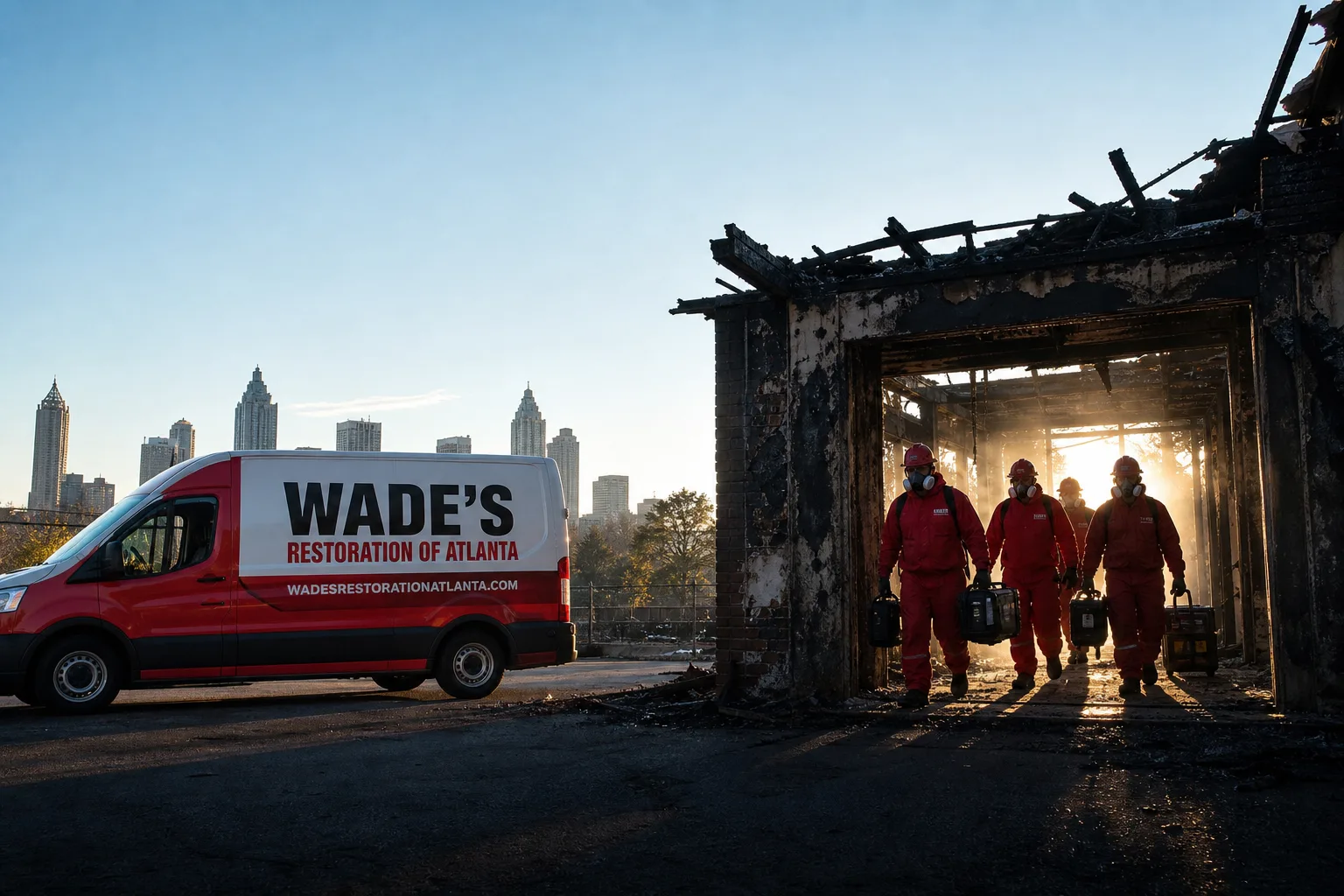
Fast, Reliable Water Damage Restoration Across Tucker
Water damage restoration in Tucker typically runs $1,800-$6,500 for extraction, drying, and repairs, and we can usually have a crew at your door within the hour when you call (888) 690-3757. If you live in the 30084 or 30085 ZIP, you already know the drill: a summer thunderstorm rolls through, a loblolly pine or water oak limb comes down, and water is suddenly where it should never be. Wade Ferris founded this company in 2007, and he still answers his own phone because he’s the one who’ll show up and tell you straight what needs to happen.
Why Wade’s Restoration of Atlanta Is Tucker’s Preferred Water Damage Restoration Company
Ask anyone on your street. We’ve been pulling water out of Tucker’s mid-century ranches and split-levels long enough that our trucks are a familiar sight along Lavista Road and Henderson Mill Road. Wade publishes his name, his address, and his license number because when you hire us, you get him – not a call center, not a rotating cast of subcontractors. Homeowners in Tucker keep our number because they know the same guy who quotes the job is the one who checks the moisture readings himself.
Response time matters more here than most places, and not just because of the 52 inches of rain Tucker gets in a typical year. The red clay under DeKalb County sheds water laterally instead of soaking it up. That means a burst pipe that sits for six hours in a crawl space off Henderson Mill Road is already wicking into floor joists. A roof leak that waits until Monday behind a downed water oak is already feeding mold in the subfloor. We cut that clock short. Calls are answered by a live person, 24/7, and Wade heads out himself with extraction running inside the hour.
Every water job we do in Tucker Carries the 90-Day Done Right Promise in writing. If it’s not done right, we make it right. No fine print, no phone tree. One call brings Wade back.
Our Water Damage Restoration Services in Tucker
Our Water Damage Restoration team handles the full sequence, from first extraction to final drying log. Here’s what that looks like in Tucker specifically.
Emergency Water Extraction
When a microburst drops a pine limb through a 1962 split-level roof off Henderson Mill Road, the first hour determines everything. We run XPOWER and B-Air extractors and air movers into the affected rooms, pulling standing water off hardwood, subfloor, and carpet before it migrates into the crawl space. In Tucker’s older stock, that migration happens fast because the brick ranch slab-and-crawl construction gives water a hundred hidden paths downward.
Structural Drying & Dehumidification
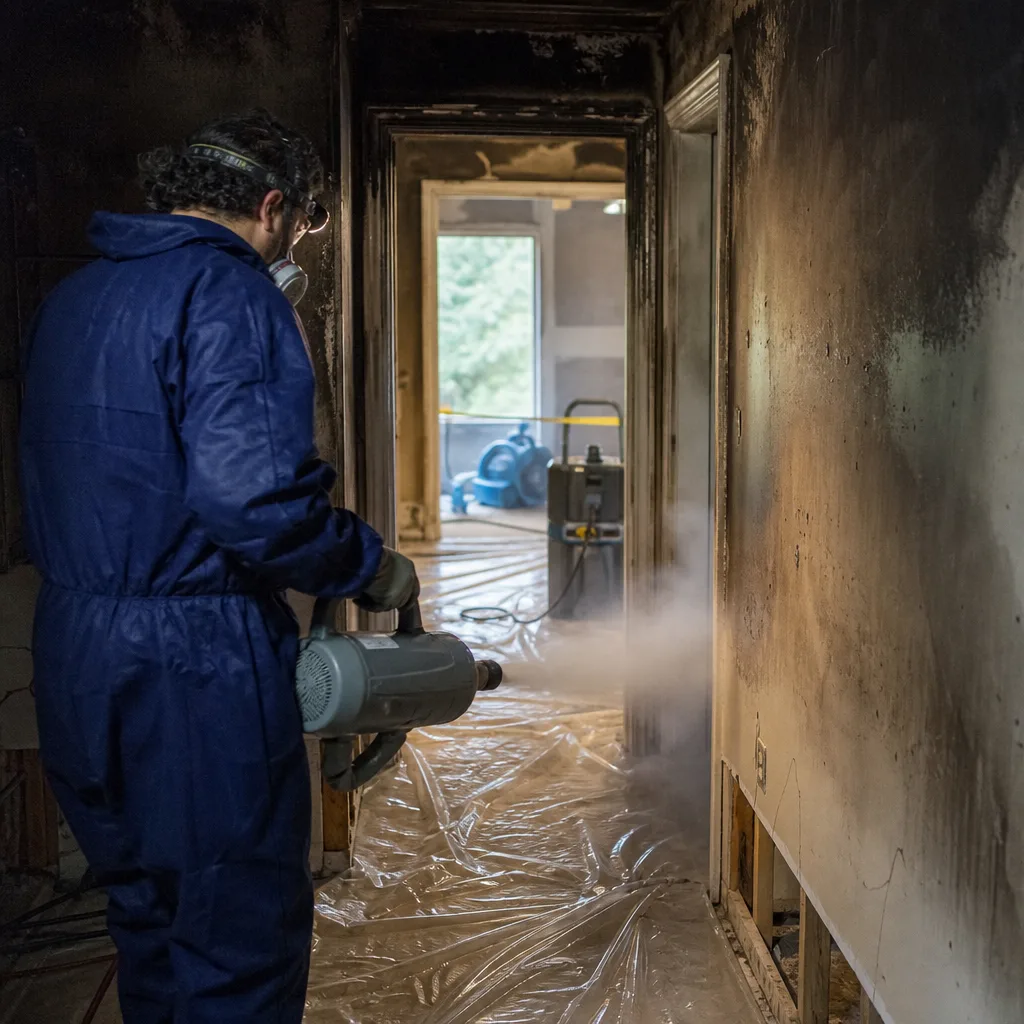
Drying a 1,000-1,800 sq ft ranch in Tucker isn’t the same as drying a newer build in the suburbs. The vented crawl spaces, the original oak subfloors, and the red clay underneath all hold moisture differently. We run Phoenix 500 desiccant dehumidifiers, Injectidry floor-mat systems on original hardwood, and take moisture readings every single day. You get the full log at the end – not a summary, not a verbal “it’s dry.” The actual numbers, dated and signed.
Flood Cleanup
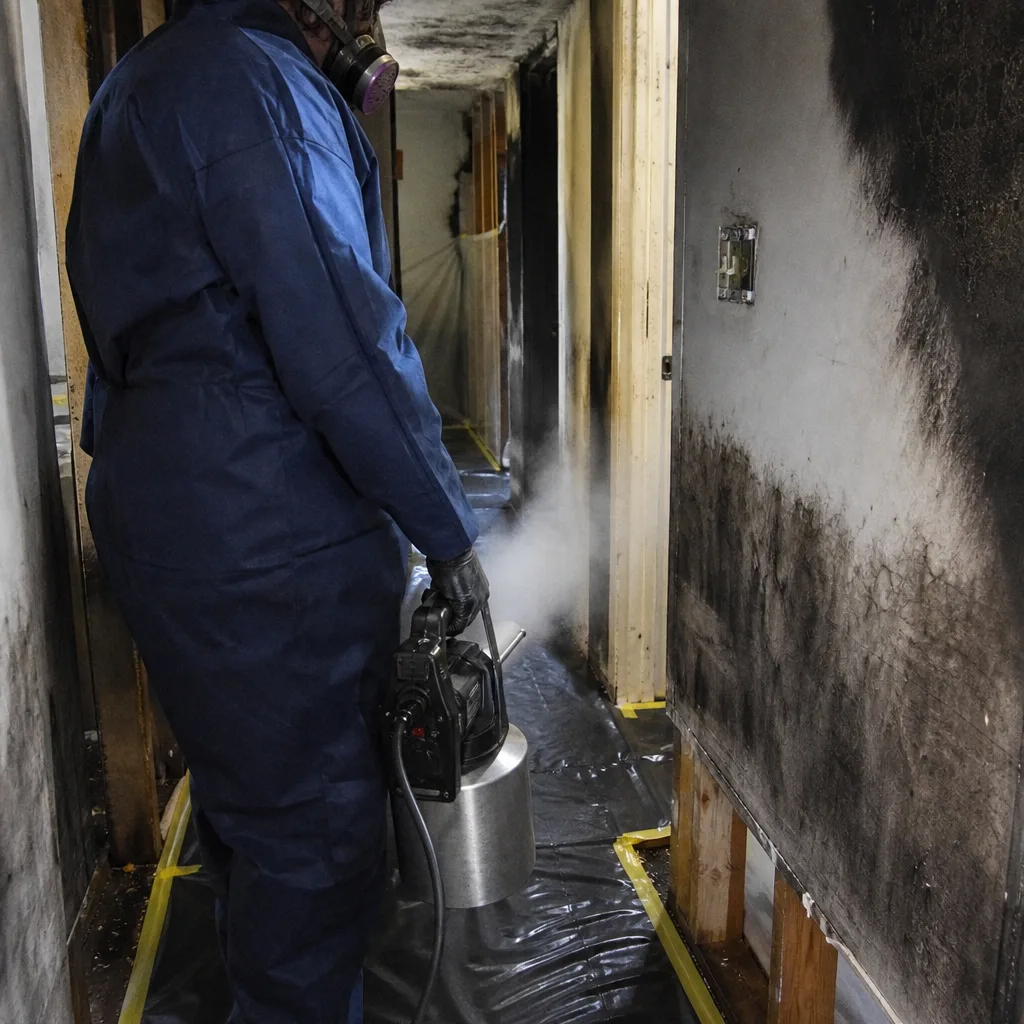
Tucker sits in the South Fork Peachtree Creek watershed, and when that creek leaves its banks or a July convective storm overwhelms the storm drains near the older subdivisions flanking Lavista Road, the water that comes in is never clean. It carries silt, clay, and whatever the creek picked up upstream. We treat it accordingly: full extraction, antimicrobial application, and structural drying with HEPA air scrubbing where the situation calls for it, following the same protocols we use for Sewage Cleanup in Tucker. We also photo-document everything for your insurance adjuster.
Burst Pipe Restoration
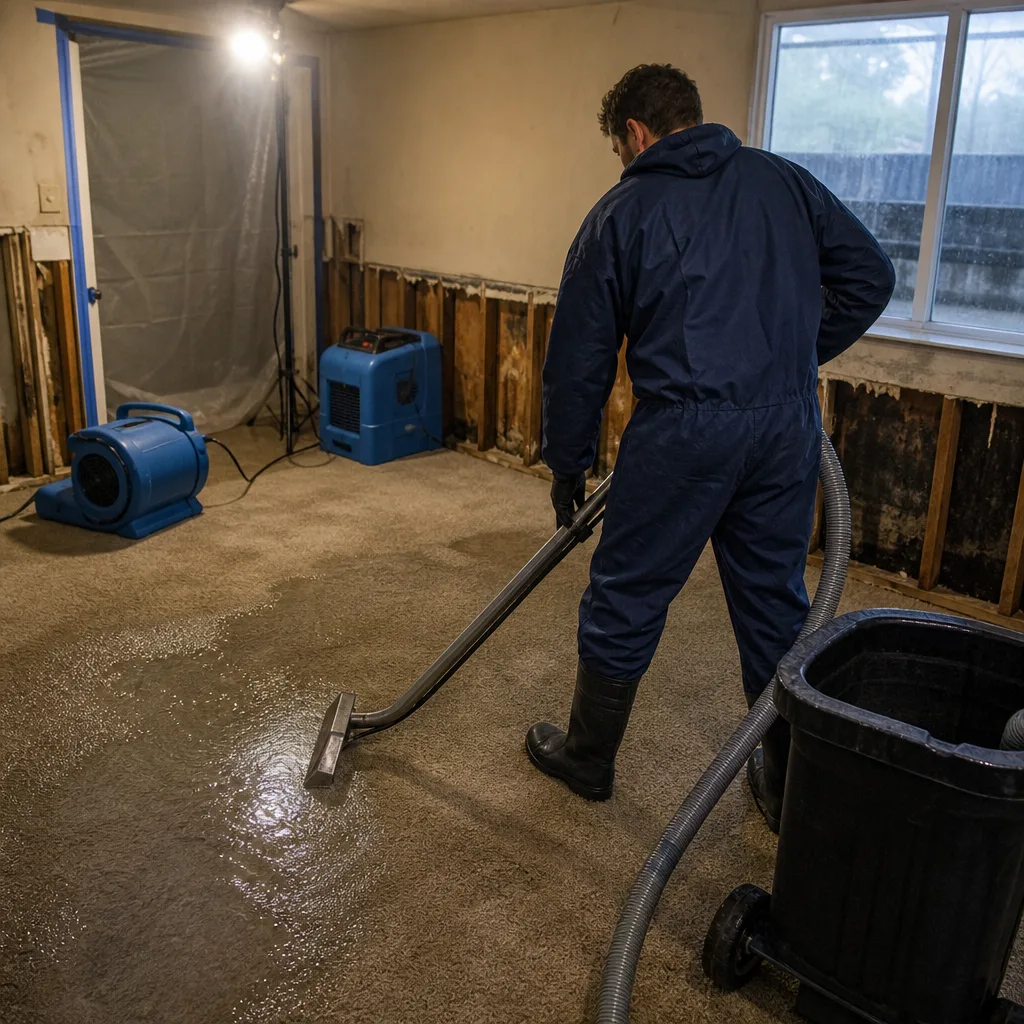
A burst supply line in a Tucker home built before 1975 often means water inside walls that were never designed to breathe properly. We don’t just mop the floor and set a fan. We open the affected wall cavities, trace the water path, dry the framing, and coordinate with your plumber so the fix actually holds. If your home is in the 30084 ZIP with original lath-and-plaster or early drywall, we know how those materials respond to water and how to dry them without ripping out more than necessary.
What happens when you call
- 1
A real person answersNo phone trees - you reach a local pro.
- 2
You get an upfront price rangeHonest numbers before anyone is dispatched.
- 3
A background-checked tech heads outLicensed & insured, dispatched right away.
- 4
You approve before work beginsNothing starts until you say go.
Trusted Brands We Service in Tucker
We run professional-grade equipment on every Tucker job, and that’s not a marketing line. The desiccants, air movers, and injection-drying systems we roll into your house are Phoenix, XPOWER, and Injectidry – the same brands used by commercial restoration outfits. For Tucker customers, that matters because your original oak floors and 1960s subfloor framing don’t handle heat or over-drying well. The equipment matters. We stock parts and replacement units locally, which means if a dehumidifier fails at 2 a.m. during a flood cleanup off Mountain Industrial Boulevard, we’re not waiting on a national shipping warehouse. Wade swaps it out same day.
Common Water Damage Restoration Problems We See in Tucker Homes
Every town has its own failure patterns. Here’s what we see again and again in Tucker’s 30084 and 30085 neighborhoods:
- Deferred maintenance on wind-rated exterior doors. Tucker’s 1955-1975 ranches and split-levels were built before wind-rated door standards were strict, and decades of Georgia humidity have warped many jambs and panels. During a microburst, a racked door doesn’t just leak – it channels driving rain straight into the wall cavity, and water shows up in rooms that never got wet from the roof.
- Red clay crawl-space moisture that gets ignored. The same storm that drops an oak limb through your roof also saturates the clay around your foundation. Water extraction teams that stop at the crawl-space opening miss that ground moisture can rise for weeks, creating hidden floor-joist mold behind the vapor barrier. In Tucker, a roof claim is almost never just a roof claim.
- Post-storm restoration that skips the exterior doors. After a storm, homeowners naturally focus on the roof and the ceiling below it. But if a damaged exterior door isn’t re-hung or reinforced, next season’s storm has an easy path for wind-driven water into the very rooms you just paid to dry. We check every exterior door on storm-damage jobs as standard practice.
- Original crawl spaces without working vapor barriers. Many homes in the older subdivisions off Henderson Mill Road and Lavista Road still have their original vapor barriers – or none at all. Combined with DeKalb’s red clay that resists drainage, this creates persistent ground moisture that accelerates mold after any water event. We inspect the crawl space on every water job, even when the call was just for a ceiling leak.
Pricing for Water Damage Restoration in Tucker, GA
Here are real numbers for Tucker’s market. Emergency water extraction alone typically runs $900-$2,200 depending on square footage and how far water has migrated. Structural drying with desiccant dehumidification usually lands between $1,500 and $3,800 for a 1,200 sq ft ranch with crawl-space involvement. Burst pipe restoration including wall-cavity drying and basic repairs averages $2,200-$5,500. Flood cleanup from a creek overflow or storm-drain backup that brings in contaminated water ranges $3,000-$9,000 because of the antimicrobial treatment and containment required, similar to what we handle with Fire & Smoke Damage Restoration in Tucker. Ceiling and roof-leak water damage repair, including sheetrock replacement and texture matching on 1960s ceilings, typically runs $1,200-$4,000.
What moves the number: how long the water sat, whether it reached the crawl space, whether the subfloor is original oak (almost always worth preserving versus replacing), and how much of the ceiling texture needs refinishing. We give you a written scope before work starts. No surprises. Call (888) 690-3757 for a free estimate, and if you already have a written estimate from another company, bring it in – we’ll give you a free second opinion.
We Also Serve Cities Near Tucker
Our Water Damage Restoration in Tucker work regularly takes us into the neighboring communities, and we treat those homes with the same urgency. If you’re in Clarkston, Mountain Park, Stone Mountain, or Chamblee, you’re inside our normal response area and subject to the same no-trip-charge policy within our county. Same crew, same equipment, same written promise.
Serving Tucker, GA - Our Local Coverage Area
We’re based in the Tucker area and know this community well. Use the map below to see our service coverage - if you’re nearby, we can almost certainly help.
FAQs - Water Damage Restoration in Tucker
Because the red clay under Tucker doesn’t absorb water – it moves it laterally. A roof breach from a downed pine limb lets water into the attic and wall cavities, but it also saturates the ground around the foundation. In a vented crawl space with a torn or missing vapor barrier, that ground moisture wicks into the floor joists and subfloor within days, even if no standing water ever reaches the crawl space. In our experience on jobs near Henderson Mill Road, secondary crawl-space mold is routinely discovered weeks after the original roof repair. Call (888) 690-3757 and we’ll inspect the crawl space on any roof-leak call, no charge for that.
DeKalb County’s building code does require that any exterior door replacement meet current wind-load standards, which for older ranch and split-level homes in Tucker typically means a wind-rated or impact-rated door and frame assembly. Doors that predate those standards and were only “patched” after a storm may not meet code and may not hold up to the next microburst, which is why we also offer our Storm & Disaster Restoration in Tucker. We coordinate with local code officials so you’re not left holding a non-compliant repair. Call (888) 690-3757 for a straight answer on your specific door replacement.
We run Phoenix desiccant dehumidifiers, XPOWER air movers, Injectidry floor-mat drying systems, and B-Air drying equipment across Tucker’s ranch homes. On the older stock off Lavista Road, the original oak subfloors and tight room layouts require equipment that dries aggressively without overheating the wood or over-drying the plaster. These are not homeowner-grade fans; they’re the same units commercial restoration firms use on hospitals and schools. Call (888) 690-3757 if you want to know what equipment your specific situation needs.
No, a synthetic vapor barrier alone won’t protect a Tucker crawl space after a creek overflow. Even a properly installed liner won’t stop water that has already run in from South Fork Peachtree Creek from sitting against the foundation and wicking into floor joists, particularly in the older subdivisions where the crawl space sits at or below grade. The barrier helps with normal ground moisture, but after an overflow you need extraction, active drying under the house, and often a full vapor-barrier replacement before the space is stable. We include crawl-space assessment in every flood cleanup we do across Tucker. Call (888) 690-3757 for a free inspection.
Mold can begin forming within 24 to 48 hours when water from a downed water oak leak reaches the interior of a 1960s split-level, particularly in Tucker’s humid summers when outdoor temperatures and dew points both sit high. The faster you get a tarp over the breach and active drying started inside, the less you’ll spend on mold remediation and structural repairs. We can usually have a dry-in crew on site within the hour of your call, with tarps, roof-securing, and interior drying running simultaneously. If you’re looking at a leak right now, call (888) 690-3757 before the water spreads into the walls.
The Full Sequence Tucker Homeowners Never Get Told About
Tucker’s post-WWII ranch and split-level homes, built between 1955 and 1975 under a dense canopy of loblolly pines and water oaks, routinely suffer storm damage where a downed tree breaches the roof envelope and combines with DeKalb County’s red clay to cause cascading crawl-space moisture and mold that often doubles the original estimate. Here’s what that sequence actually looks like. The tree limb punctures the roof, and wind-driven rain follows the puncture for hours. That water migrates through the attic, down the wall cavities, and into the subfloor. Meanwhile, the same storm saturated the red clay around the foundation. Two weeks later, the crawl-space vapor barrier is holding moisture against the floor joists from below while the subfloor dries from above, creating the exact conditions for hidden mold that no amount of surface drying will stop. If the original estimate only covered the roof and ceiling, you’re now looking at double the cost with a mold problem already underway. That’s the sequence. We interrupt it on day one because we check the crawl space on every water job, take daily moisture readings, and hand you the log so you can see exactly what we saw. In the 30084 ZIP near Henderson Mill Road, our techs responded to a water oak limb through a 1962 split-level’s roof. After emergency extraction with a Phoenix 500 desiccant and Injectidry floor-mat drying of the original oak subfloor, we found the vented crawl space’s vapor barrier breached and red clay seepage already wicking into the joists. A Dri-Eaz HEPA air scrubber and RIA-compliant containment kept the secondary mold under control before the framing was fully stabilized. That’s the difference between restoring a house and drying a floor. If you’re in Tucker and you’ve got water where it shouldn’t be – or you’re looking at storm damage and not sure what comes next – call Wade at (888) 690-3757. He’ll answer. He’ll tell you what he’d do if it were his house. And if you want a second opinion on anything another company gave you in writing, bring it in. No charge for that either.
Written by Wade Ferris, Owner at Wade’s Restoration of Atlanta, serving Tucker and the surrounding DeKalb County communities.