

Fast, Reliable Storm & Disaster Restoration Across Flowery Branch
Storm damage in Flowery Branch usually shows up fast, but the real problems often start days later. That’s the pattern we see over and over on Lake Lanier shoreline homes: the storm passes, the sky clears, and then the groundwater starts moving. If you’re dealing with a flooded crawl space, a leaking roof, or wind damage anywhere in the 30542 zip code, call Wade’s Restoration of Atlanta at (888) 690-3757. Wade Ferris owns this company and he answers his own phone. We’ve been pulling water out of Flowery Branch homes since 2007, and we know the lakefront properties on this side of Hall County better than any national chain ever will.
Why Wade’s Restoration of Atlanta Is Flowery Branch’s Preferred Storm & Disaster Restoration Company
Flowery Branch isn’t a cookie-cutter suburb. You’ve got $700,000 lakefront builds on steep grades next to 1990s subdivisions with builder-grade everything. That means storm restoration here requires knowing which house you’re walking into before you unload the truck. Wade’s crew has worked homes off Gaines Ferry Road, along McEver Road, and through the neighborhoods around Flowery Branch High School. We know the difference between a crawl space in a 2005 vinyl-sided home and a walk-out basement on a pier-and-beam lakefront lot, because we’ve dried both.
People in Flowery Branch call us because Wade answers the phone himself, 24/7. Not a call center. Not a voicemail tree. You get the owner, and he’ll tell you straight whether you need full extraction or just a drying plan. Our Storm & Disaster Restoration team is background-checked, uniformed, and shows up with professional-grade equipment from Dri-Eaz, Phoenix, and XPOWER. Every water, fire, and mold job comes with the 90-Day Done Right Promise in writing. If it’s not done right, Wade makes it right. That’s the whole point of putting his name on the truck.
Response time matters here, especially during Georgia’s summer storm season. When a pine limb goes through a roof off Spout Springs Road or a sump pump fails near the lake, water doesn’t wait. Wade can have extraction running inside the hour for most Flowery Branch addresses. Ask anyone on your street who’s had storm damage. They’ll tell you the same thing.
Our Storm & Disaster Restoration Services in Flowery Branch
Flood Damage Restoration
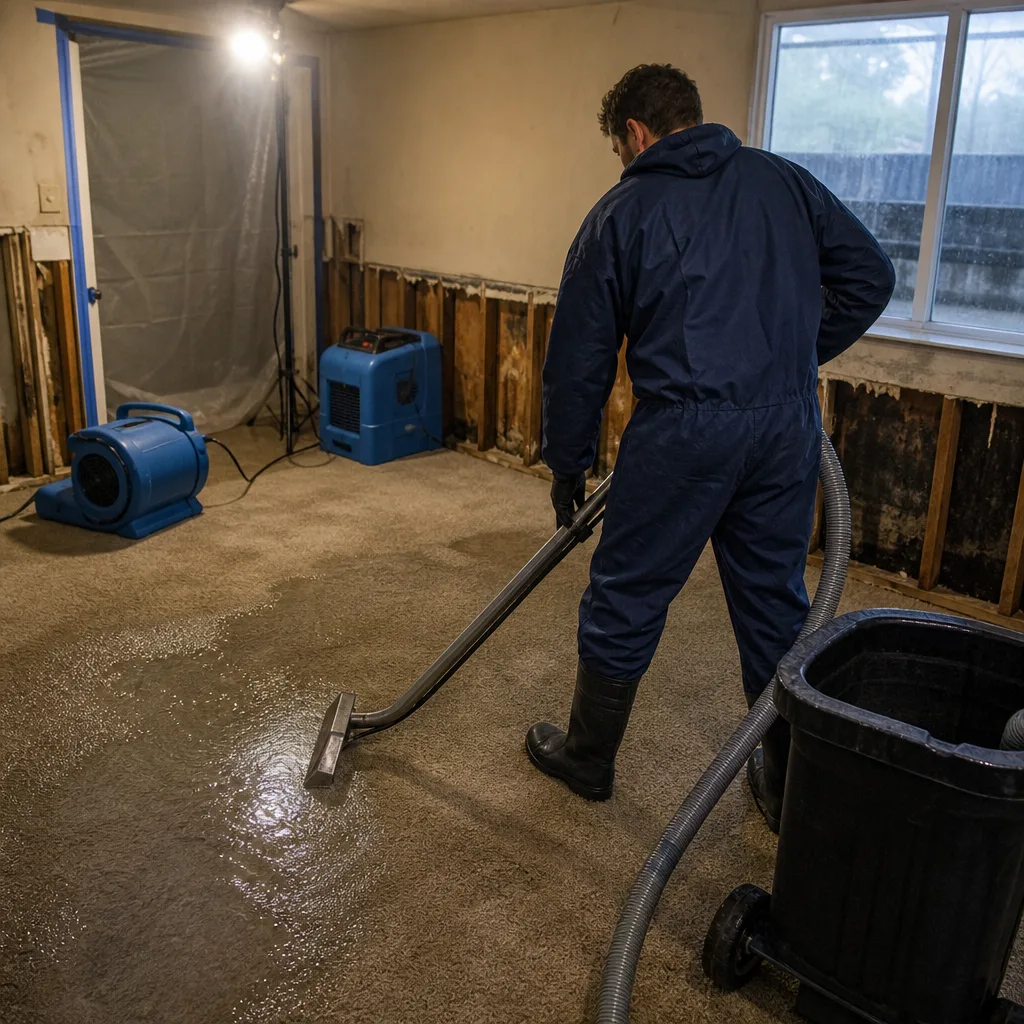
Flowery Branch lakefront homes face a flood damage profile that most Hall County houses never see. When sustained rainfall raises Lake Lanier, groundwater migrates under slab edges and through block foundations into crawl spaces. That water keeps coming for days after the storm ends. Our flood restoration in Flowery Branch starts with a full moisture map of the affected area, not just the visible standing water. We use Dri-Eaz LGR dehumidifiers and XPOWER air movers to target sill plates, rim joists, and framing that’s already wicking moisture before mold gets a foothold.
Storm Damage Cleanup
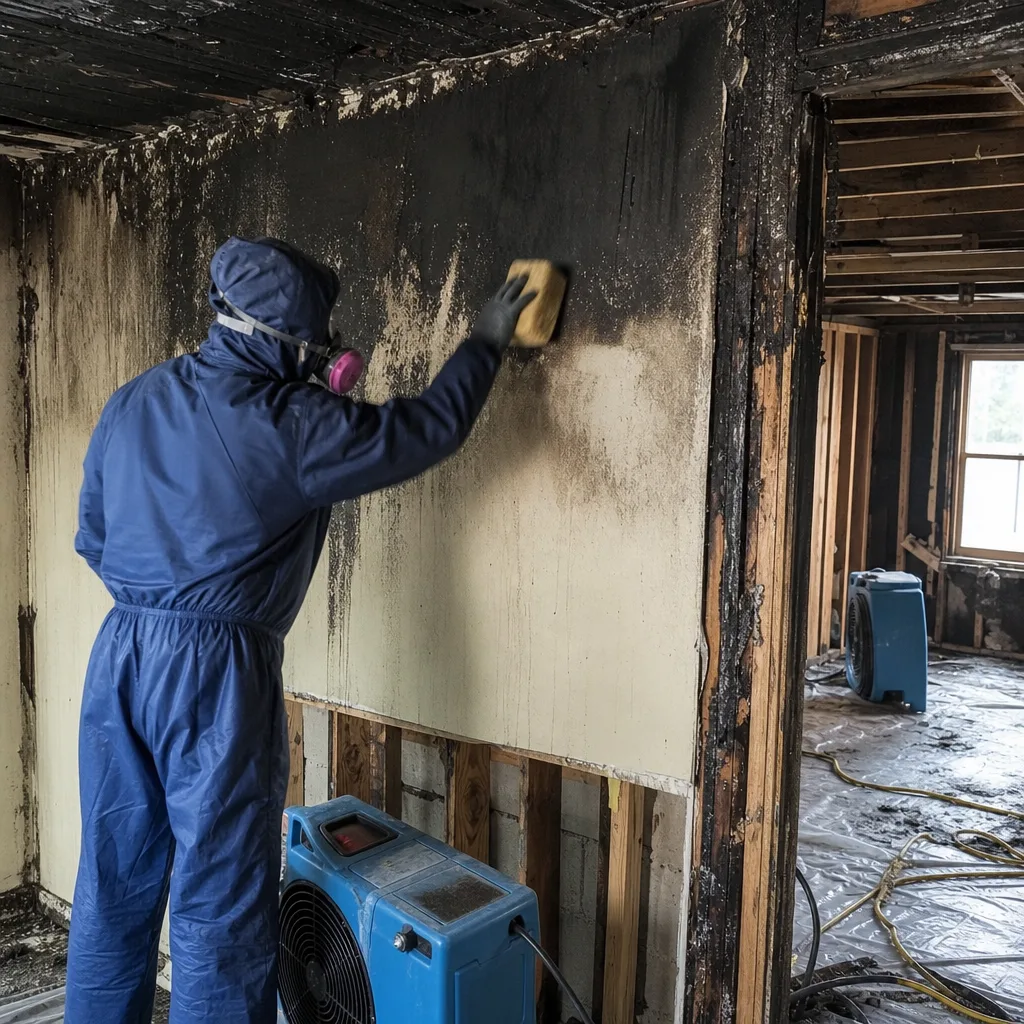
Downed trees, blown-off shingles, water in the garage, soaked drywall. Storm cleanup in Flowery Branch means getting the debris out, the water stopped, and the drying started in the right order. We photograph everything before we touch it, which matters when you’re filing an insurance claim. Wade deals with your adjuster directly, so you’re not stuck relaying messages between two parties. Our crew handles the full scope: emergency extraction, structural drying, debris haul-off, and moisture logging every single day until the job’s done.
Emergency Board-Up
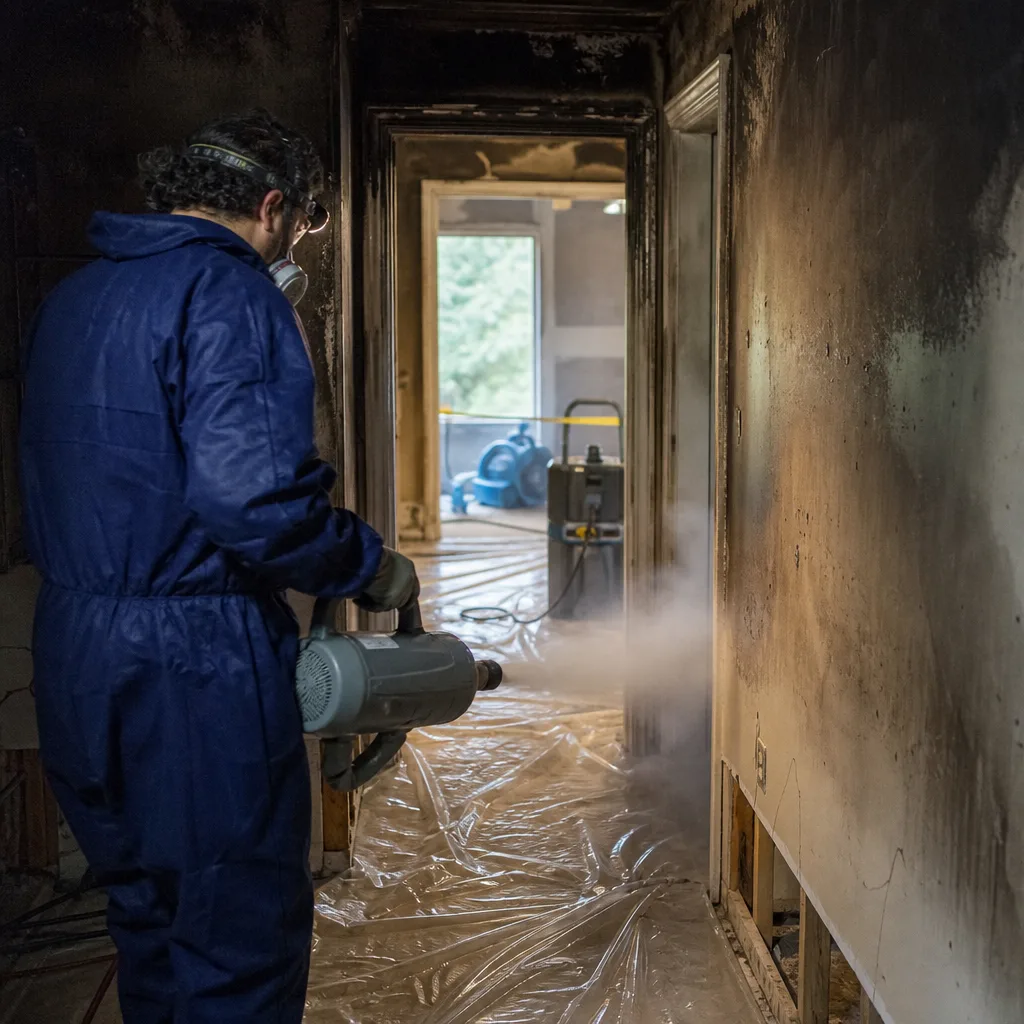
When a tree limb smashes a window or wind rips a door off its hinges, your home is open to weather, animals, and anyone driving by. Emergency board-up in Flowery Branch secures the opening fast, usually within a few hours of your call. We use proper plywood, not whatever’s leaning against the shed. That matters when the next storm rolls through before your permanent repair is scheduled. Call (888) 690-3757 and Wade will head out himself.
Roof Tarping
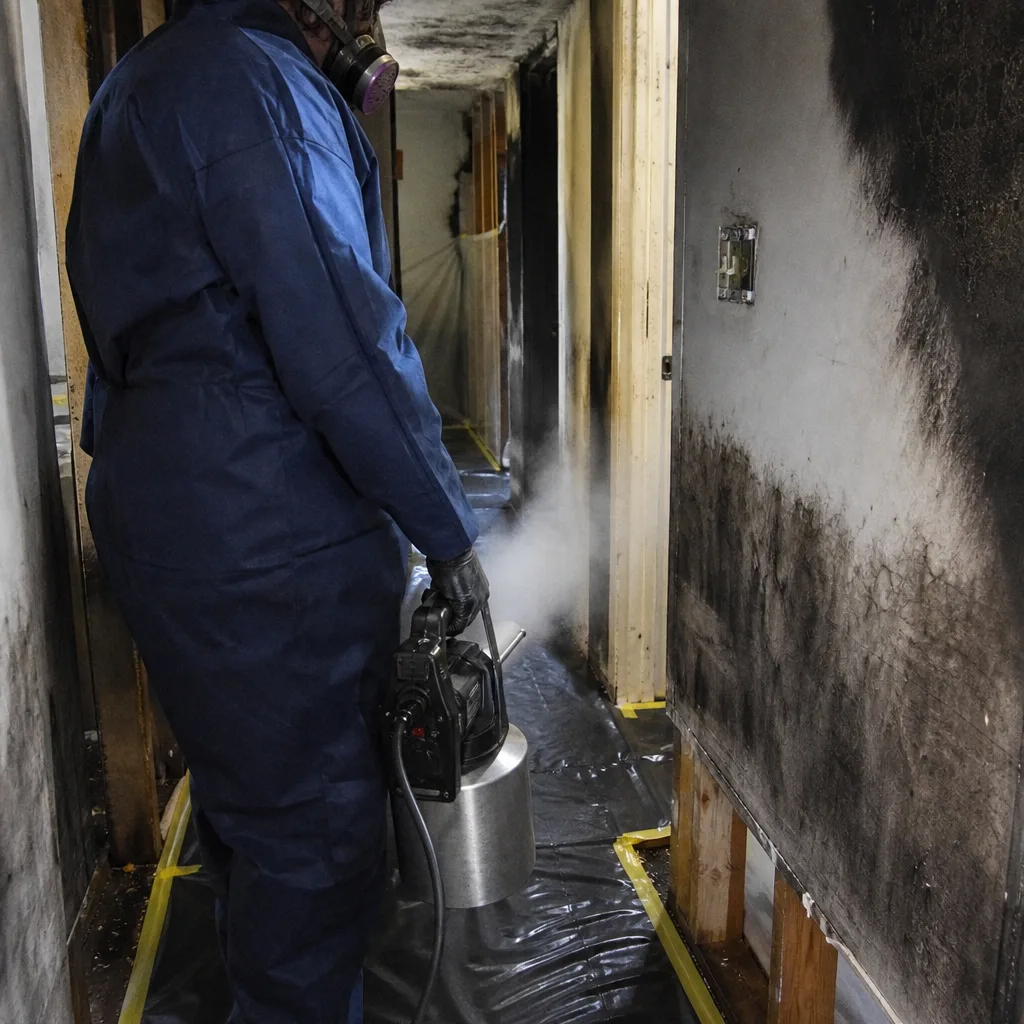
A tarp is temporary, but a bad tarp job causes permanent damage. We see it all the time: homeowners or handymen throw a blue tarp over a hole and the next wind gust lifts a corner, letting water run straight into the attic for a week unnoticed. Roof tarping in Flowery Branch should anchor properly to the ridge, overlap the damaged area generously, and hold through a Georgia thunderstorm. Wade’s crew does it right the first time, and we document the damage underneath so your adjuster has a clear record before repairs begin.
What happens when you call
- 1
A real person answersNo phone trees - you reach a local pro.
- 2
You get an upfront price rangeHonest numbers before anyone is dispatched.
- 3
A background-checked tech heads outLicensed & insured, dispatched right away.
- 4
You approve before work beginsNothing starts until you say go.
Trusted Brands We Service in Flowery Branch
We’re not brand-snobs, but we are brand-specific about equipment because it matters for drying speed. The Dri-Eaz LGR dehumidifiers we run pull moisture out of structural materials faster than residential units. XPOWER air movers give us the directional airflow to dry behind baseboards and inside wall cavities. Phoenix units handle the hot, humid summer days when the lake microclimate makes every hour count. If you’ve got storm damage in Flowery Branch, you don’t need a generic cleanup crew. You need equipment and people who know how to run it. Wade’s Restoration of Atlanta stocks parts and supplies locally for Flowery Branch jobs, so we’re not waiting on a warehouse in another state.
Common Storm & Disaster Restoration Problems We See in Flowery Branch Homes
Flowery Branch has its own storm damage profile, and it’s not the same as what we see in Buford or Suwanee. Here’s what actually goes wrong in the 30542 zip code:
- Lagging groundwater intrusion on lakefront lots: Lake Lanier rises days after the rain stops. Water moves under slab edges and through block foundation walls into crawl spaces, soaking framing that never saw standing water. The damage clock starts when the lake peaks, not when the storm ends. That’s why homeowners discover mold weeks after a storm with no obvious roof or plumbing source.
- Builder-grade OSB sheathing from the 1990s and 2000s: Flowery Branch exploded with new construction during Hall County’s suburban boom. Most of those homes have OSB sheathing behind vinyl siding that’s now 20 to 30 years old. Small, undetected leaks from storm damage have already softened panels. Once water gets behind vinyl siding, you won’t see it until the structural damage is significant. We regularly find mush where there should be sheathing on otherwise tidy-looking homes.
- Walk-out basements and pier-and-beam construction on steep grades: Lakefront lots in Flowery Branch frequently have walk-out basements or homes set on piers. Both create a raised floor assembly that catches water from every direction: groundwater below, runoff from the slope behind, and humidity from the lake. When stormwater wicks through block foundation walls, the sill plate and rim joists are saturated first, and that’s exactly where mold colonizes fastest in Georgia’s humid summers.
- Using standard rain-event drying protocols on shoreline homes: A generic water damage company will set up fans and dehus for three days, take a few moisture readings in the obvious spots, and leave. On a Flowery Branch lakefront home, that misses the lagging groundwater intrusion that continues long after the equipment is removed. We run daily moisture logs on shoreline properties and don’t sign off until the structural materials are actually dry, not just surface-dry.
Pricing for Storm & Disaster Restoration in Flowery Branch, GA
You deserve actual numbers, not a vague “it depends.” Here’s what storm restoration typically runs in Flowery Branch’s market:
- Emergency board-up: $150-$400 for most single openings, depending on size and accessibility.
- Roof tarping: $350-$700 for a standard storm-damage tarp job on a typical Flowery Branch roof pitch.
- Flood damage restoration (water extraction and structural drying): $1,800-$5,000 for a standard flooded crawl space or basement, before any reconstruction.
- Storm damage cleanup (debris removal, drywall tear-out, haul-off): $800-$3,500 depending on scope.
- Whole-home drying with daily moisture logs on lakefront properties: $3,500-$8,500, driven by square footage and how long groundwater has been migrating under the slab.
What pushes cost up in Flowery Branch: lakefront access challenges, steep grades that require specialized equipment placement, and how long water sat before we got the call. Every estimate is written down, not spoken over the phone and changed at the door. Call (888) 690-3757 for a free estimate, and take the Senior & Veteran 10% discount if it applies to you. No trip charge inside our own county, which includes Flowery Branch.
We Also Serve Cities Near Flowery Branch
While this page focuses on Storm & Disaster Restoration in Flowery Branch, Wade’s Restoration of Atlanta also handles storm damage, flood cleanup, and emergency board-up in Sugar Hill, Buford, Suwanee, and Auburn. If you’re on the Hall-Gwinnett line and you’ve got water where it shouldn’t be, call (888) 690-3757 and Wade will tell you straight what you’re dealing with.
Serving Flowery Branch, GA - Our Local Coverage Area
We’re based in the Flowery Branch area and know this community well. Use the map below to see our service coverage - if you’re nearby, we can almost certainly help.
FAQs - Storm & Disaster Restoration in Flowery Branch
When sustained rainfall raises Lake Lanier, groundwater doesn’t just sit at the lake’s edge. It migrates under slab edges and through block foundation walls into crawl spaces and lower levels of shoreline homes. This continues for days after the rain stops and the sky clears. Your basement can start showing moisture, staining, or mold weeks after the storm, with no obvious roof or plumbing source. That’s the signal to call (888) 690-3757 and get a moisture assessment before the structural rot sets in. Free second opinion on any written estimate, by the way.
Lake Lanier creates a localized humidity microclimate along the Flowery Branch shoreline that keeps building envelopes measurably wetter than properties a few miles inland. Georgia’s piedmont summers already push indoor humidity and surface temperatures into the range where mold can establish within 24 to 48 hours after any water event. Add the lake’s constant humidity and the lagging groundwater intrusion, and you’ve got a much shorter window to start drying before mold colonizes. Same-day response isn’t a luxury here. It’s the difference between drying a home and remediating mold throughout it.
The sill plate and rim joists are your biggest hidden risk. Walk-out basements on steep grades, which are common along the Lake Lanier shoreline, catch groundwater from below and runoff from the slope above. Water wicking through block foundation walls saturates the sill plate first, and that’s the exact spot where structural rot and mold take hold fastest. Our crew recently dried a 2000s-era lakefront home near the shoreline after Lake Lanier crested, where groundwater had wicked through block foundation walls into the walk-out basement. We set a Dri-Eaz LGR dehumidifier and XPOWER air movers targeting the sill plate and rim joists, pulling residual moisture before mold could colonize the vinyl-wrapped framing. That’s the protocol your home needs.
Groundwater intrusion is generally excluded from standard homeowners policies, and that includes lake-level rise from Lake Lanier. Most policies cover storm damage from wind and falling objects, but groundwater that migrates under your foundation is usually classified as flood water, which requires a separate flood insurance policy. What we’ve seen in Flowery Branch: policies that cover the storm damage itself may not cover the secondary mold and rot from groundwater that showed up days later. Wade deals with adjusters directly, and he’ll document everything with daily moisture logs and photos so you have a clear record of what happened and when. Call (888) 690-3757 and we’ll walk you through what your policy actually says.
Don’t wait to get it tested, and don’t start ripping out drywall yourself. Mold in a Flowery Branch basement that appears weeks after a storm, with no visible leak above, usually means groundwater intrusion through the foundation. The mold is telling you the structural materials are wet somewhere you can’t see. Opening walls without proper containment can distribute mold spores through the house and make the problem dramatically worse. Call (888) 690-3757 for a full inspection. Wade’s IICRC-certified crew will map the moisture, find the source, and give you a written scope before any work starts. Free estimates, and you can watch us work if you want. That’s how it should be.
Call Wade’s Restoration of Atlanta for Storm & Disaster Restoration in Flowery Branch
When a storm hits Flowery Branch, you don’t have time to vet three companies and compare online quotes. You need someone who answers the phone at midnight and shows up with the right equipment. Wade Ferris has been doing this since 2007. He answers his own phone. He publishes his address and license number. He’ll give you a written scope before work starts, run daily moisture logs, and deal with your adjuster directly so you don’t have to translate between two parties. If it’s not done right, the 90-Day Done Right Promise says he makes it right, in writing, on every job.
Call (888) 690-3757 now for a free estimate. No trip charge inside the county. Free second opinion on any written estimate. Senior and Veteran 10% discount, always. We serve all of Flowery Branch, 30542, including the lakefront homes, the subdivisions off McEver Road, and everything in between. Storm damage doesn’t wait. Neither should you.
Written by Wade Ferris, Owner at Wade’s Restoration of Atlanta, serving Flowery Branch since 2007.