
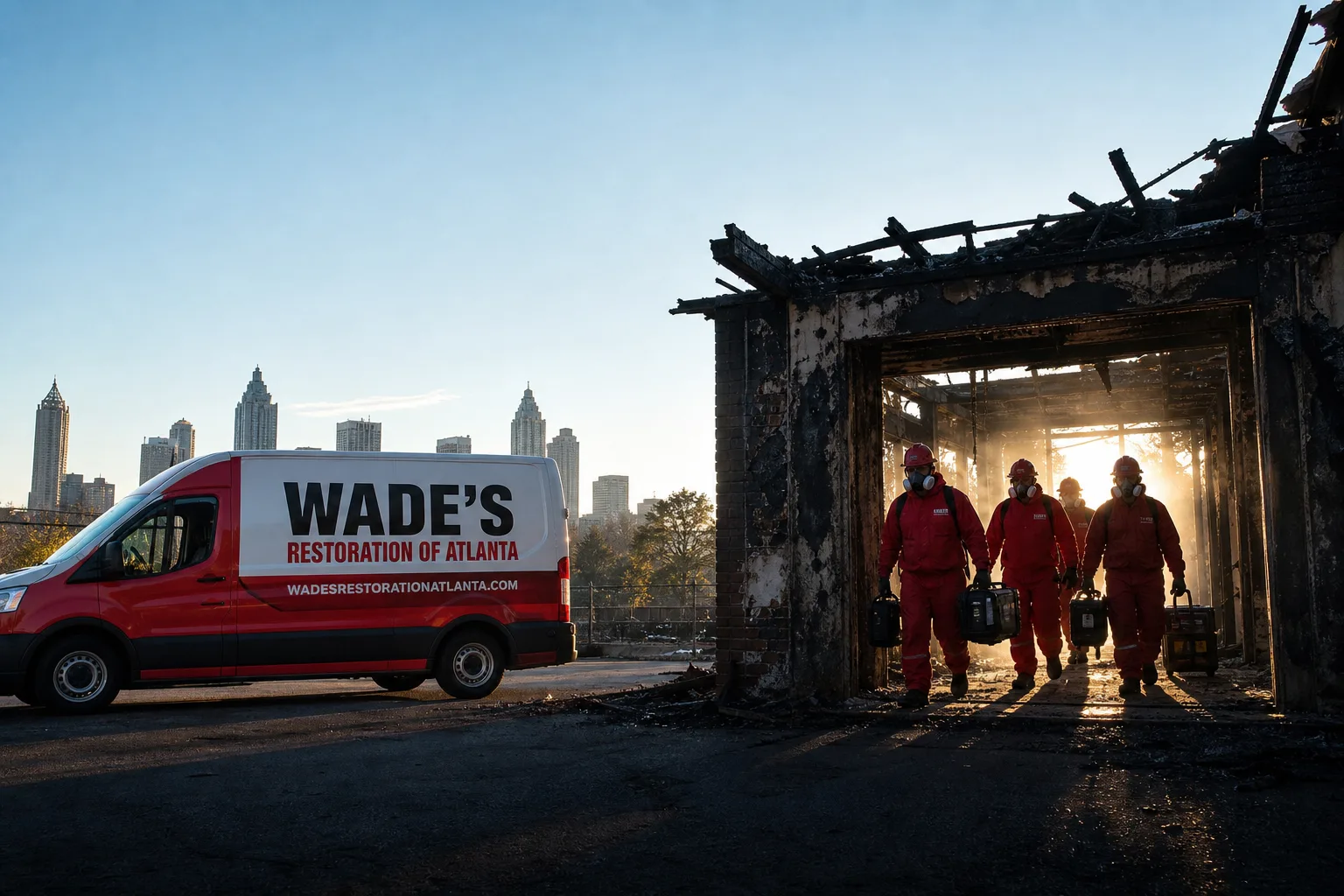
Fast, Reliable Storm & Disaster Restoration Across Lawrenceville
Storm damage in Lawrenceville moves fast, especially during those summer convective storms that dump 2-4 inches of rain in under an hour. When water is pushing through your roof, flooding your crawl space, or working its way into drywall, the window to prevent mold colonization closes within 48-72 hours. Our Storm & Disaster Restoration team knows Lawrenceville’s specific housing stock, the aging storm-drain infrastructure in the denser 1990s subdivisions, and what it actually takes to stop the damage from spreading. Call Wade’s Restoration at (888) 690-3757 and you will talk to a live person who can have extraction running inside the hour.
Why Lawrenceville Homeowners Call Wade’s Restoration
Wade Ferris founded this company in 2007 and put his name on the truck. That matters in Lawrenceville, where homeowners have every right to be skeptical of a contractor they have never met. Wade answers his own phone, 24/7, and he will be the one standing in your wet hallway at 2 a.m. if that is when the storm hits. When people in the 30045 and 30046 ZIP codes need emergency board-up after flying debris punches through a window, or roof tarping after wind-driven rain starts seeping through deteriorated ridge caps, they call Wade because the job gets done right and they will see him again at the Ingles on Sugarloaf Parkway.
Lawrenceville asks two questions before letting anyone inside: who exactly is coming, and will they make it right if something goes wrong. The answer to the first is Wade himself. The answer to the second is the 90-Day Done Right Promise, stamped in writing on every storm restoration contract. If it is not done right, Wade makes it right. No fine print, no third-party claims adjuster games, no answering service. That is why Lawrenceville homeowners who got burned by a national chain quote-one-price-then-another situation end up calling us. The phone line is (888) 690-3757.
Our Storm & Disaster Restoration Services in Lawrenceville
Storm Damage Cleanup
When a storm tears through Lawrenceville, the damage is rarely just water. Limbs come down, shingles get ripped from roofs, siding gets split, and debris piles up against the foundation. In ZIP code 30044, our crew responds to wind damage where falling pecan and oak branches punch through soffits and fascia boards. We cut out the wet material, document everything with photo evidence for your insurance claim, and stop the damage before mold gets a foothold. Every job includes a written scope of work before we start, and Wade deals with your adjuster directly so you are not stuck relaying information between two sides.
Flood Damage Restoration
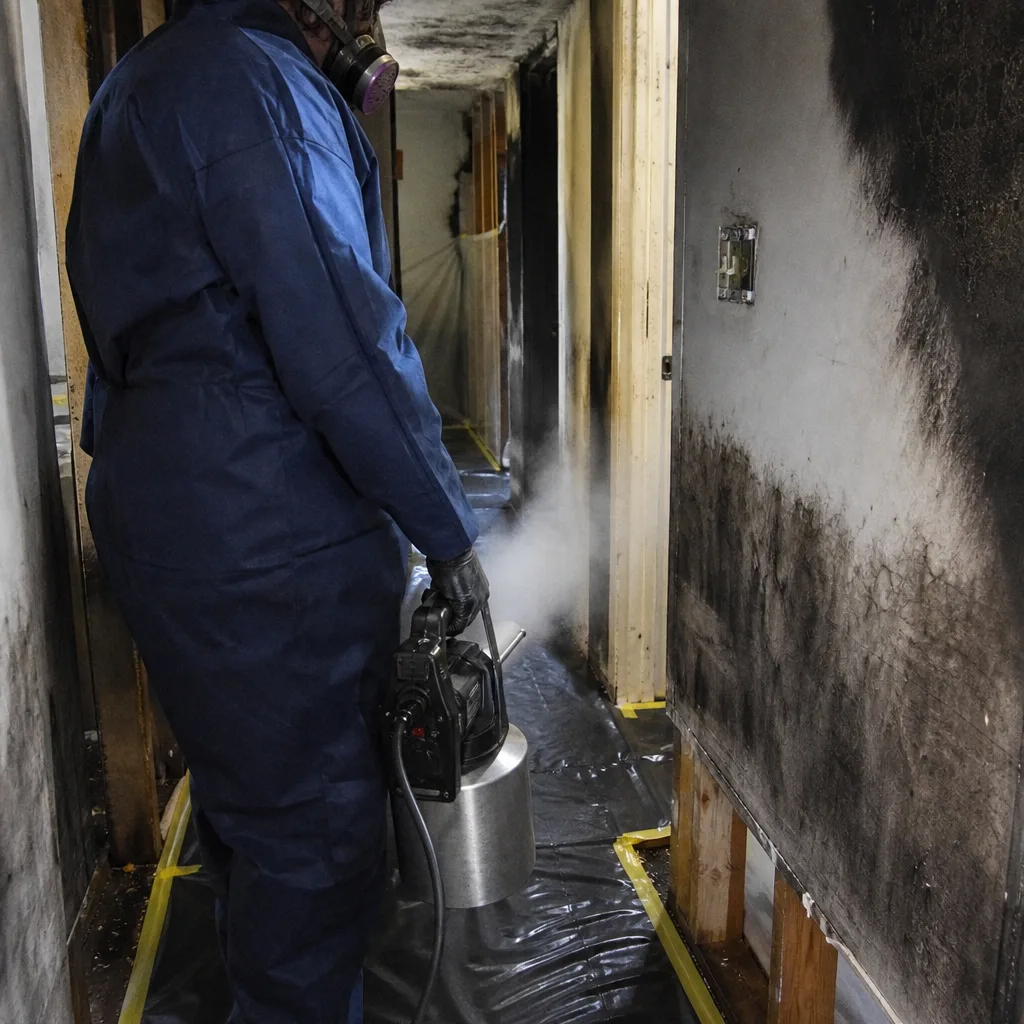
Lawrenceville’s Georgia red clay soil does not absorb water, it sheds it. That reality hits hard in the 1990s subdivisions off Sugarloaf Parkway, where the original storm-drain systems were sized for a population density that has since doubled. When a convective thunderstorm drops 3 inches of rain in 45 minutes, water backs up and runs across lots, under crawl-space foundations, and into basement-level garages. Our flood restoration crews run Dri-Eaz LGR dehumidifiers, Phoenix air movers, and Injectidry panel systems to pull water out of wall cavities and floor assemblies fast. The goal is always the same: dry it to documented moisture standards, not just until it feels dry.
Emergency Board-Up
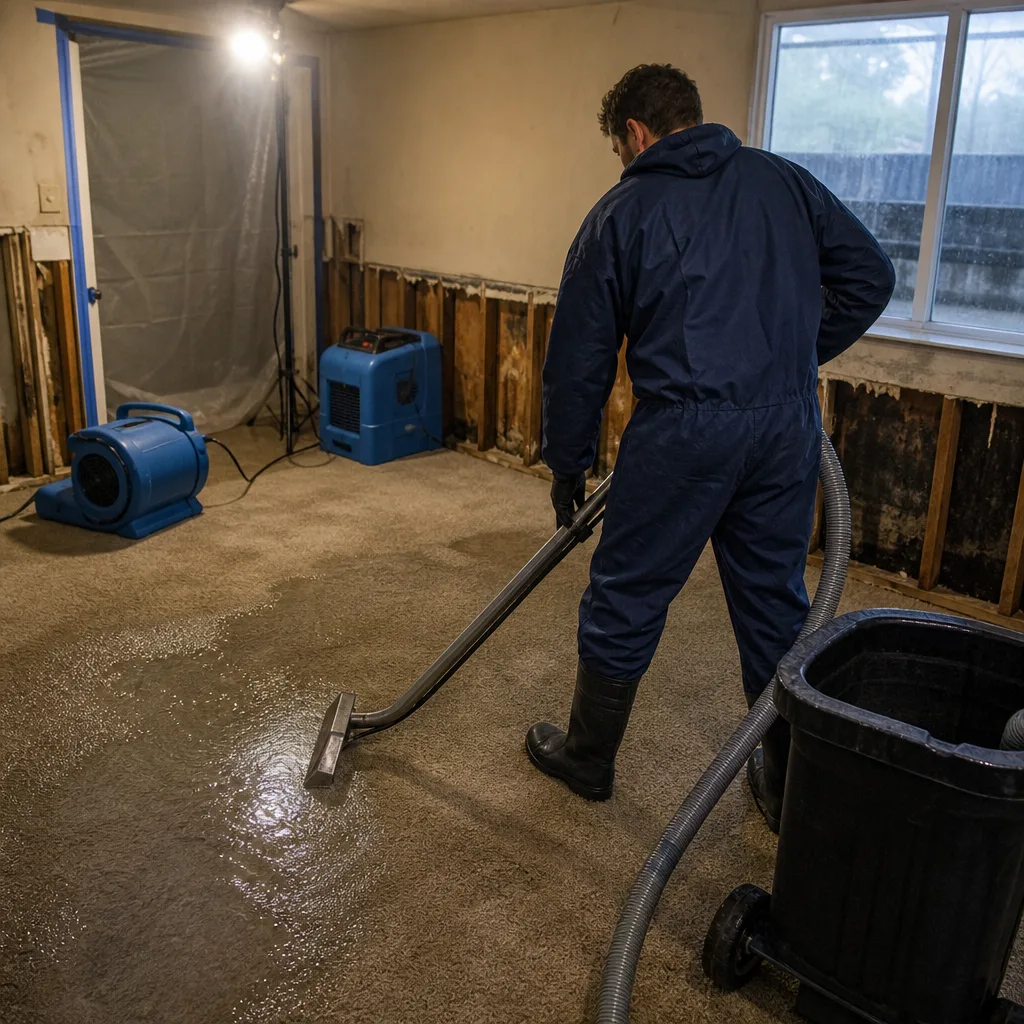
A busted window or punched-out door after a storm is an open invitation for more damage: rain intrusion, wildlife, and theft. In Lawrenceville’s 30042 and 30045 neighborhoods, where brick-front 1990s homes sit on relatively tight lots, a single uprooted tree limb can take out multiple windows in one stroke. Wade’s crew carries plywood, tarps, and fasteners on every storm call, and we can secure the opening before the next cell rolls through. Board-up is sometimes a temporary fix until the insurance claim settles, but it keeps your home dry and secure in the meantime.
Roof Tarping
Wind-driven rain finds every weakness in a roof: deteriorated ridge caps, cracked flashing, nail pops, worn shingle underlayment. In Lawrenceville’s 1985-2005 housing stock, many of those original fiberglass shingle roofs are at or past their 25-year service life. When summer storms hit the 30043 corridor, we get a flood of calls from homeowners whose living room ceiling is suddenly swelling with water. Our team gets a tarp over the damaged section fast, secured to prevent wind lift, and we photograph the damage before covering it so your adjuster sees exactly what happened.
What happens when you call
- 1
A real person answersNo phone trees - you reach a local pro.
- 2
You get an upfront price rangeHonest numbers before anyone is dispatched.
- 3
A background-checked tech heads outLicensed & insured, dispatched right away.
- 4
You approve before work beginsNothing starts until you say go.
Trusted Equipment, Stocked for Lawrenceville Jobs
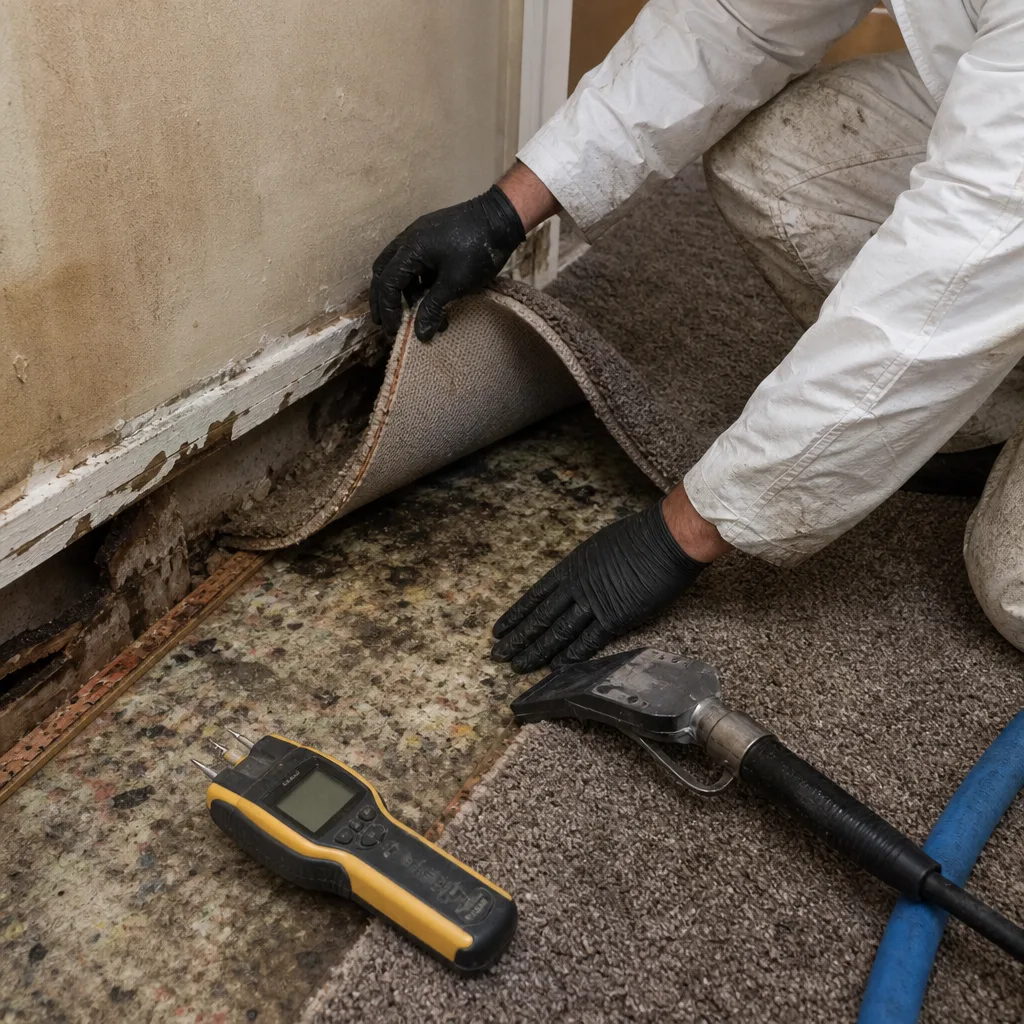
We run professional-grade restoration equipment from XPOWER and B-Air, plus the Injectidry systems that pull moisture from behind baseboards and under floor coverings without unnecessary demolition. That matters in Lawrenceville because this housing stock hides water in ways you would not expect: inside wall cavities behind vinyl siding, under buckled laminate flooring, above garage ceilings in chase walls. The right equipment, used by a crew that knows where Lawrenceville homes hide water, means the difference between a 3-day dry-out and a 3-week structural problem. We keep common components and parts on hand for the failure modes we see across ZIP codes 30042 through 30049, which means faster turnaround when your house needs immediate attention.
Common Storm & Disaster Restoration Problems We See in Lawrenceville Homes
- Collapsed crawl-space vapor barriers on red clay. In the 1994-1999 subdivisions, the original vapor barriers have degraded and fallen onto the clay, and storm runoff then saturates floor joists from below. Homeowners notice a musty smell or bouncy floors upstairs long before they realize the source is under the house.
- Cracked polybutylene and early CPVC supply lines. Lawrenceville homes built during the 1985-2005 boom often carry original supply piping that was already failing when it was installed. High-humidity storm cycles add pressure and thermal expansion, and a slab-on-grade home in 30043 can flood from a cracked line inside a wall before you even know the storm caused it.
- Failed HVAC air-handler pan liners. A uniform defect across the late-1990s subdivisions: the emergency drain pan under the air handler cracks and leaks into hallway ceilings after spring downpours. We see this constantly in homes between Sugarloaf Parkway and Highway 316.
- Wind-driven rain through ridge caps and worn shingle underlayment. Once the original fiberglass shingle roof crosses the 20-year mark, the adhesive strips fail and the underlayment degrades. A summer storm with 40 mph gusts turns that into attic leaks, ceiling stains, and swollen drywall all across Lawrenceville.
Pricing for Storm & Disaster Restoration in Lawrenceville, GA
Here are honest numbers for Lawrenceville’s market. Emergency roof tarping typically runs $450-$900 depending on the size of the damaged area and how quickly the crew can safely access it. Emergency board-up is usually $250-$600 per opening. Flood water extraction and drying starts around $1,800-$3,200 for a typical crawl-space or single-room event, and full storm damage cleanup with demolition, drying, and moisture mapping often lands between $3,500 and $8,000. If the scope includes sistering floor joists due to long-term vapor-barrier failure, the cost climbs because that is structural work, not just drying. Every estimate is free, in writing, and includes a documented moisture log when we start the drying process. Call (888) 690-3757 for an exact quote on your specific situation.
We Also Serve Cities Near Lawrenceville
Lawrenceville is our home base for this corridor, but our crews work throughout Gwinnett County. If you live in Lilburn, Norcross, Duluth, or Suwanee, the same live-answer phone line and same 90-Day Done Right Promise apply. Storm & Disaster Restoration in Lawrenceville and the surrounding communities means knowing the difference between a 1970s ranch on a slab and a 1998 brick-front on a crawl space. That local knowledge is the whole point.
Serving Lawrenceville, GA - Our Local Coverage Area
We’re based in the Lawrenceville area and know this community well. Use the map below to see our service coverage - if you’re nearby, we can almost certainly help.
FAQs - Storm & Disaster Restoration in Lawrenceville
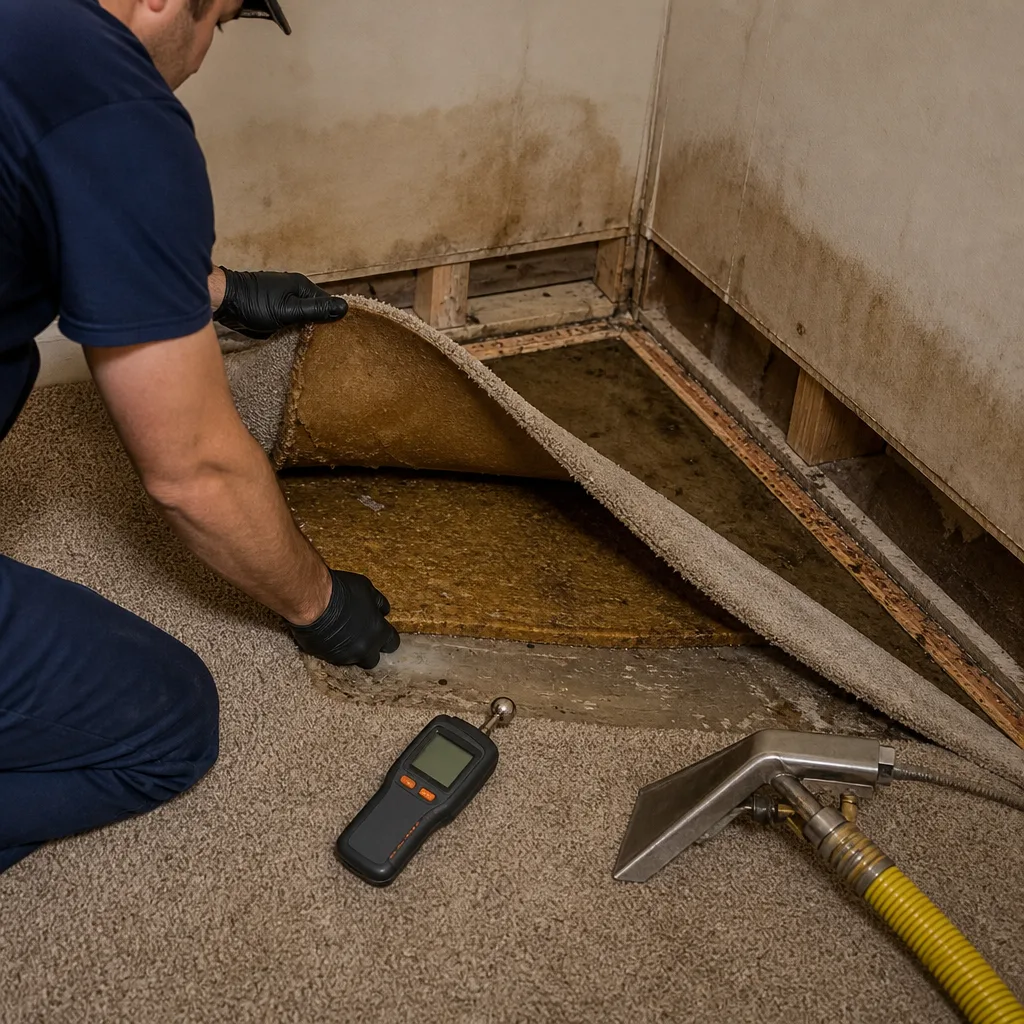
Your crawl-space vapor barrier has almost certainly collapsed onto the red clay, and storm runoff is now saturating the floor joists from below. This is the exact failure we describe across Lawrenceville’s 1990s subdivisions: the original vapor barrier degrades, water pools against the foundation, and the joists wick ground moisture upward. The bouncy feeling means structural damage is already underway. You need moisture mapping, drying, and likely joist repair or sistering. Call us at (888) 690-3757 and Wade will walk the crawl space with you and show you exactly what is happening with a moisture meter in hand.
Yes, and here is why. Georgia red clay expands when wet and contracts when dry, and it does not absorb water, it sheds it. During heavy storms, runoff sheets across the surface and pools around slab edges, then wicks under the slab through any gap or crack. Over time, this causes hydrostatic pressure that can force water through slab penetrations and baseboard gaps inside the home. In 30042, where many homes sit on slabs, we often find water entering through the garage door threshold or around plumbing penetrations in walls. Call (888) 690-3757 for a site inspection and moisture reading before that hidden water turns into mold.
Because the roofing materials in that subdivision cohort are all aging out around the same window, and summer convective storms exploit every weakness. Original fiberglass shingles rated for 20-25 years are now at 25-35 years, the ridge caps are crumbling, and the underlayment has dried out and cracked. Add wind-driven rain at 40-50 mph and you get leaks in homes that looked fine the day before the storm. When three or four houses on the same street all need tarping after a single storm event, that is not random, it is the housing vintage. Free phone estimate available at (888) 690-3757.
Yes, absolutely. Mold colonization starts within 48-72 hours in Lawrenceville’s high-humidity summer climate, and the real problem is the water you do not see: behind baseboards, under vinyl plank flooring, inside wall cavities where the drywall wicks upward, in the subfloor, and in the crawl space. Wiping up visible water is not drying. It leaves trapped moisture that feeds mold behind surfaces where you will not see it for weeks. In Lawrenceville’s 1990s homes, the wall assemblies were built tight and the insulation can hold moisture like a sponge. You need professional moisture mapping to know if the structure is actually dry. Free estimates at (888) 690-3757.
Yes, and we see it every spring in 30049. Early CPVC and polybutylene piping gets brittle as it ages, and the repeated expansion and contraction during storm cycles, plus the pressure spikes when the municipal system surges, creates exactly the conditions for a pipe crack or a fitting failure. A 2001 home with original CPVC is right in the danger window. When those pipes let go, they flood fast, often inside a wall or ceiling where you cannot see it until the drywall fails. If you have original CPVC or polybutylene in a Lawrenceville home built before 2005, the time to plan for replacement is before the next big storm. Call (888) 690-3757 for a free assessment of your plumbing risk.
Written by Wade Ferris, Owner at Wade’s Restoration, serving Lawrenceville since 2007.