
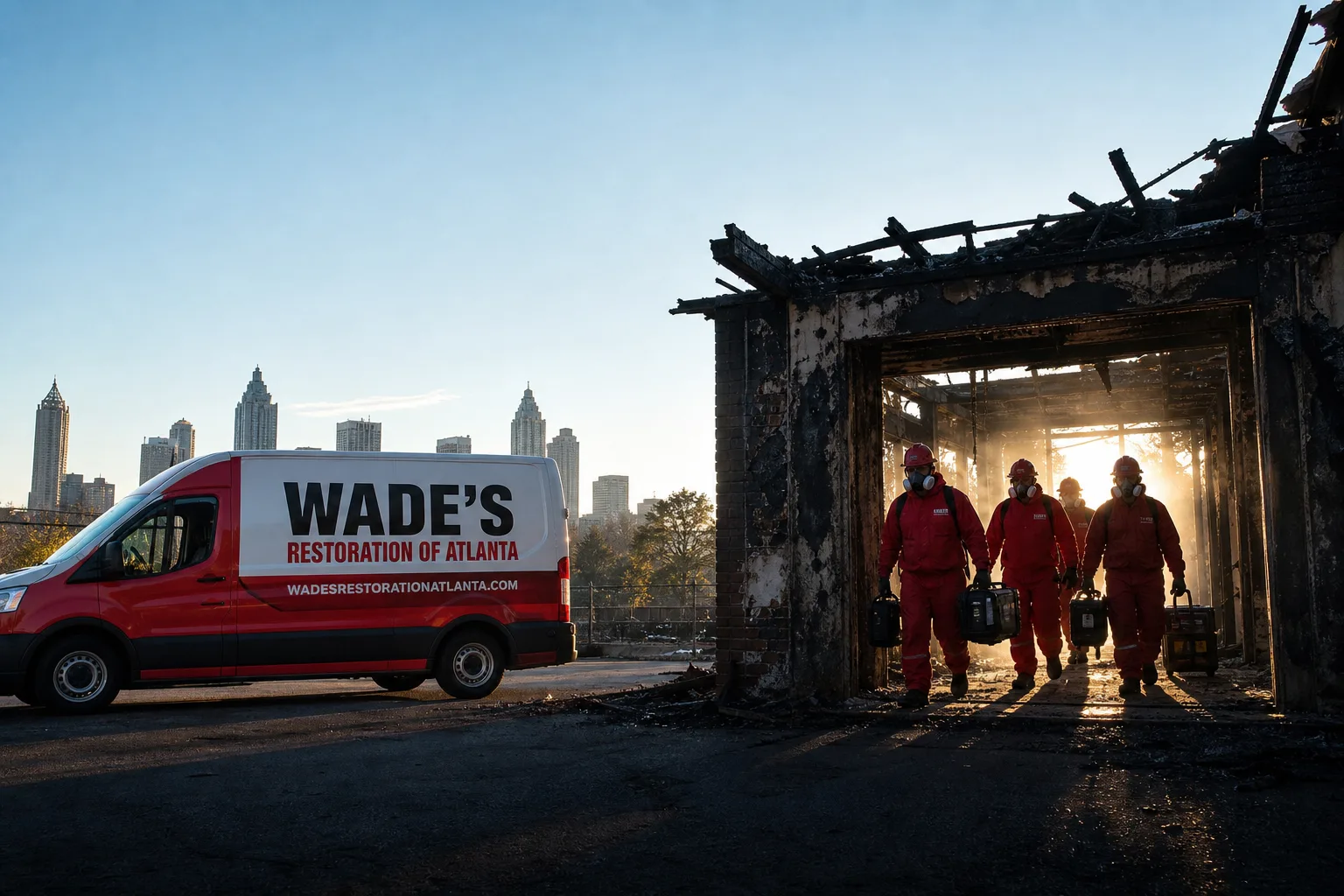
Fast, Reliable Storm & Disaster Restoration Across Lilburn
Storm damage in Lilburn rarely announces itself politely. A limb comes through the roof on a Saturday night, a polybutylene line lets go inside a wall on a Tuesday, or the Yellow River jumps its banks after a hard summer storm and your crawl space is suddenly a pond. When that happens, you need someone who knows Lilburn’s homes, Lilburn’s storm patterns, and how to get water out fast before mold sets in. Wade’s Restoration has been answering calls from Lilburn homeowners since before the big chains started buying up local shops. We answer live, 24/7, and we can have equipment running in your home inside the hour. Call (888) 690-3757 and you’ll talk to a person who knows exactly what you’re up against.
Why Wade’s Restoration of Atlanta Is Lilburn’s Preferred Storm & Disaster Restoration Company
Wade Ferris puts his name on every job. Not a franchise brand, not a rotating roster of subcontractors. Wade answers his own phone, shows up on the job himself, and is going to run into you again at the Lilburn Kroger off Lawrenceville Highway. That personal accountability changes how the work gets done. When a polybutylene line failed inside a wall cavity of a 1980s ranch-style home off Five Forks Trickum Road, our techs found water had wicked silently into the OSB subfloor above a dirt crawl space, seeding mold before any visible stain appeared. We deployed Phoenix axial air movers and a Dri-Eaz dehumidifier to dry the entire floor system, then removed and replaced the compromised subfloor sheets and treated the framing to prevent regrowth. That’s the kind of problem you only catch if you’ve worked enough Lilburn homes to know where water hides.
Every job comes with the 90-Day Done Right Promise in writing. If it’s not done right, Wade makes it right. And Wade hands you the full moisture log at the end of every water job, no exceptions. Most companies don’t do that because it documents whether they actually dried your home. We want you to see it.
Our Storm & Disaster Restoration Services in Lilburn
Storm Damage Cleanup
After a Lilburn thunderstorm drops a tree limb on your roof or sends water through a window, the clock starts. Water that sits in wall cavities and under flooring for more than 48 hours in Gwinnett’s 70%+ humidity reliably becomes a mold problem. Our Storm & Disaster Restoration team starts with a full damage assessment, written scope, and photo documentation before any equipment goes in. Then we extract, dry, and stabilize so the damage stops spreading while you deal with your insurance adjuster. Wade coordinates directly with your adjuster so you’re not relaying messages between two sides.
Flood Damage Restoration
Lilburn homes in the eastern 30047 ZIP get a specific kind of flood damage. The Yellow River corridor creates flash-flood and crawl-space inundation risk that ridge-top Gwinnett cities like Snellville largely avoid. When that water comes up through your crawl space or into a partial basement, you need extraction immediately, then aggressive drying with commercial-grade equipment. We run XPOWER and B-Air air movers and dehumidifiers, and we take moisture readings every single day until the structure is dry, not just until it feels dry.
Emergency Board-Up
A broken window or a tree through the roof leaves your Lilburn home open to the next storm, to pests, and to anyone walking by. We board up fast, same day, with materials that hold up in Gwinnett weather. This isn’t plywood slapped over a hole. It’s a proper temporary seal that keeps rain out and buys you time to make the right permanent repair decision. No trip charge inside Gwinnett County.
Roof Tarping
When a Lilburn summer storm punches a hole in your roof, the damage doesn’t stop when the rain stops. Every shower after that sends more water into the same compromised areas. We tarp quickly and securely, then document everything for your insurance claim. Our tarp jobs are meant to last until a roofing crew can get scheduled, not until the next wind picks up.
What happens when you call
- 1
A real person answersNo phone trees - you reach a local pro.
- 2
You get an upfront price rangeHonest numbers before anyone is dispatched.
- 3
A background-checked tech heads outLicensed & insured, dispatched right away.
- 4
You approve before work beginsNothing starts until you say go.
Trusted Brands We Service in Lilburn
We run professional-grade restoration equipment from Phoenix, XPOWER, and Dri-Eaz, and we stock parts locally so Lilburn homeowners aren’t waiting on a truck from another county. When you’ve got water migrating through a 1980s ranch’s subfloor or a crawl space that won’t dry, the equipment matters. The cheap box-store fans don’t move enough air to dry wall cavities and under-floor systems, and in Lilburn’s humidity, that difference is the difference between a restoration and a mold remediation job. We don’t compromise on equipment because we’ve seen what happens when it fails.
Common Storm & Disaster Restoration Problems We See in Lilburn Homes
- Polybutylene supply line failures. Lilburn sits squarely in Gwinnett County’s late-1970s through mid-1990s build-out corridor, and a large share of homes in both 30047 and 30048 still have original polybutylene supply lines. Gwinnett’s mineral-heavy water has degraded those pipes faster than in nearby counties, and they fail without warning, often behind drywall where water saturates wall cavities and subfloors for days before anyone notices.
- Yellow River flash flooding. Eastern Lilburn in 30047 faces a localized flood risk that most of Gwinnett doesn’t. The Yellow River doesn’t need to overflow to cause problems. Heavy convective rainfall overwhelms older French drains and sump systems, flooding crawl spaces and partial basements before the water has anywhere to go.
- Hidden subfloor mold in 1980s construction. In subdivisions off Lawrenceville Highway and Five Forks Trickum Road, we’ve learned to probe the subfloor OSB as a first step after any water loss. Slab-on-grade with a dirt crawl space below means a slow leak behind a wall wicks silently into the subfloor and seeds mold colonies before a water stain ever appears on drywall.
- Humidity compounding every leak. Gwinnett averages above 70% humidity year-round. Any water intrusion that isn’t extracted within 24 to 48 hours reliably converts into a secondary mold remediation job. We treat moisture as an emergency even when the visible damage looks minor.
Pricing for Storm & Disaster Restoration in Lilburn, GA
We Also Serve Cities Near Lilburn
Wade’s Restoration covers Storm & Disaster Restoration in Lilburn and the surrounding Gwinnett communities including Lawrenceville, Norcross, Snellville, and Duluth. If you’re in one of those areas and dealing with storm damage, the same live-answer 24/7 line gets you the same fast response from the same crew. No call centers, no runaround.
Serving Lilburn, GA - Our Local Coverage Area
We’re based in the Lilburn area and know this community well. Use the map below to see our service coverage - if you’re nearby, we can almost certainly help.
FAQs - Storm & Disaster Restoration in Lilburn
Mold can begin growing within 24 to 48 hours in Lilburn’s climate. Our year-round humidity averages above 70%, which means the moisture from a leak or flood rarely evaporates on its own. Wall cavities, subfloors, and crawl spaces stay wet for weeks without active drying. If you’ve had water intrusion in your Lilburn home, call (888) 690-3757 immediately. Moisture extraction in the first hour makes a mold remediation job unnecessary in most cases.
Get the water out now and call a restoration crew that can be on-site within the hour. If the flood reached your crawl space or partial basement, cut power to affected areas if you can do so safely, don’t enter standing water that may be carrying sewage or debris, and start extraction as fast as possible. Standing water in a Lilburn crawl space becomes a structural and mold problem faster than most homeowners realize. Call (888) 690-3757 and Wade will talk you through the critical first steps while he’s on the road.
Homes built in Lilburn between roughly 1978 and 1995, especially in 30047 and 30048, commonly have polybutylene supply lines. Look for gray or blue-gray piping where it’s visible near your water heater, under sinks, or at the main shutoff. The risk is real: Gwinnett’s mineral-heavy water has accelerated interior degradation of these pipes, and they fail without warning, flooding walls and floors while you’re at work. If you’re not sure, Wade can assess your plumbing during any restoration visit and tell you honestly whether replacement is worth prioritizing. Call (888) 690-3757 to schedule a look.
Lilburn’s older housing stock and the Yellow River corridor create two specific risks that neighboring ridge-top cities like Snellville largely avoid. First, the prevalence of original polybutylene plumbing means many “storm” water losses here are actually pipe failures that happen during or after heavy weather. Second, eastern 30047 faces flash-flood and crawl-space inundation risk tied directly to the Yellow River. A restoration crew that knows Lilburn probes for polybutylene first, checks the subfloor OSB in 1980s construction, and treats crawl-space moisture as an urgent structural issue, not an afterthought.
Homeowners insurance generally covers sudden and accidental water damage from a burst pipe, including polybutylene failures, when the damage is sudden rather than gradual. What gets denied is long-term seepage that the insurer can argue should have been caught earlier. That’s why Wade documents everything with photos, daily moisture readings, and a written scope; adjusters process claims faster when the evidence is clear and professional. Wade works directly with your adjuster so you’re not in the middle. Call (888) 690-3757 and we’ll help you understand what your policy covers before you commit to anything.
Call Wade’s Restoration for Storm & Disaster Restoration in Lilburn
Storm damage in Lilburn doesn’t wait and neither do we. Call (888) 690-3757 any hour, any day, and you’ll reach a live person who can start the response immediately. Wade Ferris owns this company and answers his own phone. No answering service, no voicemail labyrinth, no national call center reading from a script. You’re hiring a neighbor who knows Lilburn’s homes from the polybutylene pipes to the Yellow River floodplain, and who stands behind the work in writing. Call now for a free estimate and no trip charge anywhere in Gwinnett County.
Written by Wade Ferris, Owner at Wade’s Restoration of Atlanta, serving Lilburn since 2007.