

Fast, Reliable Mold Remediation Across Sugar Hill
Mold remediation in Sugar Hill typically costs $1,800-$6,500 depending on how far the colonization has spread and whether crawl space encapsulation is needed. Most jobs in the 30518 zip code take 2-4 days from containment to post-remediation clearance. If you’re smelling musty air in a Sugar Hill home near Lake Lanier, don’t wait for visible growth. Wade Ferris answers his own phone at (888) 690-3757, and he’ll tell you straight what you’re dealing with.
We know Sugar Hill’s homes. We know what lake humidity does to a 1990s crawl space off Pine Acre Drive and why a 2004 split-level near the Buford line shows different moisture patterns than a ranch home a mile south. That local knowledge changes how we scope every job, and it’s why homeowners call us before the national franchises even return their messages.
Wade’s Restoration of Atlanta has been doing this work since 2007. Wade built this company on a simple rule: if his name is on the truck, he’s accountable to the person whose house he’s standing in. You’ll get the full moisture log at the end of the job, a written 90-Day Done Right Promise, and a number that reaches a live person at midnight.
Key Takeaways
- Lake Lanier proximity compresses mold timelines - Sugar Hill crawl spaces can colonize within 24-48 hours after saturation, faster than Buford or Suwanee.
- OSB and engineered-wood framing from the 1990s-2000s building boom absorbs moisture aggressively and can degrade structurally within 72 hours.
- Most Sugar Hill mold remediation jobs need encapsulation - drying alone won’t fix a crawl space sitting on lake-fed Georgia red clay.
- Testing matters before you list a home - hidden colonization behind vinyl siding or under vapor barriers is common and kills sales.
- Wade answers the phone himself - call (888) 690-3757 for a free estimate, and he’ll come out with the meters running.
Why Wade’s Restoration of Atlanta Is Sugar Hill’s Preferred Mold Remediation Company
We built our reputation in Sugar Hill one crawl space at a time. Homeowners here don’t want a sales script; they want someone who can read a moisture meter, explain what the numbers mean, and not pad the scope with work that doesn’t need doing. Wade’s crew does exactly that. When we tell you the OSB subfloor under your family room has 28% wood moisture, we show you the reading on the meter at your kitchen table.
Response time to Sugar Hill neighborhoods is fast. Wade coordinates from the Atlanta office, but his crews are serving Sugar Hill homes the same day you call. He sets up containment, drops dehumidifiers from Dri-Eaz and Phoenix, and starts pulling moisture before the mold has another night to spread. That speed matters more here than almost anywhere else in Gwinnett County, and we’ll explain why below.
Ask anyone on your street who’s dealt with a water heater failure or a crawl space that never really dried out. The people Wade has worked for in Sugar Hill tend to call him back first, and their neighbors second. That’s the accountability that comes with a published address, a license number you can verify, and a guy who runs into you at the Sugar Hill Farmers Market on a Saturday.
Every job gets the 90-Day Done Right Promise in writing. If the mold comes back or the moisture readings climb again, Wade makes it right. No phone tree, no adjuster shuffle, no argument.
Our Mold Remediation Services in Sugar Hill
Mold Inspection & Testing
Mold inspection in Sugar Hill usually runs $250-$550 for a full visual assessment with moisture mapping and air sampling. We start every job here, especially for 1990s and 2000s construction where hidden colonization behaves differently. A crawl space floor might look dry while the OSB above it reads 26%. Sugar Hill’s lake microclimate means the moisture isn’t always where you’d guess, which is why we test surfaces you can’t see.
Wade brings his meters, his thermal camera, and three decades of restoration experience. He’ll show you exactly where the problem is, document everything for your insurance company, and hand you a scope of work in writing before any remediation starts. No charge to come out and look when you schedule the full assessment.
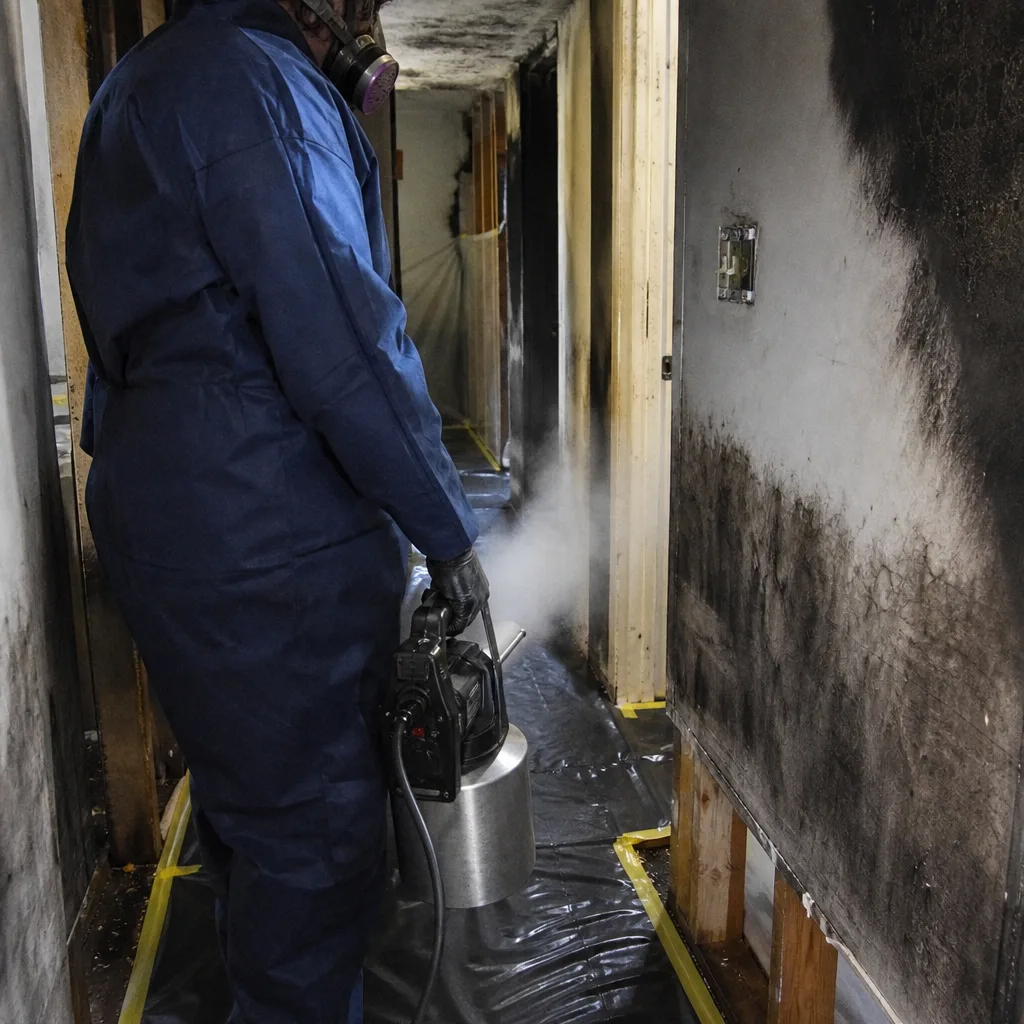
Crawl Space Treatment
Crawl space mold treatment in Sugar Hill runs $1,500-$4,500 depending on square footage, moisture load, and whether structural drying plus antimicrobial application is needed. This is the service we emphasize most for Sugar Hill homes because the lake-fed clay soil keeps crawl spaces damp year-round. Drying alone fails here. We know because we’ve re-treated crawl spaces other companies “fixed” by running a dehumidifier for three days.
In a Sugar Hill subdivision off Pine Acre Drive near a Lanier cove, our crew responded to a crawl space that tested 28% wood moisture with visible Aspergillus bloom despite no acute leak. We installed a Dri-Eaz dehumidification system, removed saturated fiberglass batt insulation, and applied an antimicrobial to the OSB subfloor before encapsulating the crawl space, stopping a hidden mold reservoir that was driving musty odors upstairs. That house needed encapsulation, not just drying, and we scoped it that way from the start.
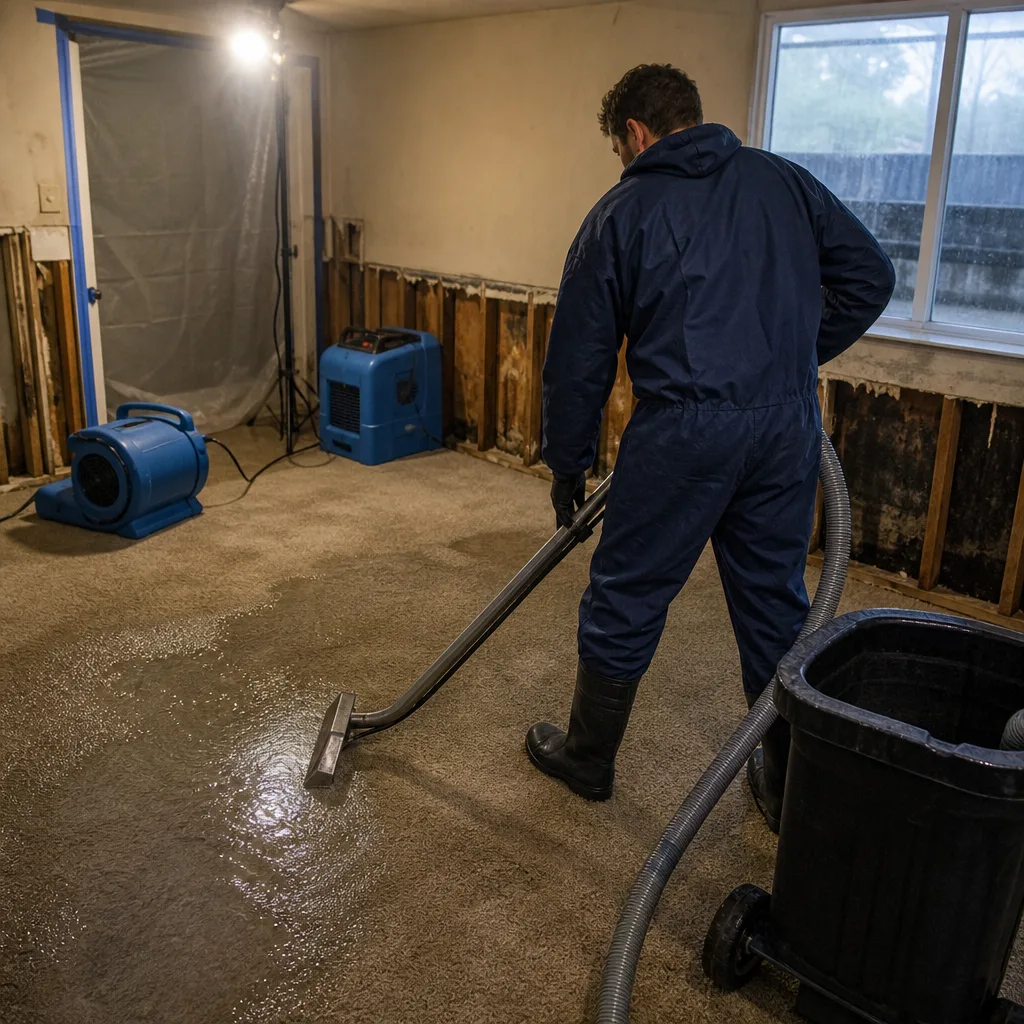
Mold Removal & Black Mold Remediation
Mold removal in Sugar Hill homes runs $2,000-$6,500 for containment, HEPA air scrubbing, material removal, antimicrobial treatment, and clearance verification. Black mold (Stachybotrys) is serious business. If you’ve got dark staining on drywall, baseboards, or attic sheathing, call us before you disturb it. Improper removal can send spores through your entire house.
Wade’s crew sets up negative-air containment. We bag and remove affected material, treat structural wood, and run HEPA air scrubbers until post-remediation verification clears the space. You get the clearance report, not just our word that it’s fixed.
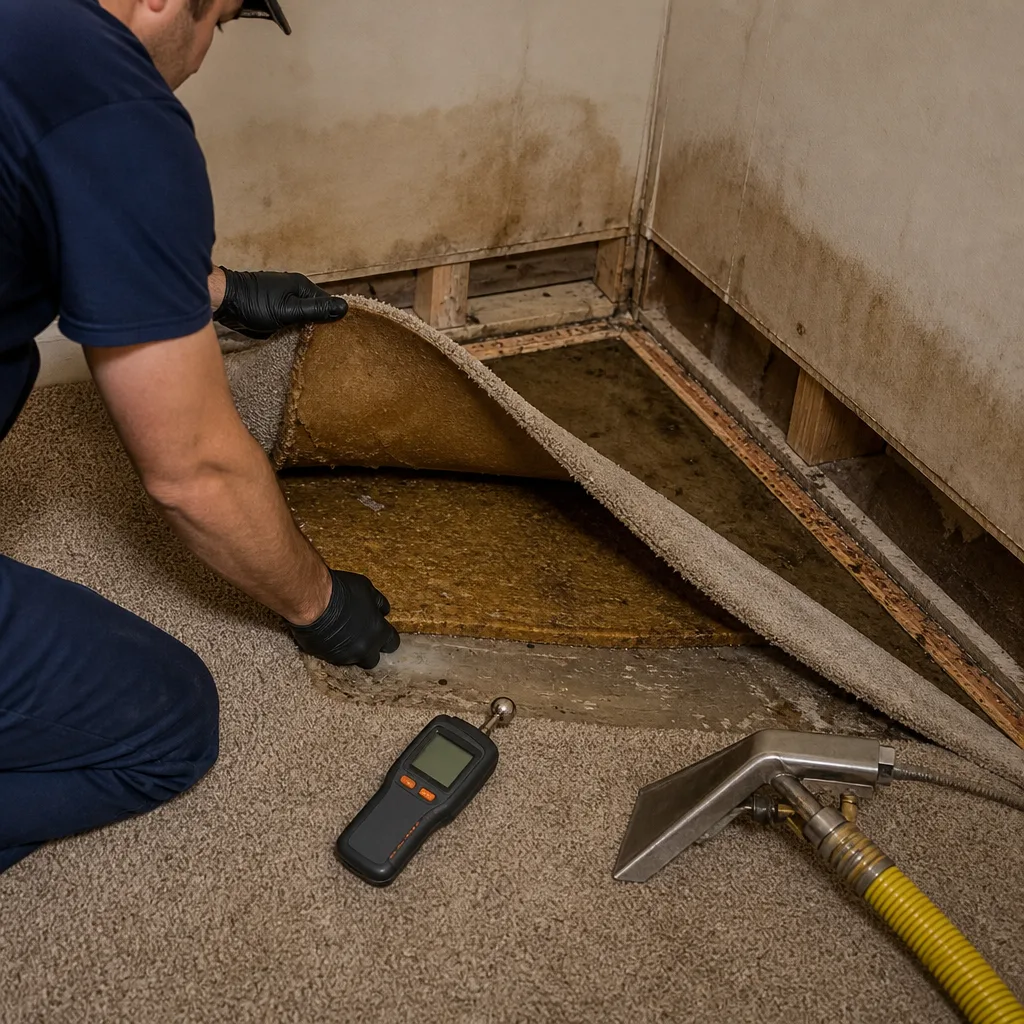
Air Quality Restoration
Air quality restoration in Sugar Hill homes runs $600-$1,800 for HEPA air scrubbing, duct cleaning if needed, and post-remediation verification. Houses near the lake tend to hold humidity, which means musty air lingers even after visible mold is gone. We don’t hand you a bottle of spray and call it done. We pull the spores out of the air you’re breathing.
Wade runs HEPA filtration units from Dri-Eaz and B-Air during the whole remediation, then samples the air again before we take the equipment out. The numbers don’t lie, and neither do we.
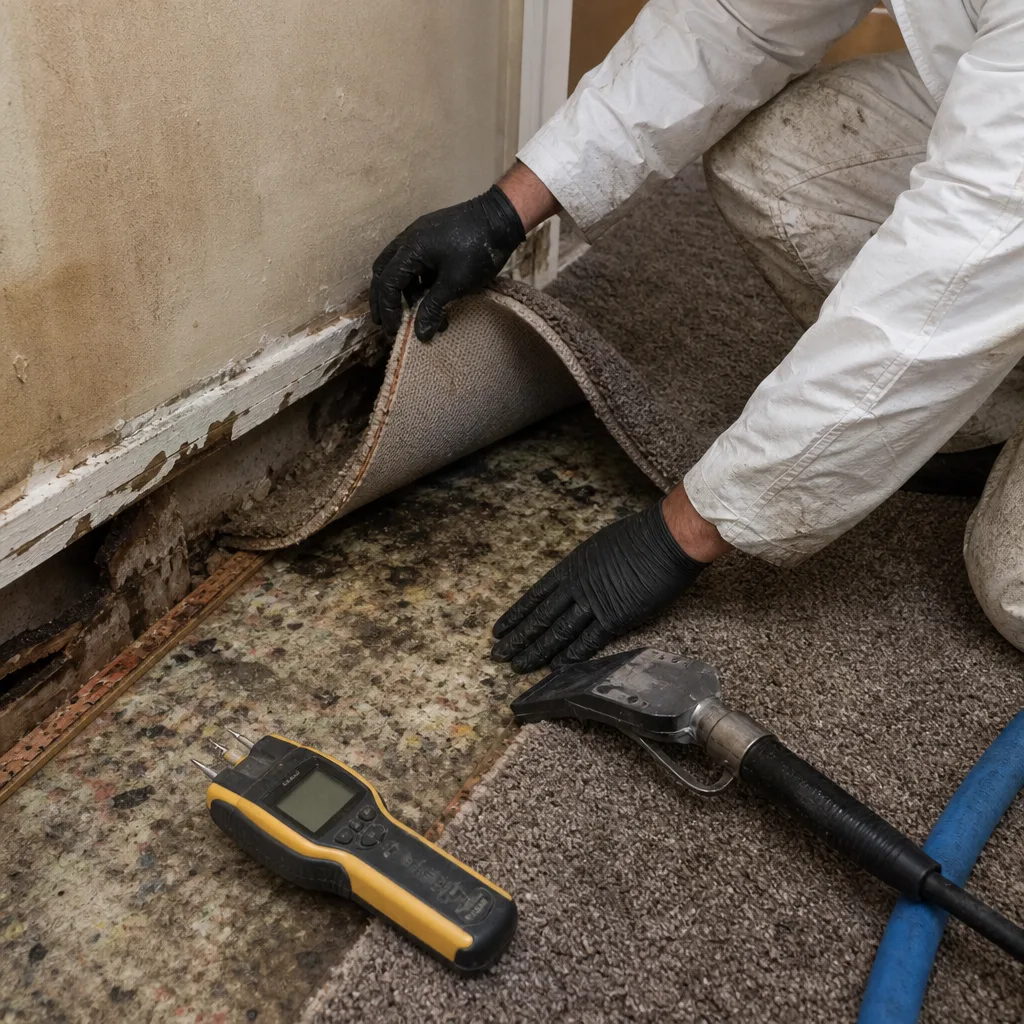
What happens when you call
- 1
A real person answersNo phone trees - you reach a local pro.
- 2
You get an upfront price rangeHonest numbers before anyone is dispatched.
- 3
A background-checked tech heads outLicensed & insured, dispatched right away.
- 4
You approve before work beginsNothing starts until you say go.
Common Mold Remediation Problems We See in Sugar Hill Homes
- Hidden colonization behind vinyl siding on 1990s-2000s homes. Engineered-wood framing and OSB sheathing soak moisture through nail penetrations and flashing failures. By the time you see the stain inside, the structural wood behind it has been wet for days or weeks.
- Crawl spaces that never dry because the clay soil keeps re-wetting them. Sugar Hill sits on dense Georgia red clay that drains poorly. Even after a successful extraction, groundwater presses against foundation walls and keeps the space humid, so mold returns within weeks without encapsulation.
- Attic mold from ice dams or storm-driven rain, not roof leaks. Sugar Hill gets intense thunderstorms and occasional winter ice events. Water blows under ridge vents or through soffit gaps, soaking fiberglass insulation and the OSB decking beneath. The roof itself may be fine; the microbial growth isn’t.
- Pre-listing home sales derailed by surprise mold inspection results. Buyers’ inspectors in Sugar Hill regularly flag musty odors and crawl space staining. Sellers then scramble. We’ve scoped dozens of Sugar Hill homes a week before closing. Testing early costs a few hundred dollars; losing a sale costs thousands.
Pricing for Mold Remediation in Sugar Hill, GA
Mold remediation in Sugar Hill typically falls between $1,800 and $6,500. A straightforward isolated bathroom remediation with containment and HEPA air scrubbing runs $1,800-$3,000. A full crawl space treatment with encapsulation, insulation removal, and antimicrobial application runs $3,500-$6,500. Full-house remediation involving multiple rooms, HVAC cleaning, and structural drying can push past $8,000. What moves the number: square footage affected, whether structural wood needs treatment, whether the HVAC system has been contaminated, and how far the Lake Lanier humidity has driven the moisture.
Older homes in Sugar Hill built before 1980 with dimensional lumber sometimes cost less to treat because the material dries more predictably. The 1990s-2000s OSB stock that dominates Sugar Hill neighborhoods takes longer to release moisture and sometimes needs replacement rather than drying. Wade walks you through the numbers with the scope of work in hand. Free estimates. Call (888) 690-3757.
Wade’s standing offers apply to Sugar Hill jobs the same as everywhere else: $40 off any repair over $200, a free second opinion on any written estimate you’ve received, and no trip charge for homes inside the county. Senior and Veteran discount is 10%, always.
We Also Serve Cities Near Sugar Hill
If you’re outside Sugar Hill proper, we cover the surrounding area too. Our Mold Remediation crews work in Buford, Suwanee, Flowery Branch, and Duluth on the same schedule. Lake Lanier’s humidity doesn’t respect city limits, and neither does our service area. For full details on the work we do in Sugar Hill specifically, visit our Sugar Hill page.
Serving Sugar Hill, GA - Our Local Coverage Area
We’re based in the Sugar Hill area and know this community well. Use the map below to see our service coverage - if you’re nearby, we can almost certainly help.
FAQs - Mold Remediation in Sugar Hill
Sugar Hill sits immediately south of Lake Sidney Lanier, and the lake’s constant evaporation keeps ambient humidity elevated across the city year-round. Crawl spaces near the shoreline corridor, especially subdivisions off Pine Acre Drive or Lanier Beach South Road, stay chronically moist because the lake’s microclimate keeps soil moisture high even when no leak has occurred. That means colonization can begin within 24-48 hours after any saturation event, while Buford or Suwanee homes a few miles inland typically have a longer drying window before spores activate. For Sugar Hill homes on lake-fed clay, standard 48-hour drying targets fail. Call (888) 690-3757 and we’ll explain what your specific crawl space needs.
In most Sugar Hill homes built during the 1990s-2000s boom, yes. Clay soil holds groundwater against your foundation long after the leak is fixed, keeping the space humid enough for mold to return within weeks. Encapsulation with a vapor barrier and a dehumidifier stops the re-wetting cycle. It’s more expensive than a simple dry-out, but it’s the difference between doing the job once and paying for remediation every 18 months. Wade shows you the moisture readings before recommending encapsulation, so you’re making the call with data, not a sales pitch.
The short answer is moisture mapping with a penetrating meter, thermal imaging of the wall cavity, and air sampling through small probe holes. Sugar Hill’s 1990s vinyl-clad construction hides staining behind siding and exterior sheathing long before drywall shows it. Wade’s crew uses non-invasive thermal scanning to find temperature anomalies that indicate hidden moisture, then confirms with a penetrating meter. Air samples pulled from the cavity tell us what’s growing. Most inspections can be done without demolition. Call (888) 690-3757 to schedule testing.
Yes, and we see this regularly. Intense thunderstorms in Sugar Hill can blow rain under ridge vents, through soffit gaps, or around flashing without causing an actual roof leak. The water saturates fiberglass insulation and the OSB decking beneath, and with the lake’s humidity adding to the attic heat, Stachybotrys (black mold) gets going fast. If you see dark staining on attic sheathing after a storm season, get it tested. A roof repair won’t fix the mold that’s already there.
Mold removal is the physical removal of visibly affected material. Mold remediation is the full process: containment, air scrubbing, removal, antimicrobial treatment, drying to target, clearance testing, and documentation that the space is safe. For a Sugar Hill home sale, buyers’ inspectors and lenders sometimes require remediation documentation, not just a cleaning. If you’re selling, call Wade before the inspection hits a speed bump. A few hundred dollars of testing now saves a $5,000-$10,000 deal falling apart.
Call Wade’s Restoration of Atlanta for Mold Remediation in Sugar Hill
You don’t have to guess whether the musty smell in your Sugar Hill home is a problem. Call Wade at (888) 690-3757. He’ll answer, ask the right questions, and schedule the assessment. Free estimate. Documented moisture logs. A 90-Day Done Right Promise on every mold job, in writing. One call brings Wade back if something isn’t right. Don’t let Lanier’s humidity keep doing damage while you wait.
Written by Wade Ferris, Owner at Wade’s Restoration of Atlanta, serving Sugar Hill and the surrounding Gwinnett County communities since 2007.