
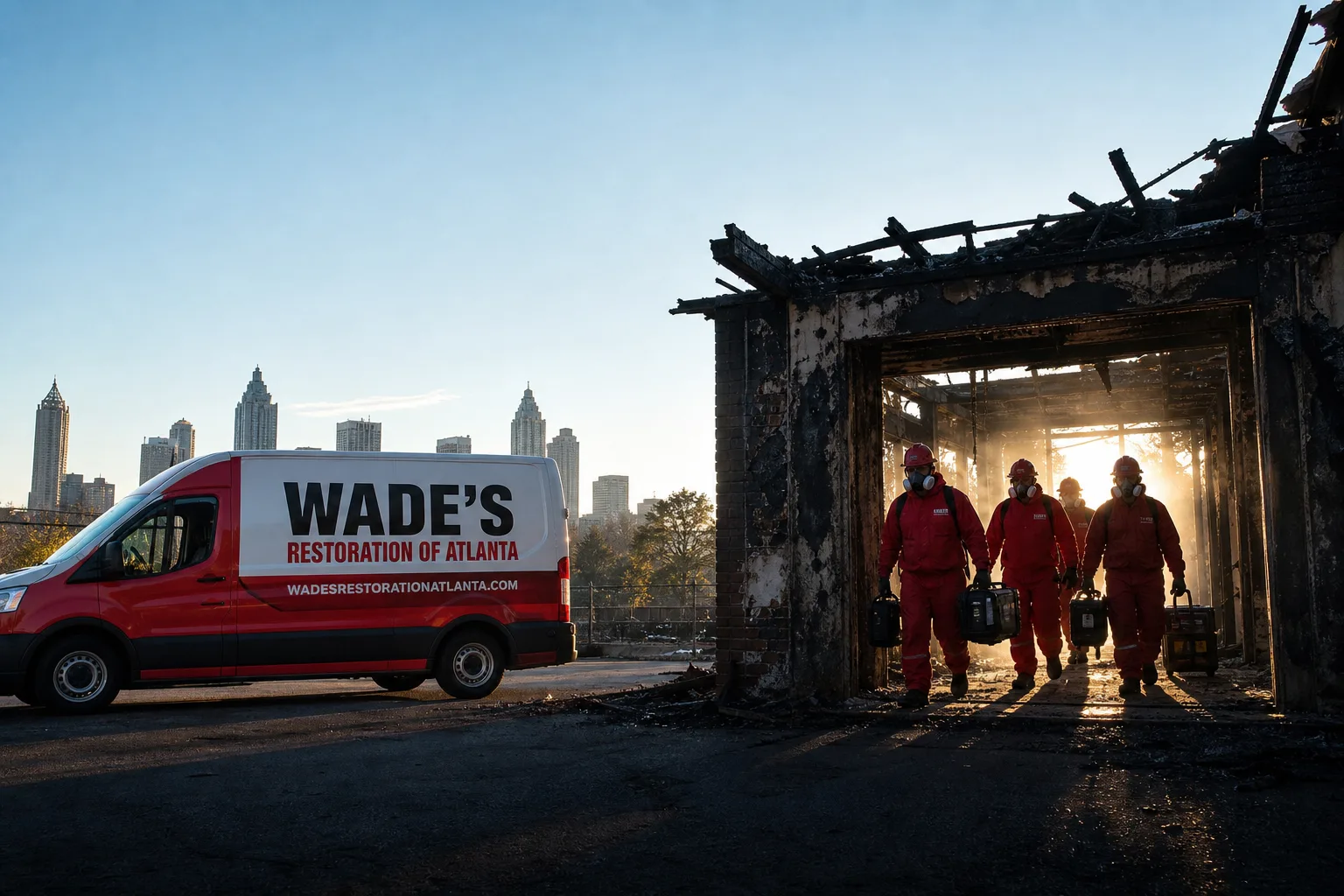
Fast, Reliable Water Damage Restoration Across Lilburn
If you’re standing in a flooded basement off Killian Hill Road or watching water pour through a ceiling on Burns Road, you need someone who knows Lilburn’s houses from the inside out. Water damage restoration in Lilburn, GA typically runs $1,200-$4,800 for a standard room, with emergency extraction alone costing $350-$900, and we also offer Fire & Smoke Damage Restoration - Lilburn. Wade’s Restoration answers the phone 24/7, and Wade himself heads out within the hour to start pulling water before it soaks into your subfloor. Call (888) 690-3757 right now.
Why Wade’s Restoration of Atlanta Is Lilburn’s Preferred Water Damage Restoration Company
Wade Ferris has been running restoration jobs in Gwinnett County since 2007, and Lilburn homes are the ones he knows best. The split-levels off Five Forks Trickum Road, the brick ranches along Lawrenceville Highway, the cul-de-sac subdivisions off Burns Road. These houses were built in a specific era with specific plumbing, and Wade’s crew knows exactly where water hides in them. He publishes his name, his address, and his license number, and he answers his own phone. That’s the difference between an owner who has to face you at the Lilburn Farmers Market on a Friday night and a national chain that will never see you again.
When a pipe lets go at 2 a.m. in the 30047 zip code, Wade doesn’t route your call through a call center in another state. He picks up. He asks what happened. And he tells you whether to kill the water main and what he’ll do when he gets there. That’s the kind of directness that homeowners in Lilburn keep telling their neighbors about. Read our full Water Damage Restoration page for more on how we work.
Our Water Damage Restoration Services in Lilburn
Emergency Water Extraction
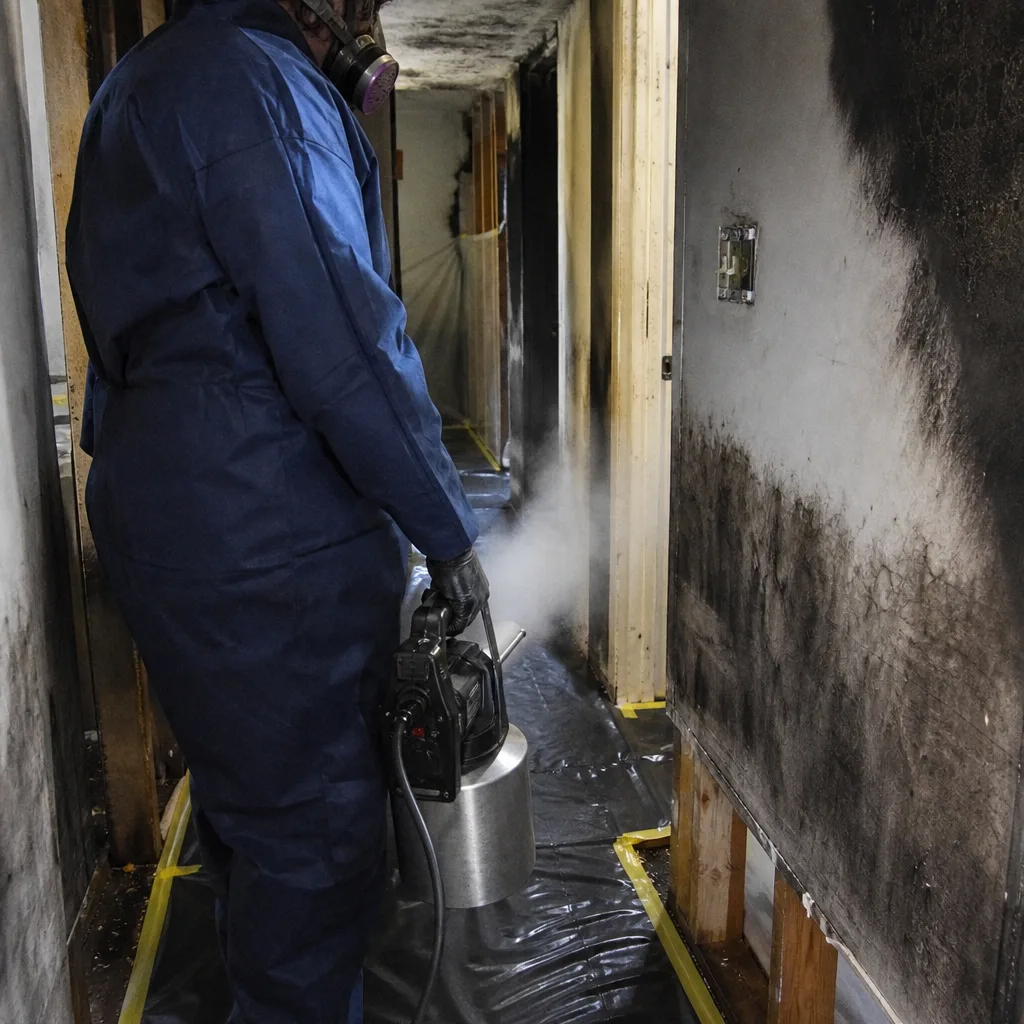
The first four hours decide whether your Lilburn home gets dried out or ripped apart. Water from a burst polybutylene line or a failed water heater doesn’t just sit there. It wicks into the OSB subfloor, climbs the drywall, and settles into the crawl space. Wade’s crews run XPOWER extractors and Dri-Eaz drying systems, and they don’t stop at the visible puddle. They probe the places Lilburn’s slab-on-grade ranchers hide water. Extraction inside the hour means drywall that survives. Extraction tomorrow means a tear-out.
Structural Drying & Dehumidification
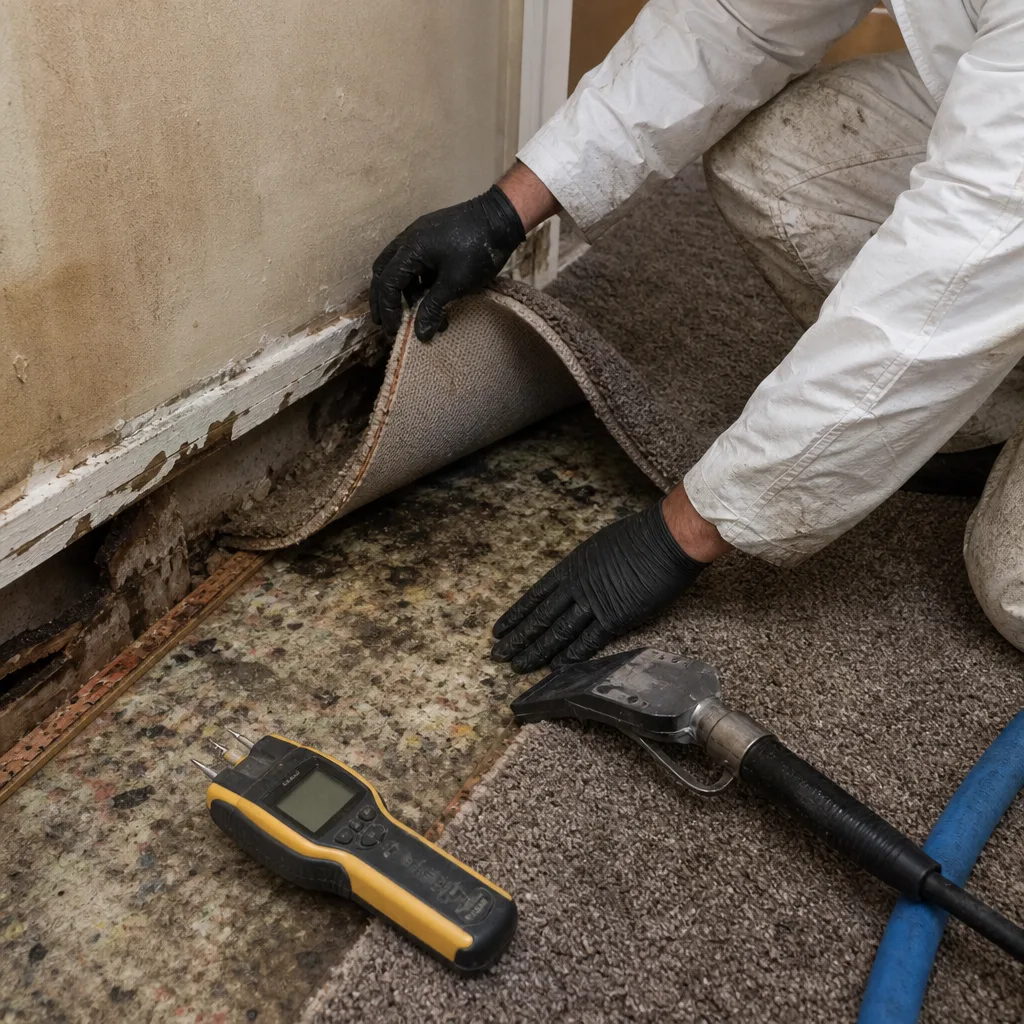
Lilburn sits in the Gwinnett Piedmont, where year-round humidity averages above 70%. That means drying is a race against mold, and it’s a race Wade wins with daily moisture readings, not guesswork. He puts a meter on your subfloor, your framing, your drywall, every single day until the numbers say it’s done. Then he hands you the full log. Almost nobody else in this trade does that. It’s how you know the job was actually dry, not just dry-looking. We run Phoenix dehumidifiers and B-Air air movers sized for the square footage, and we don’t pack up until the readings prove it.
Flood Cleanup
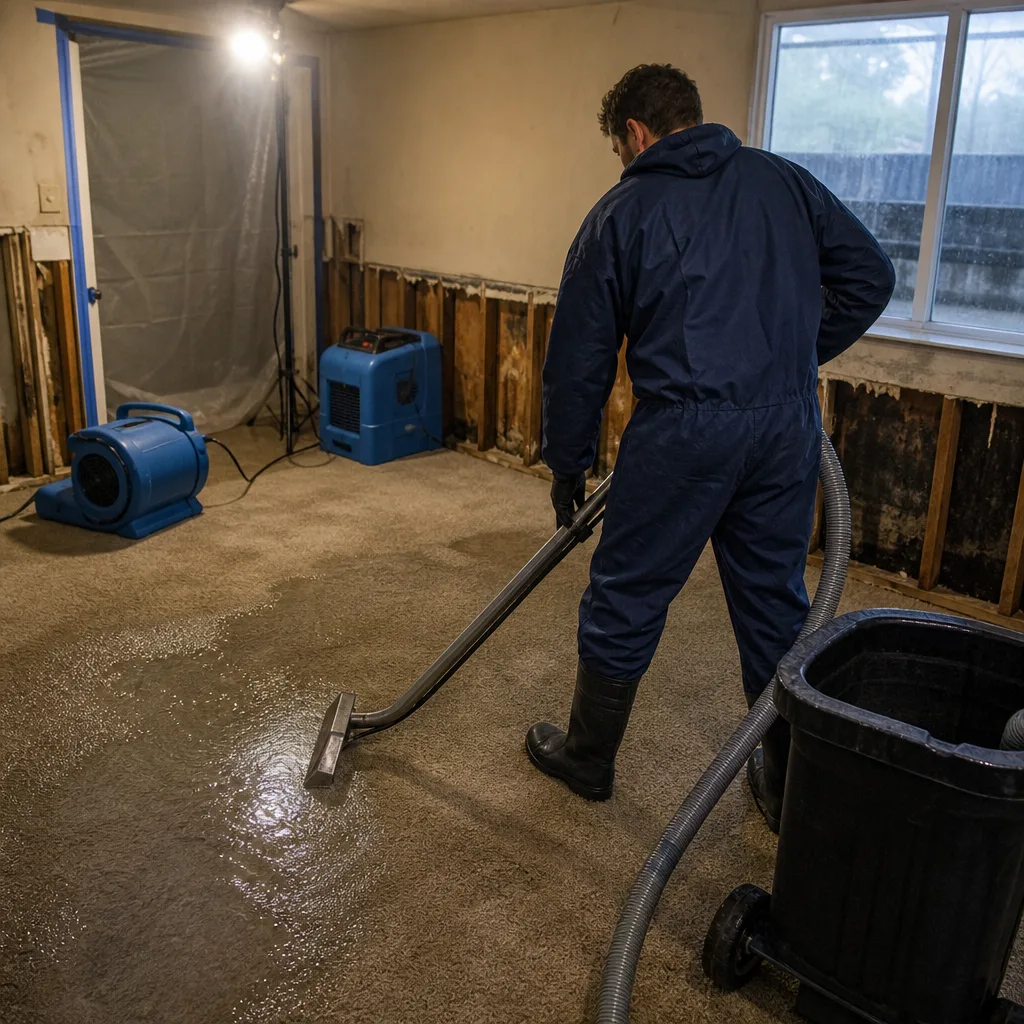
The Yellow River corridor through eastern Lilburn in the 30047 zip code floods when heavy summer thunderstorms overwhelm the older French drains and sump systems those neighborhoods were built with. That water comes in full of silt, debris, and whatever the river picked up along the way. Crawl spaces in the Yellow River corridor end up inundated with a kind of muck that requires Sewage Cleanup - Lilburn specialists, not just a shop vac. Wade’s crews pumped out and remediated more than a few flooded crawl spaces along the river corridor, and the priority is always the same: get it extracted and get air moving before the humidity turns it into a mold job.
Burst Pipe Restoration
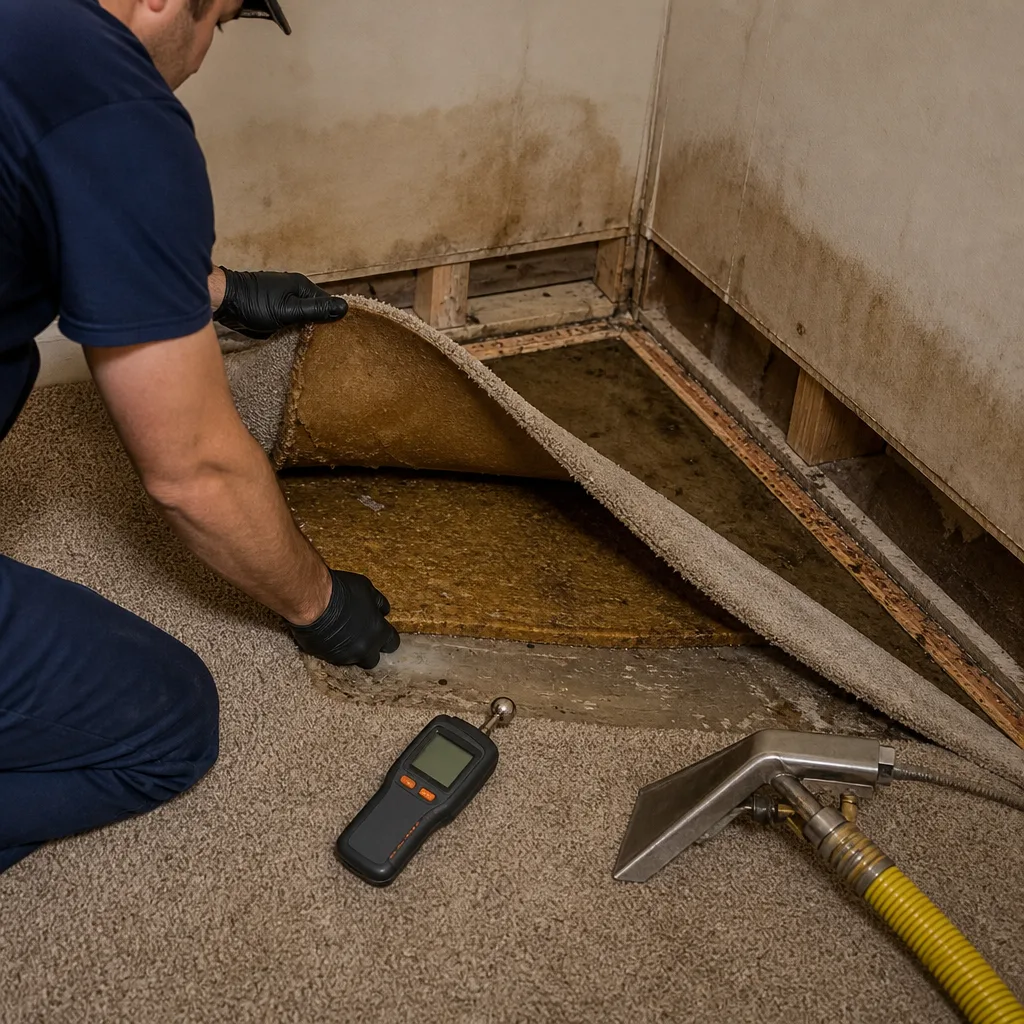
Polybutylene supply lines are the quiet disaster behind Lilburn’s walls. Homes built between the late 1970s and the mid 1990s, which is a big share of both 30047 and 30048, were routinely plumbed with it. Decades of Gwinnett’s mineral-heavy water have degraded the interior walls of those gray pipes. When one fails, it’s not a clean break at a joint. It’s a slow hairline split behind sheetrock that feeds water into the subfloor for weeks before you ever see a stain. By the time we get the call, the damage is usually in the crawl space and the framing. Our Water Damage Restoration in Lilburn team has seen hundreds of these failures and knows exactly where to look first.
What happens when you call
- 1
A real person answersNo phone trees - you reach a local pro.
- 2
You get an upfront price rangeHonest numbers before anyone is dispatched.
- 3
A background-checked tech heads outLicensed & insured, dispatched right away.
- 4
You approve before work beginsNothing starts until you say go.
Trusted Brands We Service in Lilburn
Wade’s trucks carry Phoenix dehumidifiers, XPOWER extractors, and B-Air air movers, and he stocks the parts and filters online and in local supply houses so he’s not waiting on a shipment while your subfloor keeps soaking. When you call from a split-level off Burns Road, the equipment is already on the truck. When you call from a ranch near Rockbridge Road, same thing. Wade’s crew runs the same professional grade equipment on every job, and they know these systems inside out because they use them every day in Lilburn.
Common Water Damage Restoration Problems We See in Lilburn Homes
- Polybutylene supply lines failing silently behind drywall. These gray pipes run through most 1970s-1990s homes in Lilburn, and Gwinnett’s hard water has been eating away at them for thirty years or more. A hairline crack can feed water into the subfloor for weeks before you ever see a stain.
- Subfloor OSB and framing turned into mold reservoirs. Lilburn’s slab-on-grade ranchers and split-levels with dirt crawl spaces hide slow leaks perfectly. Water wicks downward into the OSB, and with humidity over 70% most of the year, mold colonies start seeding before the leak is ever visible.
- Yellow River corridor flash floods overwhelming old drainage. The eastern edge of Lilburn in 30047 sits low along the river, and many homes still have the original French drains and sump systems from when the neighborhood was built. A heavy summer thunderstorm can push silt-heavy water into crawl spaces faster than those systems can move it out.
- Aging HVAC condensate systems leaking into closets and ceilings. Homes from the 1980s and 1990s often still have original air handler drain pans and lines. In Lilburn’s humidity, those lines clog and overflow, dripping water through ceilings and down studs in ways that look like a roof leak but aren’t.
And here’s the thing we’ve learned from years of probing Lilburn’s subfloors. In a 1980s split-level off Five Forks Trickum Road, we responded to a musty odor with no visible water anywhere. Probing the subfloor OSB revealed a hairline polybutylene supply leak behind the master bath wall that had been feeding mold into the crawl space for weeks. We extracted the trapped moisture, dried the subfloor with Dri-Eaz equipment, and then walked the homeowner through repiping before any mold remediation started. That’s the kind of failure mode you don’t hear about in the National Association of Home Builders, but you’ll hear about it all day from a restoration crew that actually works Lilburn.
Pricing for Water Damage Restoration in Lilburn, GA
Here are real numbers for Lilburn, not a phone quote with fine print. Emergency water extraction in a single room typically runs $350-$900. Full structural drying and dehumidification after a burst pipe or appliance failure runs $1,200-$3,500 depending on square footage and how far the water traveled. Flood cleanup from Yellow River overflow or a failed sump pump in a crawl space starts around $2,000 and can reach $6,000 when silt removal and insulation replacement are included. Burst pipe restoration with drywall and baseboard replacement runs $1,500-$4,800 per affected room. A full polybutylene repipe is a plumbing job, not a restoration job, but we’ll tell you straight if that’s what you need and help you coordinate it. Every estimate includes a written scope before any work starts, and Wade will walk you through exactly what the numbers mean. Call (888) 690-3757 for a free estimate.
We Also Serve Cities Near Lilburn
In addition to Lilburn, Wade’s crews regularly run water extraction and structural drying jobs in Lilburn‘s neighboring communities: Lawrenceville, Norcross, Snellville, and Duluth. If you live just over the line in any of those areas, the same trucks, the same equipment, and the same owner who answers his own phone is available 24/7.
Serving Lilburn, GA - Our Local Coverage Area
We’re based in the Lilburn area and know this community well. Use the map below to see our service coverage - if you’re nearby, we can almost certainly help.
FAQs - Water Damage Restoration in Lilburn
Look for gray or blue-gray plastic supply lines visible under sinks, behind toilets, or near your water heater. If your home was built between the late 1970s and mid 1990s in the 30047 or 30048 zip codes and has never been repiped, assume they’re there. Watch for unexplained musty odors, warm spots on floors, peeling paint near baseboards, and water bills that creep up without a reason. Any of those can mean a slow polybutylene leak is already feeding your subfloor. If you’re not sure, call (888) 690-3757 and we’ll help you check.
In Lilburn’s humidity, which stays above 70% most of the year, mold can start colonizing damp OSB and insulation within 48 hours, and sometimes faster in a warm, still crawl space. That’s why we don’t treat a leak as just a leak. We treat it as a mold clock that’s already running. The faster we extract and get air moving, the less likely you are to need full mold remediation. If you smell something musty under the house, call (888) 690-3757 today.
Yes. We handle flood cleanup from Yellow River overflow throughout eastern Lilburn, including the neighborhoods along Burns Road, Rockbridge Road, and the river corridor in the 30047 zip code. Silt-heavy river water in a crawl space requires our Storm & Disaster Restoration in Lilburn, not just extraction. We remove the contaminated insulation, treat the framing, and dry it down with professional equipment before any rebuilding starts. That work is scoped in writing before we start, and Wade coordinates directly with your insurance adjuster.
Repairing a burst section is a stopgap. It gets your water back on, at least temporarily. But if your Lilburn home still has polybutylene supply lines, another failure is not a question of if. It’s a question of when and where the next hidden leak will feed your subfloor. A full repipe means replacing every polybutylene line with PEX or copper, and that’s a plumbing scope, not restoration. We’re honest about which one you actually need. If your damaged drywall and subfloor need restoration first, we do that; then we’ll point you to a licensed plumber we trust and coordinate the schedule so the restoration work doesn’t conflict with the repipe. Call (888) 690-3757 and we’ll lay out the options straight.
Sometimes, yes. If the insulation is fiberglass batting that got wet but hasn’t been sitting long enough to grow mold, we can often dry it in place with targeted air movement and dehumidification. But if it’s saturated, silt-covered from flood water, or already showing mold, it has to come out. Leaving wet insulation in a Lilburn crawl space is a mold factory. We’ll show you the moisture readings before we recommend anything, and you’ll see the numbers with your own eyes. Call (888) 690-3757 and Wade will take a look and tell you straight what needs to come out and what can stay.
When water is spreading through your Lilburn home, every hour makes the job bigger and the bill higher. Call (888) 690-3757 now. Wade answers his own phone, and he’ll tell you what to do in the next five minutes, not just when he can show up. Free estimates, a written scope before any work starts, and the owner’s name on the truck.
Written by Wade Ferris, Owner at Wade’s Restoration of Atlanta, serving Lilburn since 2007.