
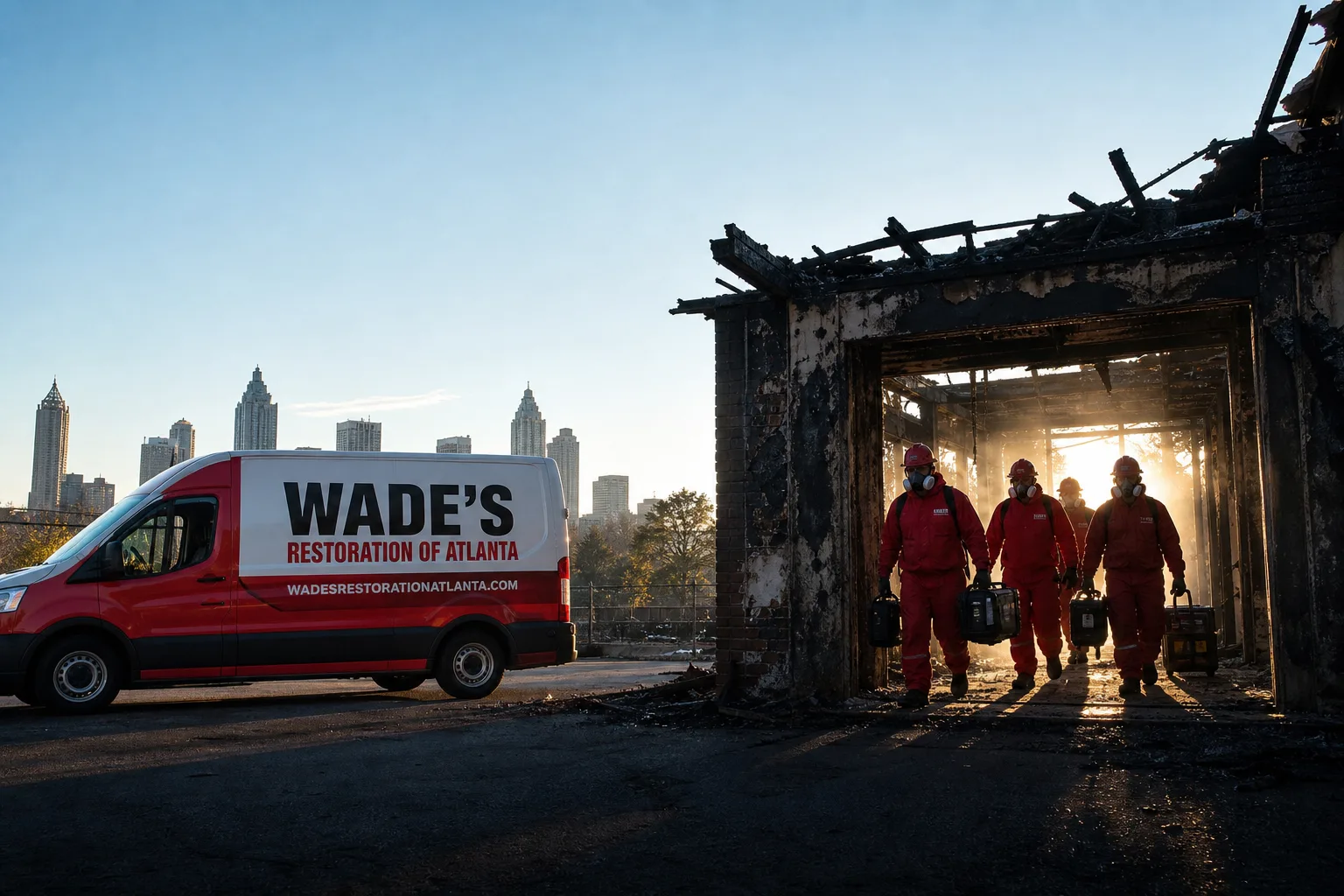
Fast, Reliable Sewage Cleanup Across Lilburn
Sewage cleanup in Lilburn typically costs between $1,800 and $5,500 depending on how far the contamination has spread, and most jobs can be started within two hours of your call. That’s the direct answer. Wade Ferris and his crew work the Lilburn area every day, and we know exactly what a sewage backup does to a 1980s split-level off Lawrenceville Highway or a ranch home in the 30048 zip. Call (888) 690-3757 and Wade himself will pick up. You won’t get a call center, and you won’t get a national chain’s rotating technician list. You’ll get the owner, usually on the first ring, and a real plan for what happens next.
Why Lilburn Homeowners Call Wade’s Restoration for Sewage Cleanup
Lilburn isn’t a city where you want to gamble on a franchise crew from across the metro. The housing stock here has its own character, and the failure patterns are predictable if you’ve spent years working in this part of Gwinnett County. Wade’s Restoration of Atlanta is owned and operated by Wade Ferris, who publishes his name, address, and license number and answers his own phone 24 hours a day. That matters when sewage is spreading through a crawl space and you need someone who treats your house like it belongs to a neighbor, not a work order number.
Our Sewage Cleanup team serves Lilburn with the same approach Wade has used since 2007: document everything, tell you what it costs before work starts, and hand you the moisture log when we leave. Homeowners on Burns Road, Arcado, and the cul-de-sacs around Killian Hill have seen Wade’s crew show up in uniformed trucks, start extraction inside the hour, and deal directly with their insurance adjuster so they don’t have to play phone tag between two frustrated parties. Ask anyone on your street. In Lilburn, reputation travels faster than sewage.
Wade’s crew responds to Lilburn calls fast enough to stop a backup from becoming a full subfloor replacement. We don’t staff a rotating bench of subcontractors. The people who show up are background-checked, IICRC-certified, and they’ve worked in this exact housing stock before. From Five Forks Trickum Road down to the Yellow River corridor, we know which homes have pier-and-beam crawls, which ones sit on slab, and which subdivisions were still framing in polybutylene as late as the mid-90s. That local knowledge is the reason we can get the scope right on the first visit instead of discovering the real problem three days later.
Our Sewage Cleanup Services in Lilburn
Sewage work is not one-size-fits-all. A toilet overflow in a ranch off Rockbridge Road needs different handling than a septic failure in a split-level near Mountain Park. Here’s what we actually do in Lilburn, based on what we see most often.
Sewage Backup Cleanup
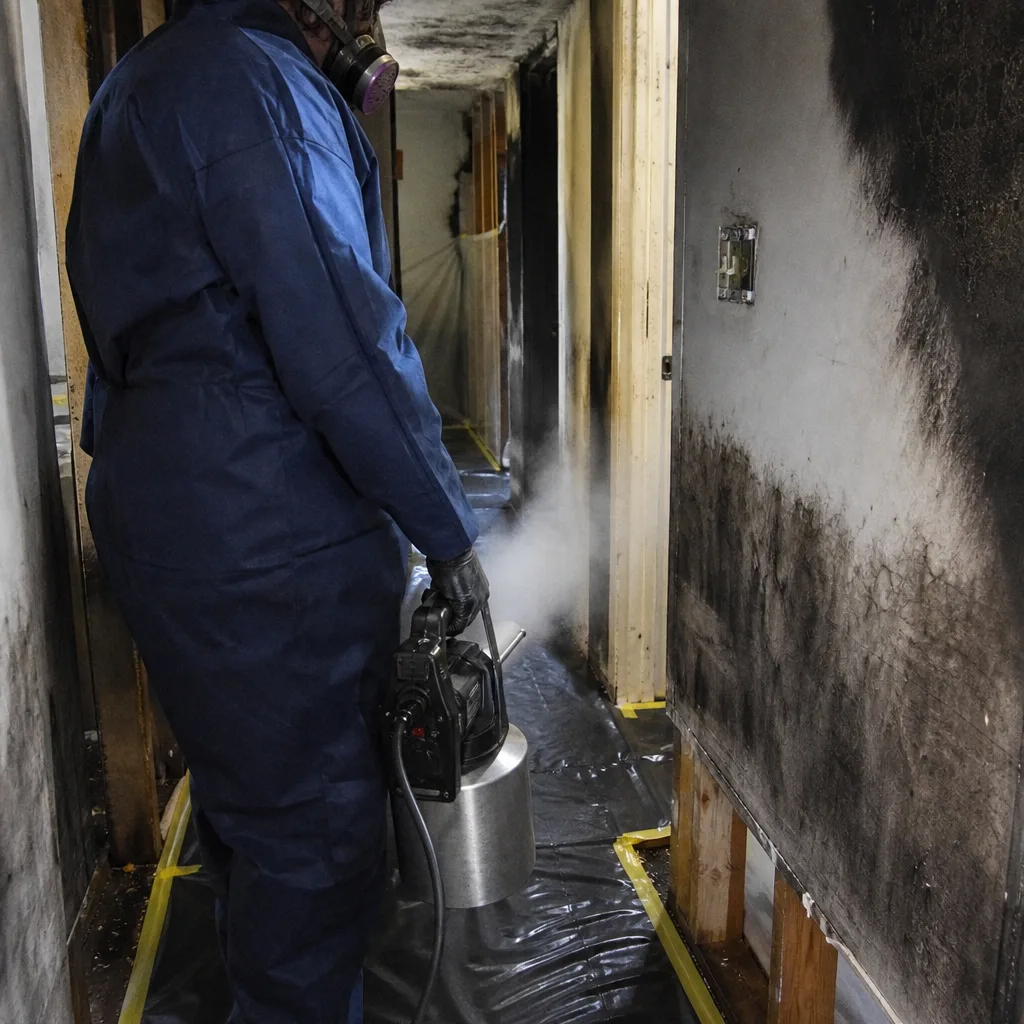
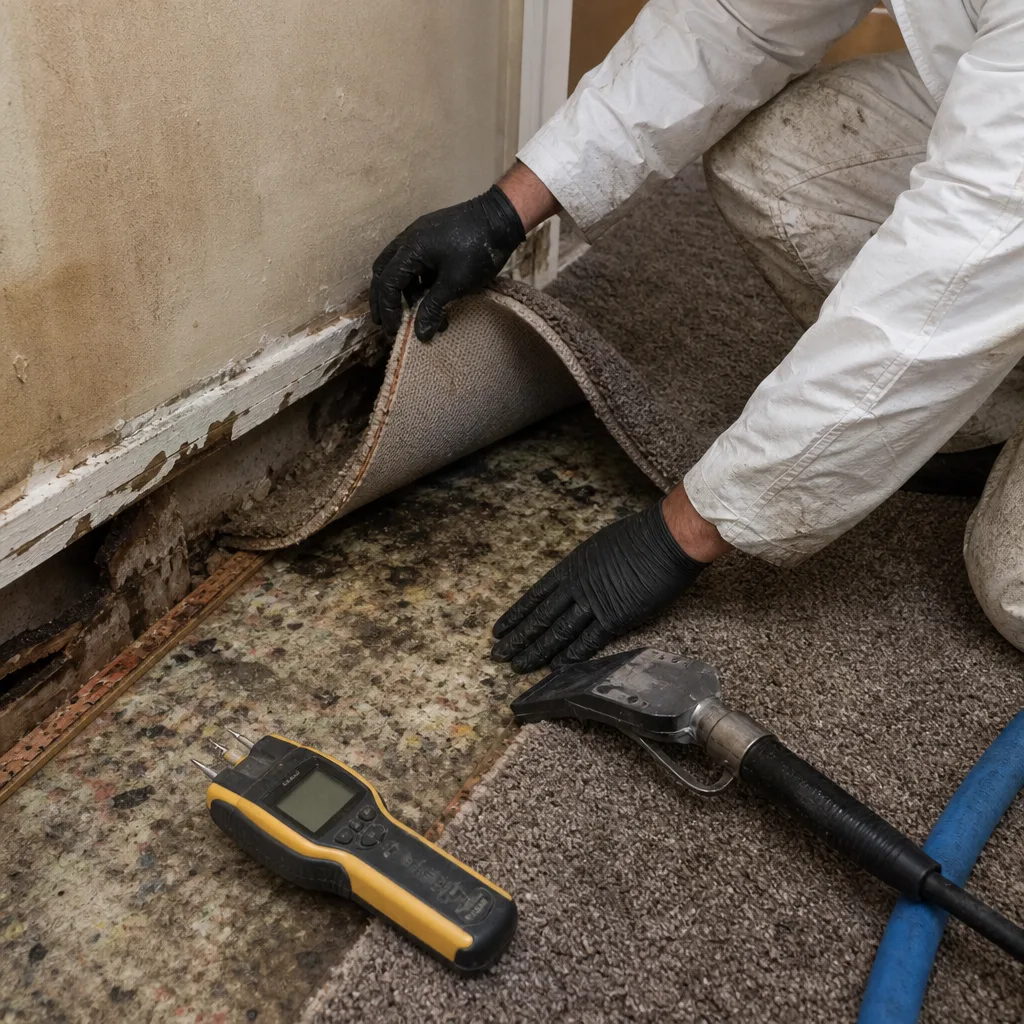
A sewage backup in Lilburn usually shows up as a gurgling floor drain or a toilet that won’t clear, and by the time you notice it, the water has already carried pathogens into whatever it touched. We extract the standing sewage, cut out and remove saturated drywall and flooring, and sanitize every affected surface with EPA-registered disinfectants. In homes along the Yellow River corridor, backups often follow a heavy summer storm that overwhelmed an aging French drain, and that distinction matters: stormwater cleanup is not the same as sewage sanitization, and we treat every assumed backup as contaminated until proven otherwise.
Toilet Overflow Cleanup
Toilet overflows in Lilburn’s 1970s and 1980s builds often wick into subfloor OSB fast because so many of these homes have slab-on-grade foundations with a dirt crawl space directly beneath. That means contaminated water doesn’t just sit on the tile. It moves downward, and within 48 hours the subfloor is seeding mold even if the bathroom looks fine. Our crew cuts out the affected underlayment, treats the cavity, and dries the structure with professional-grade equipment, not rental fans. We’ve done too many jobs off Five Forks Trickum Road where a homeowner waited a week and turned a $1,500 extraction into a $7,000 rebuild.
Septic Failure Cleanup
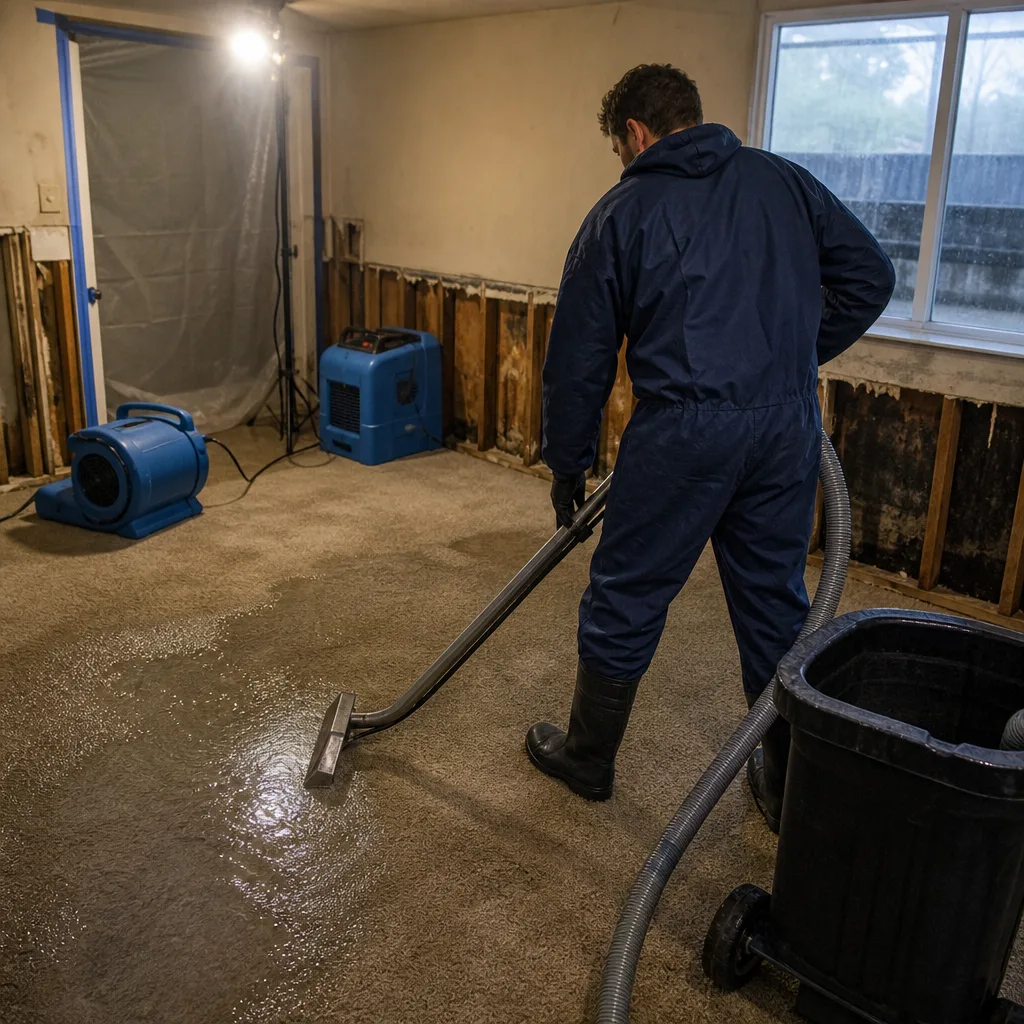
Septic failures in eastern Lilburn’s 30047 zip are a different animal than a standard city sewer backup. When a leach field fails, the effluent doesn’t always surface where you’d expect. It travels along the same disturbed soil lines as your foundation drain and can pool in a crawl space or under a deck without a single visible outdoor wet spot. We inspect the crawl, extract what’s pooled, and document moisture levels in writing before we touch anything. Wade deals with the adjuster directly, so you’re not stuck explaining septic hydraulics to a claims rep who covers fourteen states.
Black Water Extraction
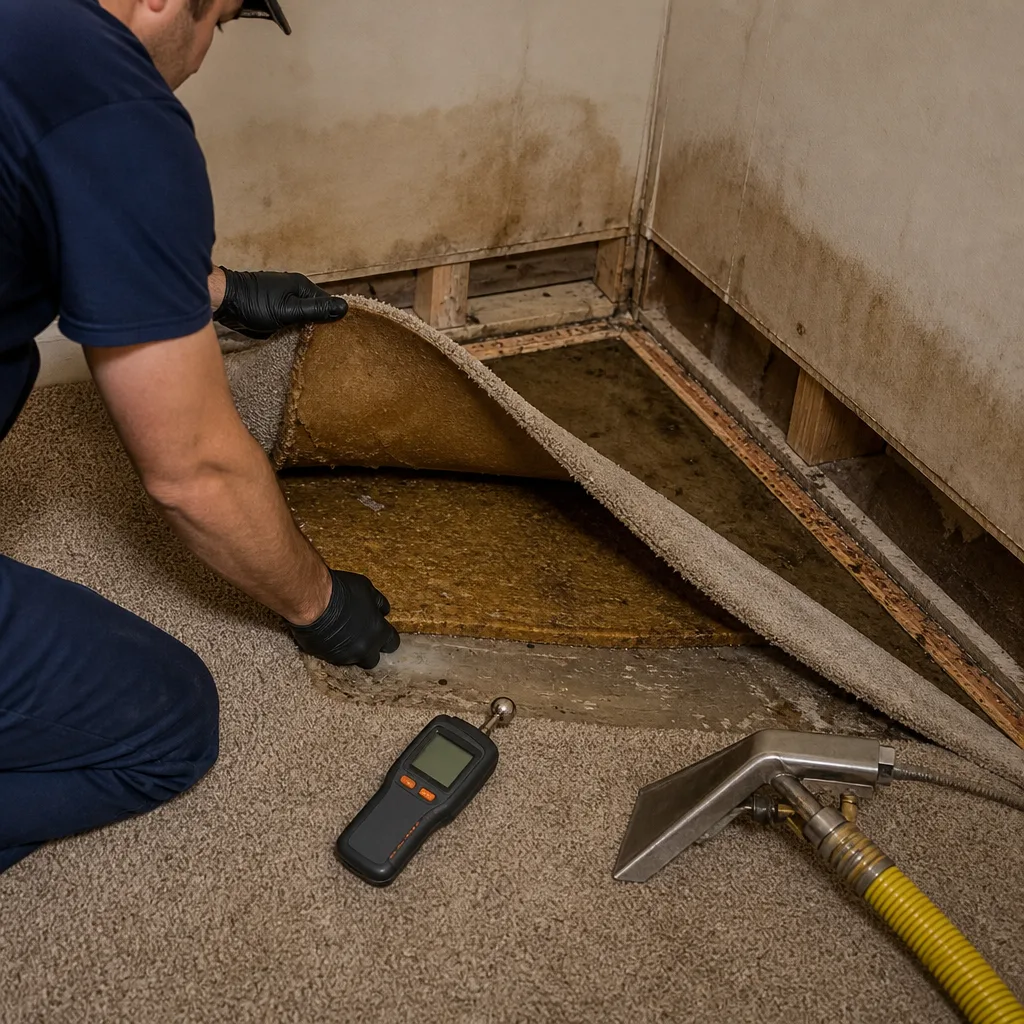
Black water is the category sewage falls into, and it carries bacteria, viruses, and parasites that a mop and bleach will not fix. In Lilburn, where summer humidity averages above 70%, black water that isn’t extracted and dried within 24 to 48 hours reliably converts into a secondary mold remediation job. We run Phoenix 200 MAX extraction units, Dri-Eaz dehumidifiers, and HEPA air scrubbers on every sewage job, and we don’t declare the work done until the moisture readings in the subfloor and wall cavities match the ambient baseline. That’s the only honest way to do black water work in this climate.
What happens when you call
- 1
A real person answersNo phone trees - you reach a local pro.
- 2
You get an upfront price rangeHonest numbers before anyone is dispatched.
- 3
A background-checked tech heads outLicensed & insured, dispatched right away.
- 4
You approve before work beginsNothing starts until you say go.
Common Sewage Cleanup Problems We See in Lilburn Homes
- Slow polybutylene leaks behind walls hide sewage contamination until the subfloor is saturated. Lilburn’s housing boom years overlap with the polybutylene plumbing era, and Gwinnett County’s mineral-heavy water has spent decades degrading those lines from the inside. A pinhole leak behind a vanity can drip contaminated water into the wall cavity and then into the crawl, growing mold before any stain shows on the drywall.
- Pier-and-beam crawl spaces in 30047 trap sewage odors and moisture, and homeowners misdiagnose it. We get calls from Lilburn residents who swear there’s a dead animal under the house. Sometimes there is. More often, it’s sewage wicking through a crawl space that hasn’t been properly vented since Reagan was in office. The smell fades and returns with humidity swings, which is exactly what sewage does in a conditioned crawl.
- Heavy summer thunderstorms overwhelm aging French drains near the Yellow River, and sewage gets mistaken for stormwater. When the drain system backs up, sewage and stormwater mix. Homeowners mop up the visible water and skip sanitization because they think it was just rain. It wasn’t. That house now has residual contamination in the baseboards and the bottom 12 inches of drywall.
- Slab-on-grade ranches with a dirt crawl underneath hide a week of damage behind a single water stain. The polybutylene supply line fails behind a wall, water travels along a stud, and by the time you see a stain on the hallway baseboard, the subfloor underneath has been wet for days. In Lilburn’s humidity, that’s long enough for mold to establish. We always probe subfloor OSB as a first step on any poly-line loss in these 1980s subdivisions.
Pricing for Sewage Cleanup in Lilburn, GA
A toilet overflow cleanup in Lilburn with no subfloor damage typically runs $1,200 to $2,400. A sewage backup affecting a bathroom and part of an adjacent hallway runs $2,500 to $4,500. Full crawl space sewage removal with sanitization and structural drying runs $4,000 to $8,500 depending on square footage and how long the contamination sat. These are real ranges from jobs we’ve done in 30047 and 30048, not national averages pulled from a website. What changes the price is depth of wicking, whether we’re cutting open walls or just treating a crawl, and whether the polybutylene line is still leaking while we work. Free estimates. Wade will walk it without a trip charge if you’re inside the county. Call (888) 690-3757.
We Also Serve Cities Near Lilburn
If you’re just outside Lilburn, we cover the surrounding area too. Sewage Cleanup in Lilburn is our home page for this market, and we regularly work in Lawrenceville, Norcross, Snellville, and Duluth. Same crew, same response time, same owner answering the phone. If your house is in one of those cities and you’re dealing with a backup tonight, call (888) 690-3757.
Serving Lilburn, GA - Our Local Coverage Area
We’re based in the Lilburn area and know this community well. Use the map below to see our service coverage - if you’re nearby, we can almost certainly help.
FAQs - Sewage Cleanup in Lilburn
Polybutylene supply lines in Lilburn homes degrade from the inside out due to Gwinnett County’s mineral-rich water, and the failure often begins behind a wall or under a slab where you can’t see it. When a toilet overflows, the sewage doesn’t just sit on the floor. It travels along the same pathways as the failing poly lines and can drain down into the crawl space through the same chases. That means contamination spreads farther and faster here than in a newer home with PEX lines and a sealed crawl. We check for active polybutylene leaks on every Lilburn sewage job, because a slow supply leak plus a sewage backup is a compounding problem.
The 30047 zip includes homes along the Yellow River corridor and lower-lying terrain that sits closer to the water table than Snellville’s ridge-top lots. A sewage loss in a pier-and-beam crawl in this part of Lilburn is feeding standing water into a space that’s already fighting groundwater seepage and 70% humidity. Mold establishes faster, odors are stronger, and subfloor damage accelerates. In Snellville, a crawl might dry partially on its own. In eastern Lilburn, it won’t. That’s why we treat 30047 crawl sewage as a same-day extraction priority.
If you smell sewage and see no water, call us before you call a plumber to start opening walls blind. In Lilburn’s slab-on-grade ranches with a dirt crawl underneath, the smell almost always means contaminated water has already wicked into the subfloor or the wall cavity below the slab line. You can’t see it because it’s moving through the OSB, not across your tile. That’s a sanitation job, not just a deodorizer. Call (888) 690-3757 and we’ll probe the subfloor and the wall cavities before anyone tears open the wrong wall.
Lilburn’s year-round humidity means the drying window after a sewage loss is shorter than in drier parts of the metro, and the margin for error is thinner. We run Phoenix 200 MAX dehumidifiers and Dri-Eaz air movers longer and we take daily moisture readings until the subfloor and wall cavities meet the ambient baseline. In a dry climate, a few points above baseline might be acceptable. In Lilburn, it’s not. The humidity will push that residual moisture right back into the structure, and you’ll get mold in the same spots we just dried. Wade hands you the full moisture log at job’s end so you can see the numbers yourself.
In many Lilburn homes, yes, as long as we catch the contamination before it has saturated the OSB from below. We can treat the crawl space with EPA-registered sanitizer, run HEPA air scrubbers, and dry the subfloor from underneath without cutting into your hardwood or tile above. That said, if the subfloor has already delaminated or the contamination penetrated past the surface, cutting it out is the only honest fix. We’ll tell you which situation you’re in before we start, and you’ll get a written scope. No surprises after the floor comes up.
Written by Wade Ferris, Owner at Wade’s Restoration of Atlanta, serving Lilburn since 2007.